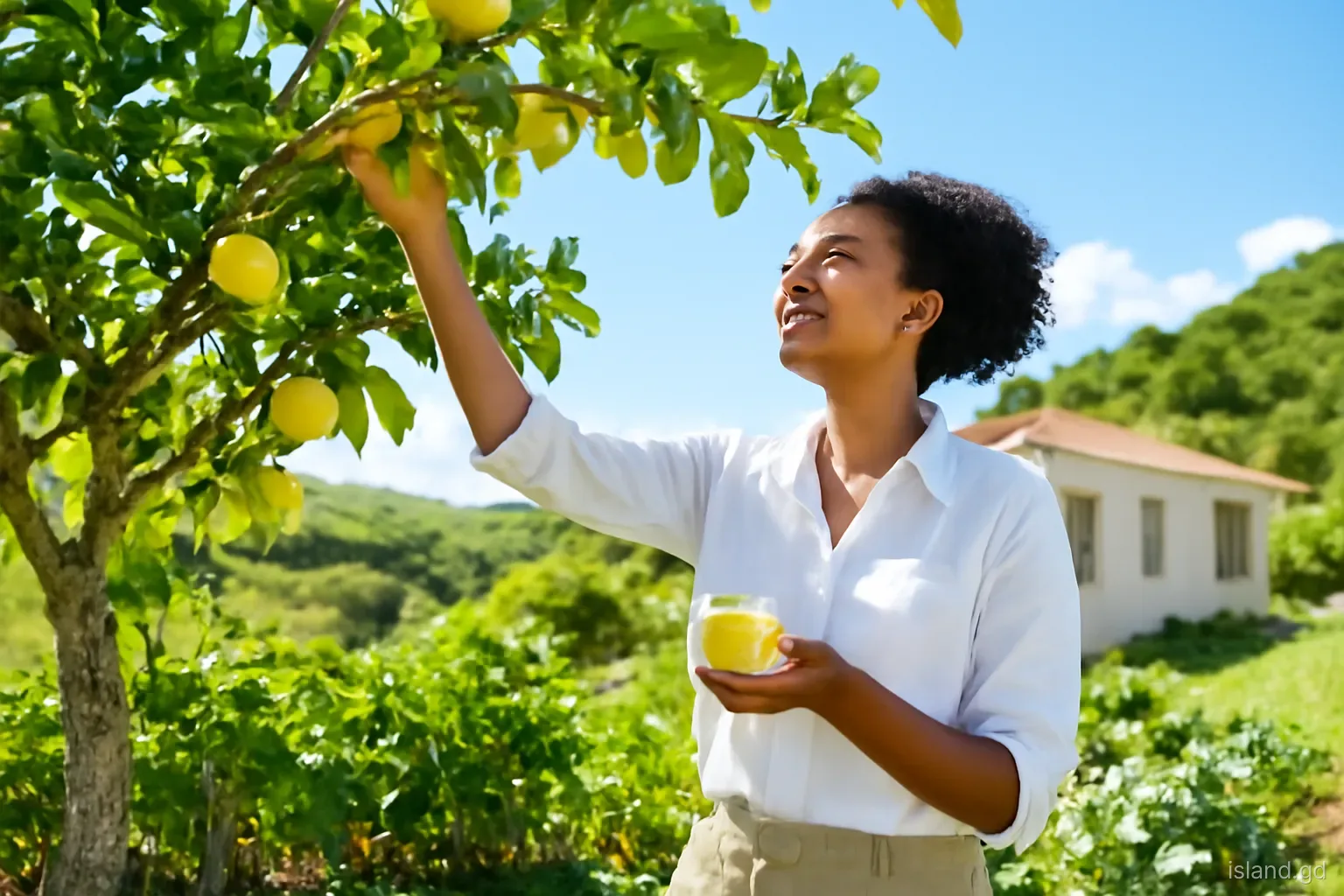
A traditional Grenadian yard is a working space. Around the house there might be a breadfruit tree, a couple of mango trees, a golden apple, a banana patch, a row of pigeon peas, some callaloo, seasoning peppers, chive and thyme. Many families still eat from their yards every week, and in tough times, such as after Hurricane Ivan in 2004 or during the pandemic, yards helped feed households and neighbours.
Grenada's volcanic soils, warmth and rainfall make it easy to grow a remarkable range of food, but the climate also brings dry spells, heavy rain, pests and the occasional storm. This guide covers what to plant, when, and what to watch out for, whether the space is a large rural plot or a small yard in the south.
Fruit trees worth planting
Breadfruit. A large, productive tree whose starchy fruit is boiled, roasted or used in oil down. One mature tree can feed a family through its season. It needs space and grows tall, so plant it away from the house and power lines.
Mango. Grenada has many varieties, from the popular Julie to stringy local types. Mango trees are large, long-lived and productive, with the main season roughly from late spring into summer. Grafted trees fruit earlier and stay smaller.
Golden apple. Also called June plum elsewhere, it produces tart fruit used in juice and chutney and eaten green with salt. A compact tree that suits smaller yards.
Citrus. Limes, oranges, grapefruit and tangerines grow well, though citrus can suffer from pests and disease. Limes are particularly useful in the kitchen.
Avocado. Known locally as zaboca, avocado trees produce heavily in season. They need well-drained soil and dislike waterlogging.
Soursop, sugar apple and plum. Soursop gives large, fragrant fruit for juice and ice cream; sugar apple is a smaller sweet fruit; local plums, including hog plum, fruit in the dry season.
Coconut and banana. Coconuts thrive near the coast; bananas and plantains, known locally as fig and plantain, grow quickly in sheltered, moist spots.
The kitchen garden: everyday crops
A kitchen garden close to the house supplies the daily basics. Seasoning is the foundation: chive, thyme, seasoning peppers, celery, parsley, chadon beni and hot peppers are used in nearly every Grenadian dish, and a few plants save frequent trips to the market. These grow well in beds or containers.
Callaloo, the young leaves of dasheen, is grown in damp ground and harvested repeatedly. Pigeon peas are planted with the rains and are ready around the end of the year, which is why they are associated with Christmas. Sorrel, whose red calyces make the Christmas drink, flowers as the days shorten in the later part of the year, so it is planted in mid-year.
Other common crops include tomatoes, cucumbers, pumpkin, sweet peppers, okra, lettuce in cooler or shaded spots, sweet potato, cassava, yam and dasheen. Corn is grown in many yards, and roasted corn is a favourite. Small spaces can still be productive with containers, raised beds and vertical growing along fences.
Planting around the seasons
The year divides broadly into a dry season, roughly January to May, and a wet season, roughly June to December. Timing planting to the rains saves water and effort.
- Prepare beds in the late dry season: clear weeds, add compost or well-rotted manure and build up beds so they drain well when the rains come.
- Plant most seasonal crops, peas, corn and provisions with the first reliable rains, usually around May or June, once the soil is moist.
- Plant sorrel in mid-year so that it flowers in time for Christmas, as it responds to the shortening days.
- Plant fruit trees early in the wet season so they establish roots before the dry months, and water them through their first dry season.
- Mulch heavily with grass cuttings, leaves or coconut husk to keep soil moist and suppress weeds, especially before the dry season.
- In the dry season, focus on watering established plants, harvesting and preparing for the next cycle. Collect rainwater whenever possible.
- Before and during hurricane season, prune large trees near buildings and remove dead branches to reduce storm damage.
Water, soil and slopes
Grenada's soils are generally fertile, derived from volcanic rock, but they vary from heavy clay to stony, thin soils on slopes and sandier ground near the coast. Adding organic matter improves almost every soil. Much of the island is hilly, and gardens on slopes lose topsoil quickly in heavy rain. Terracing, planting across the slope and keeping the ground covered reduce erosion.
Water is the main limitation in the dry season, especially in the south, the south-west and on Carriacou and Petite Martinique, which are considerably drier than the mainland's interior. Public water supply may be restricted in the dry season, and using treated water for gardens can be expensive and discouraged during shortages. Many households collect rainwater from roofs into tanks for this purpose.
Drip irrigation, watering in the early morning or evening, and choosing drought-tolerant crops for dry areas make a big difference. In the wet season, the opposite problem arises: waterlogged soil can rot roots, so good drainage is essential.
Pests, thieves and other pitfalls
Growing food in Grenada is rewarding, but newcomers should expect some challenges. Knowing them in advance prevents disappointment.
- Insects such as aphids, caterpillars, mealybugs and leaf-cutting ants can damage crops. Simple measures, including hand-picking, soapy water sprays and encouraging natural predators, are often enough for a home garden.
- Monkeys raid fruit in hill areas near forest, and birds, rats and other animals take ripening fruit. Netting or early harvesting can help.
- Iguanas eat leaves and flowers in some coastal and dry areas, and stray goats or sheep can destroy a garden quickly if fences are weak.
- Praedial larceny, the theft of crops and livestock, is a recognised problem in Grenada. Secure fencing, harvesting promptly and good relations with neighbours help.
- Large trees planted too close to houses, septic systems or power lines cause problems later. Plan for mature size.
- Heavy chemical use harms soil life, water and wildlife. Use the least toxic option and follow label instructions carefully.
Herbs and bush tea plants
Many Grenadian yards include plants grown for bush tea, the traditional hot drink brewed from fresh leaves. Lemongrass, often called fever grass, is one of the most common, along with mint, basil, soursop leaves, and ginger and turmeric grown for their roots. Cerasee, a bitter vine, is another familiar bush tea plant in the region.
These plants are easy to grow, mostly tolerant of the climate and useful in the kitchen as well as in teas. Ginger and turmeric are planted with the rains and harvested months later when the leaves die back; lemongrass forms clumps that can be divided and shared.
Bush teas are part of a long tradition of home remedies, and older relatives often have strong views about what each plant is good for. Some plants can interact with medicines or are unsuitable in pregnancy, so anyone with health conditions should check with a doctor or pharmacist before using bush remedies regularly. Grown simply as herbs and pleasant teas, they are a good addition to any yard.
Sharing, swapping and local knowledge
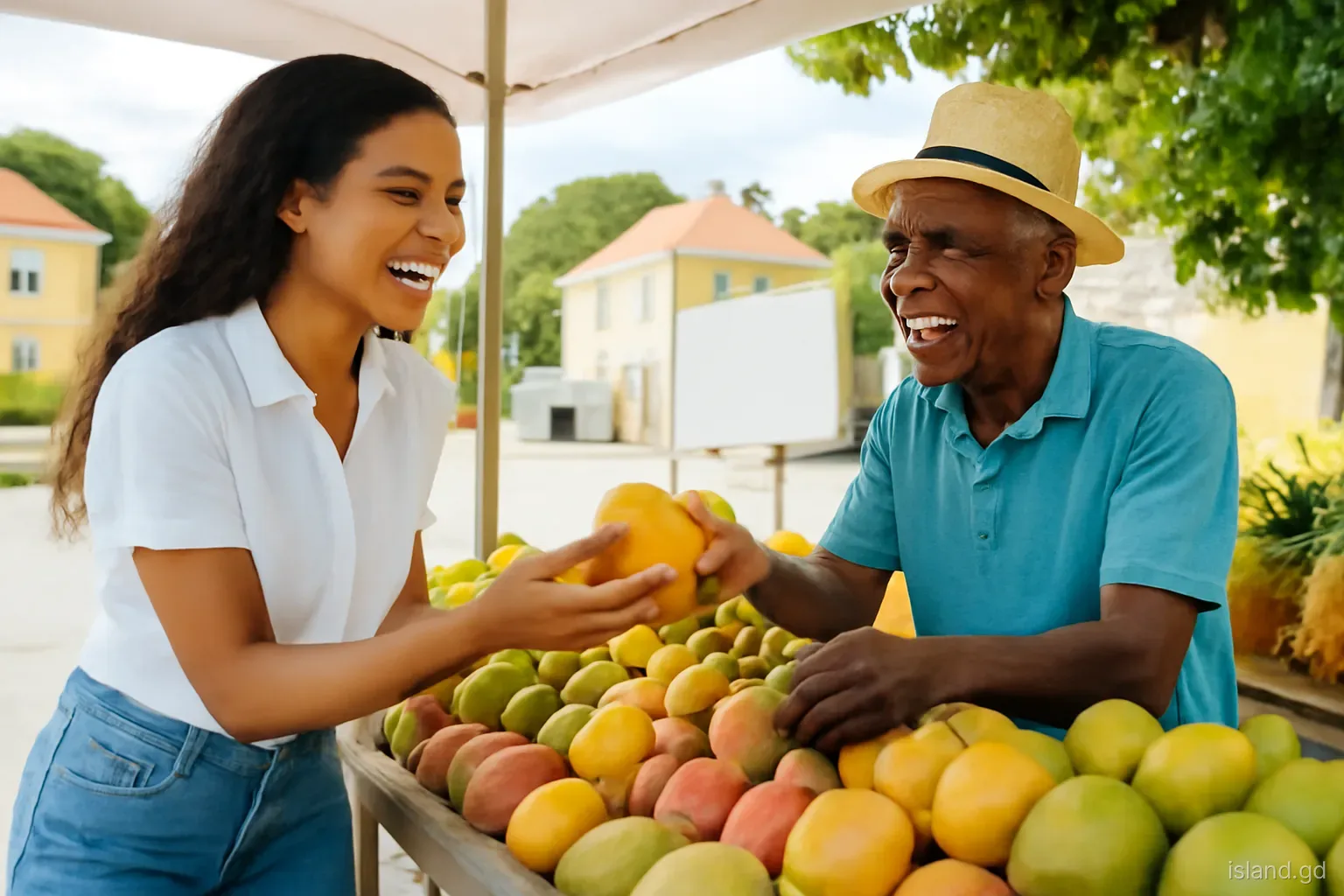
Gardening in Grenada is rarely a solitary activity. Neighbours share surplus fruit and vegetables, swap seedlings and cuttings, and give advice freely. A bag of mangoes or a bunch of bananas offered over the fence is one of the quickest ways to build goodwill. In mango or breadfruit season, giving away fruit that would otherwise rot is normal.
Older neighbours often have deep knowledge of what grows well in the area, when to plant and which varieties are best. Asking for advice is welcomed. The Ministry of Agriculture's extension services and local agricultural stations can provide guidance, planting material and information on pests and diseases; enquire locally about what is currently offered.
Local markets and roadside vendors sell seedlings, fruit tree saplings and seeds. Choosing locally adapted varieties usually gives better results than imported seeds, which may not suit Grenada's climate or day length.
Frequently asked questions
What fruit trees grow well in Grenada?
Mango, breadfruit, golden apple, avocado, citrus, soursop, sugar apple, plum, coconut and banana all grow well. Choice depends on space, soil and rainfall. Grafted trees fruit sooner and stay smaller, which suits limited yards.
When is the best time to plant in Grenada?
Most seasonal crops and fruit trees are best planted at the start of the rainy season, around May or June, when soil moisture is reliable. Sorrel is planted mid-year to flower before Christmas. Dry season planting needs regular watering.
Can vegetables be grown on Carriacou?
Yes, but Carriacou is drier than the mainland, so water is the main challenge. Rainwater collection, mulching, drip irrigation and drought-tolerant crops help. Many residents grow peas, corn, peppers and fruit trees, timing planting carefully with the rains.
What is praedial larceny?
Praedial larceny is the theft of agricultural produce and livestock. It is a recognised problem in Grenada and other Caribbean countries, affecting farmers and home gardeners alike. Good fencing, prompt harvesting and good neighbour relations reduce the risk.
Why are pigeon peas linked to Christmas in Grenada?
Pigeon peas planted with the rains in mid-year typically mature around the end of the year. Fresh green pigeon peas are a traditional part of Christmas meals, cooked with rice or in stews, so the crop and the season are closely linked.