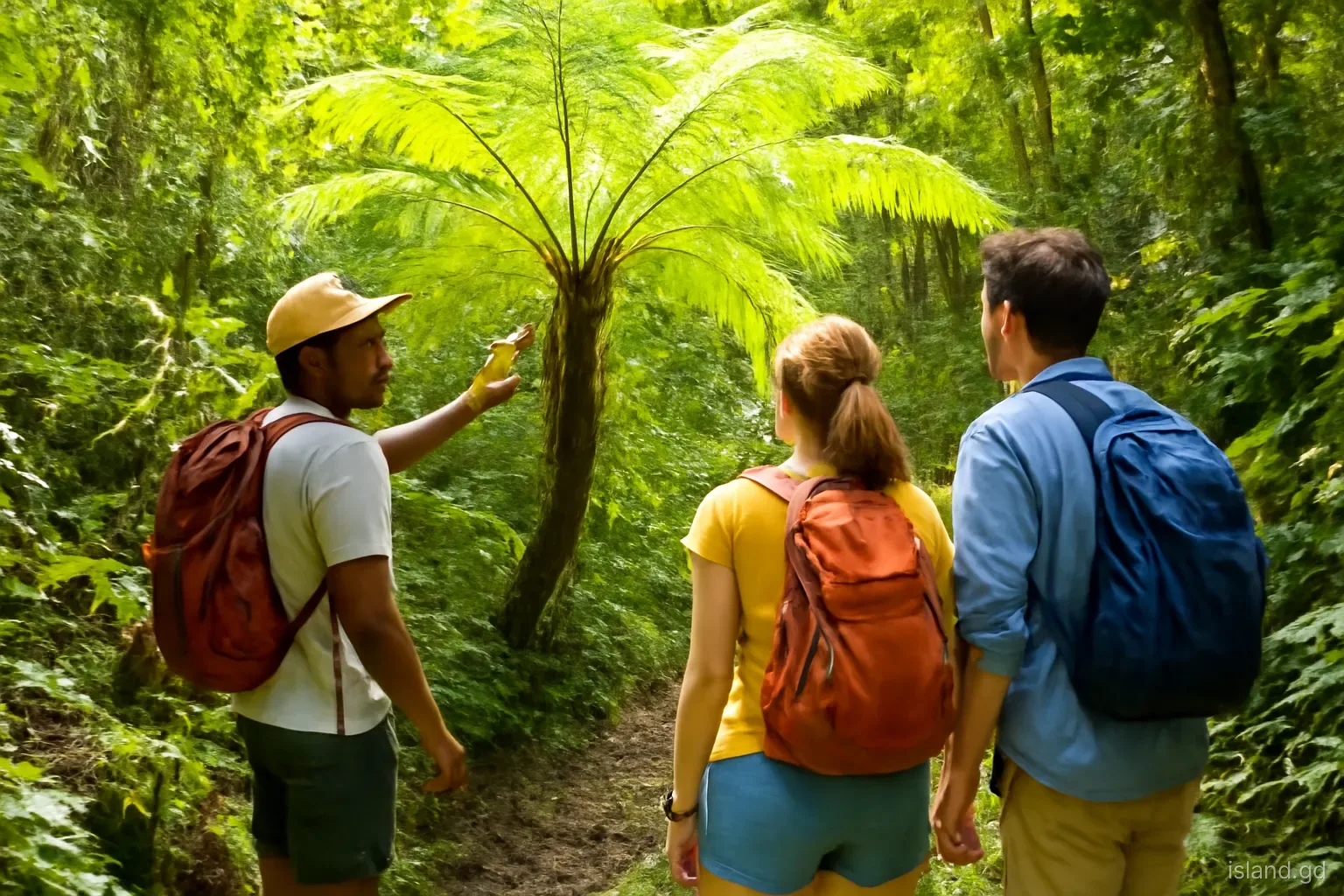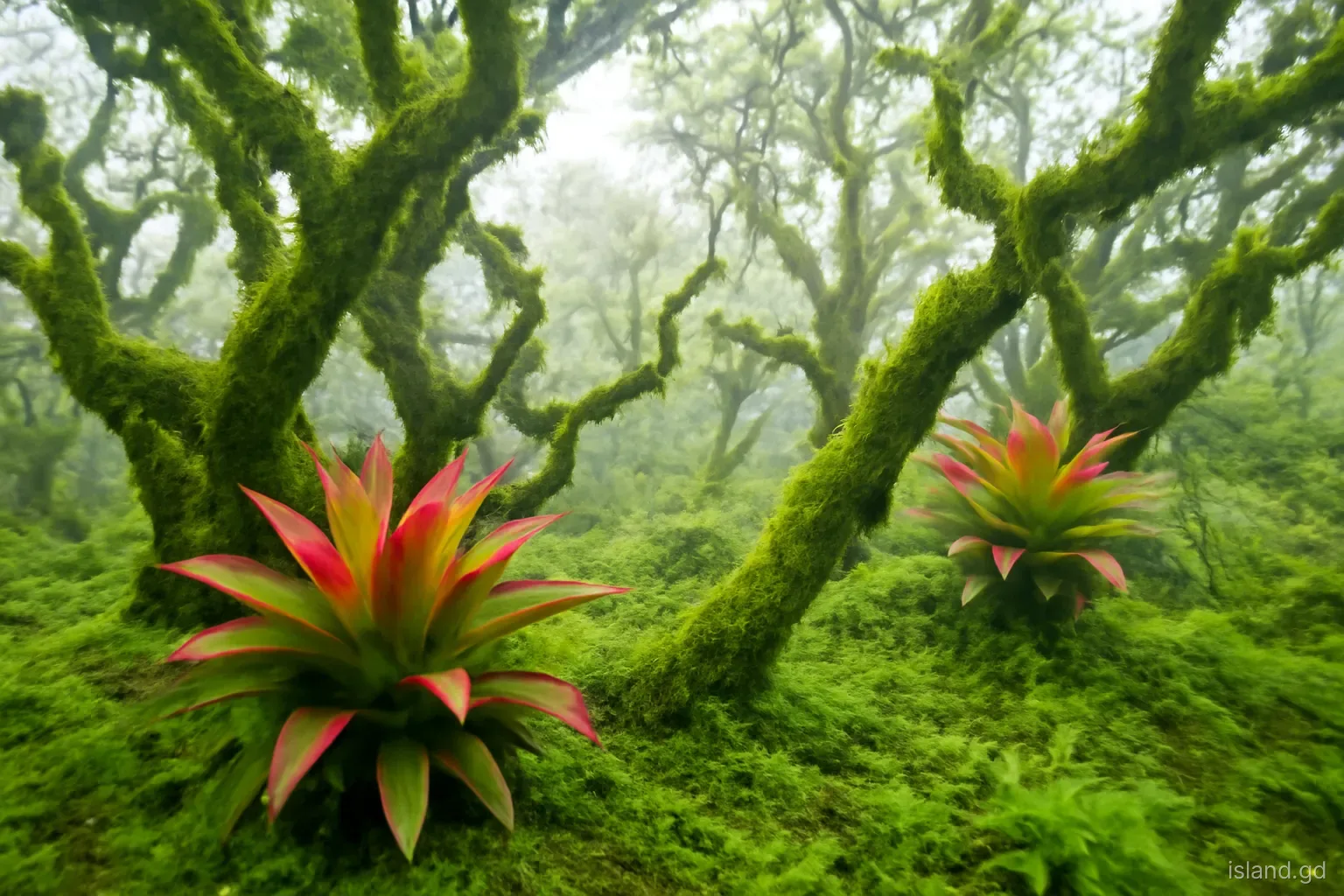
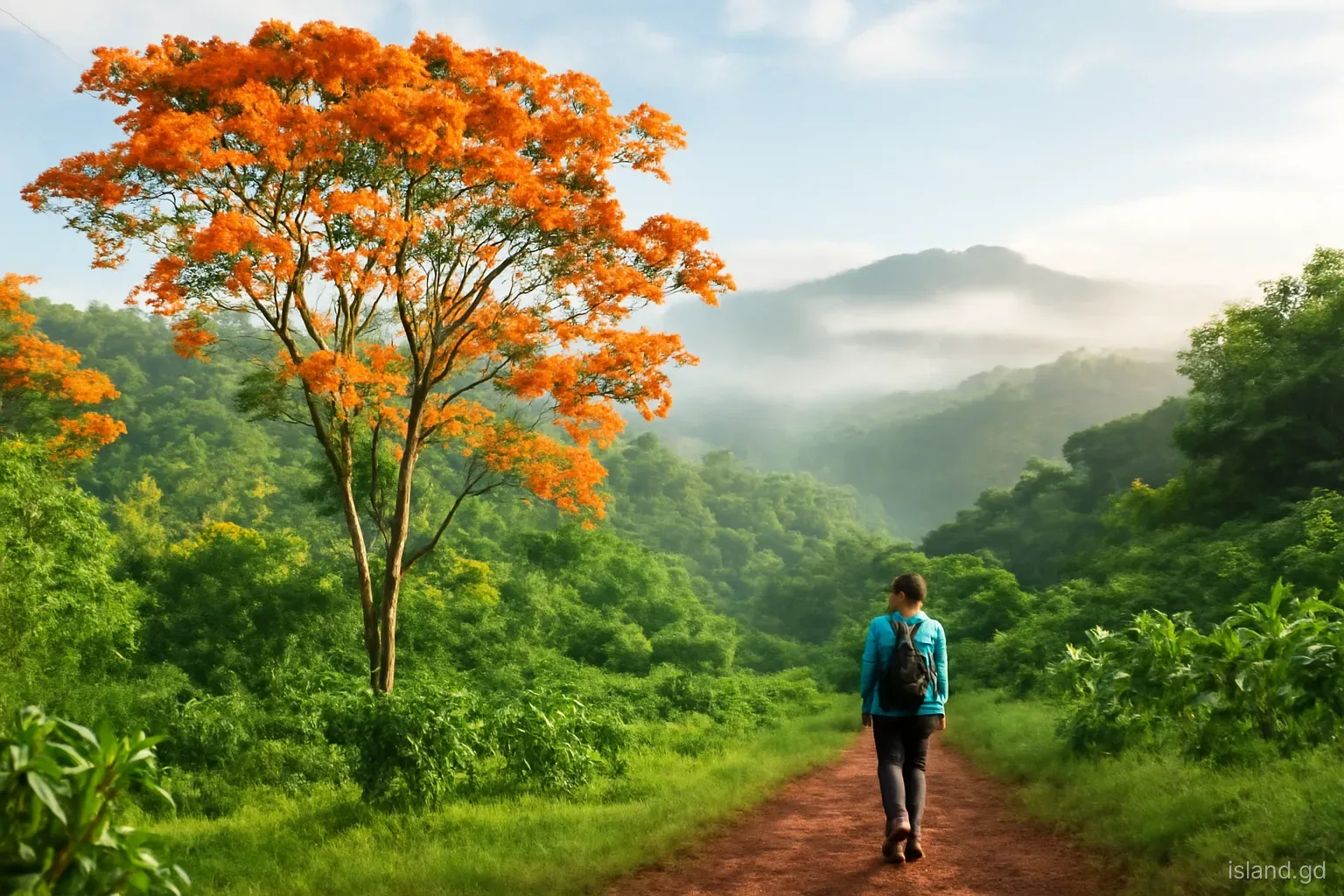
Grenada's interior does not have one face. The forests around Grand Etang, Mount Qua Qua and Mount St Catherine look and feel different from month to month, as the island swings between a dry season, roughly January to May, and a rainy season, roughly June to November. Even in the driest months, the mountains catch far more rain than the coast, but the amount, the state of the trails, the flow of the rivers and what is flowering all shift through the year.
Choosing when to visit the rainforest is less about good and bad seasons than about matching the forest to what you want: clear views from the ridges, roaring waterfalls, flowering trees, birdsong or quiet trails. This guide walks through the year from the forest's point of view and explains what changes, what to expect underfoot and which months suit which kinds of visit. Patterns vary from year to year, so treat the months as tendencies rather than guarantees.
January to March: clearer ridges and flowering immortelles
The early months of the year bring the steadiest trade winds and the lowest humidity. In the interior, cloud still forms over the peaks, but there are more clear spells, and mornings often give long views from viewpoints and summits. This is the most popular time for climbs such as Mount Qua Qua and Mount St Catherine, partly because trails dry out between showers and partly because it coincides with the main tourist season.
One of the sights of these months is the flowering of the immortelle trees, tall trees with bright orange flowers that were planted in the past to shade cocoa. Seen across the valleys of the interior and on the slopes above old cocoa estates, they mark the landscape with patches of colour during the dry season. Other trees and shrubs also flower, and the forest edges along roads and trails are busy with hummingbirds and bananaquits feeding on nectar. Rain still falls in the mountains, sometimes heavily, so a waterproof layer remains essential.
April and May: the driest weeks and the lowest water
By April and May, the dry season reaches its peak. The coastal lowlands and the smaller islands of Carriacou and Petite Martinique turn brown, and even in the mountains streams run lower than at any other time. For walkers this is often the easiest period: paths are firmer, river crossings are shallower and the risk of being caught by a flash flood is lower. Views can be excellent on clear days, although heat and haze, including Saharan dust carried across the Atlantic, can soften distant horizons.
The trade-off is that waterfalls lose some of their power. Annandale, Concord and the Seven Sisters still flow, but the volume can be much reduced compared with the rainy season, and some smaller cascades shrink to a trickle. Bush fires are a risk in dry lowland areas at this time of year, though the high rainforest rarely burns. If your aim is hiking and views, these months work well; if your aim is waterfall photography, the second half of the year may suit better.
June to August: the rains return
Greener, louder, wetter. The rainy season begins in earnest around June. Showers become more frequent and heavier, often in the afternoon, and the forest flushes with new growth. Frogs call loudly in the evenings and streams rise.
Waterfalls at their best. As the season progresses, waterfalls regain their volume. Concord, Annandale and the Seven Sisters become more impressive, though pools can be murky after heavy rain and currents stronger.
Mud and slippery paths. Clay soils turn slick quickly. Trails that are easy in April can become challenging, and steep sections may need careful footwork or a hand on roots and branches.
Tropical waves. Passing tropical waves bring spells of heavy rain and gusty wind. Trail plans should be flexible around forecasts.
Quieter trails. Visitor numbers are lower than in the winter peak, apart from the August carnival period, so popular trails can feel almost empty on weekdays.
September to November: peak rains and hurricane caution
The heart of the rainy season and the peak of hurricane season coincide in September and October. Rainfall in the mountains can be very heavy, and prolonged downpours raise the risk of landslides on steep slopes and roads, flash floods in narrow valleys and trees falling across paths. After a significant storm or heavy rain event, trails may be closed, damaged or blocked for some time, and forestry officials may advise visitors to stay away from certain areas. Hurricane Ivan in 2004 flattened large parts of the forest canopy around Grand Etang, showing how much a single storm can change the landscape.
That said, many days in these months are perfectly good for a visit, with sunshine between showers and an extraordinarily lush forest. The key is caution: check forecasts and local advice, avoid river valleys and waterfall pools when heavy rain is falling or forecast upstream, and go with a guide on anything more than a short walk. By November, rainfall often begins to ease, the forest is at its greenest and the dry season's clearer days lie just ahead.
Wildlife through the year
The forest's animals follow the seasons too. Between roughly October and April, migrant birds from North America, including warblers and other small songbirds, join Grenada's resident species, and keen birders find the forest edges and clearings at their most varied in these months. Resident birds such as hummingbirds, tanagers and thrushes are present all year, with much singing and nesting activity as the rains return and food becomes plentiful.
Mona monkeys are seen year-round around Grand Etang, most often in the early morning and late afternoon, when they move and feed more actively. In the rainy season, frogs become far more vocal, and the night-time chorus in the interior can be loud. Butterflies and other insects are especially abundant in the wetter months. Whatever the season, the best wildlife watching comes from starting early, moving quietly and stopping often; most animals in the forest notice walkers long before walkers notice them.
Matching the season to what you want
There is no single best month for the rainforest. These pairings are a useful starting point:
- Summit views and long hikes: February to May, starting early in the morning, when trails are driest and cloud is most likely to lift.
- Waterfalls with full flow: July to November, choosing a dry spell between rain events and avoiding pools after heavy rain.
- Flowering trees and nectar-feeding birds: the dry season, roughly January to April, when immortelles and other trees bloom.
- Quiet trails and lush scenery: June, early July and November, outside the busiest tourist and carnival periods.
- Easiest family walks: the dry season, on short, well-used trails such as those around the Grand Etang visitor centre.
- Photography of mist and atmosphere: any time, but especially in the rainy season, when cloud drifts through the forest and across Grand Etang Lake.
Year-round realities and mistakes to avoid
Whatever the month, some things stay constant. It can rain in the mountains on any day of the year, and conditions can change within half an hour. Temperatures in the interior are cooler than on the coast, and after a soaking, wind on an exposed ridge can make you surprisingly cold. Sunset comes around six in the evening year-round, and the forest gets dark quickly, so start walks early and plan to be out well before dusk.
The most common seasonal mistake is assuming that a trail described as easy in one month will be easy in another. A route that is a pleasant stroll in April can be a muddy scramble in October. Another is ignoring rain upstream: a river crossing that looks calm can rise rapidly if heavy rain has fallen higher up. Ask locally about recent conditions, carry water and a light layer, wear footwear with real grip and accept that turning back is sometimes the right decision.
Frequently asked questions
What is the best month to visit Grand Etang?
For clear views and drier trails, February to May tends to be best, ideally in the morning. For a lush, misty atmosphere and full streams, the rainy season from June to November has its own appeal. Rain is possible at any time of year in the mountains, so always carry a waterproof layer.
Are Grenada's waterfalls better in the rainy season?
Waterfalls such as Concord, Annandale and the Seven Sisters generally flow more strongly in the rainy season, roughly June to November. However, heavy rain can make pools murky, currents strong and paths slippery, and flash floods are a risk. Visit on a dry spell between rains and follow local advice.
Is it safe to hike in Grenada during hurricane season?
Many days in hurricane season are fine for hiking, but heavy rain raises the risk of landslides, flash floods and fallen trees. Check forecasts, avoid river valleys during heavy rain and follow advice from forestry officials and guides. After a storm, trails may be closed or damaged for some time.
When do the immortelle trees flower in Grenada?
Immortelle trees, planted in the past to shade cocoa, usually flower in the dry season, roughly from January to March or April. Their bright orange blossoms stand out across valleys and estate slopes in the interior. Timing varies from year to year with rainfall and temperature.
How cold does it get in Grenada's rainforest?
It does not get truly cold, but the mountains are noticeably cooler than the coast, especially at Grand Etang and on the summits. Rain, wind and wet clothing can make it feel chilly. A light, breathable rain jacket and a spare dry layer are enough for most visits.