
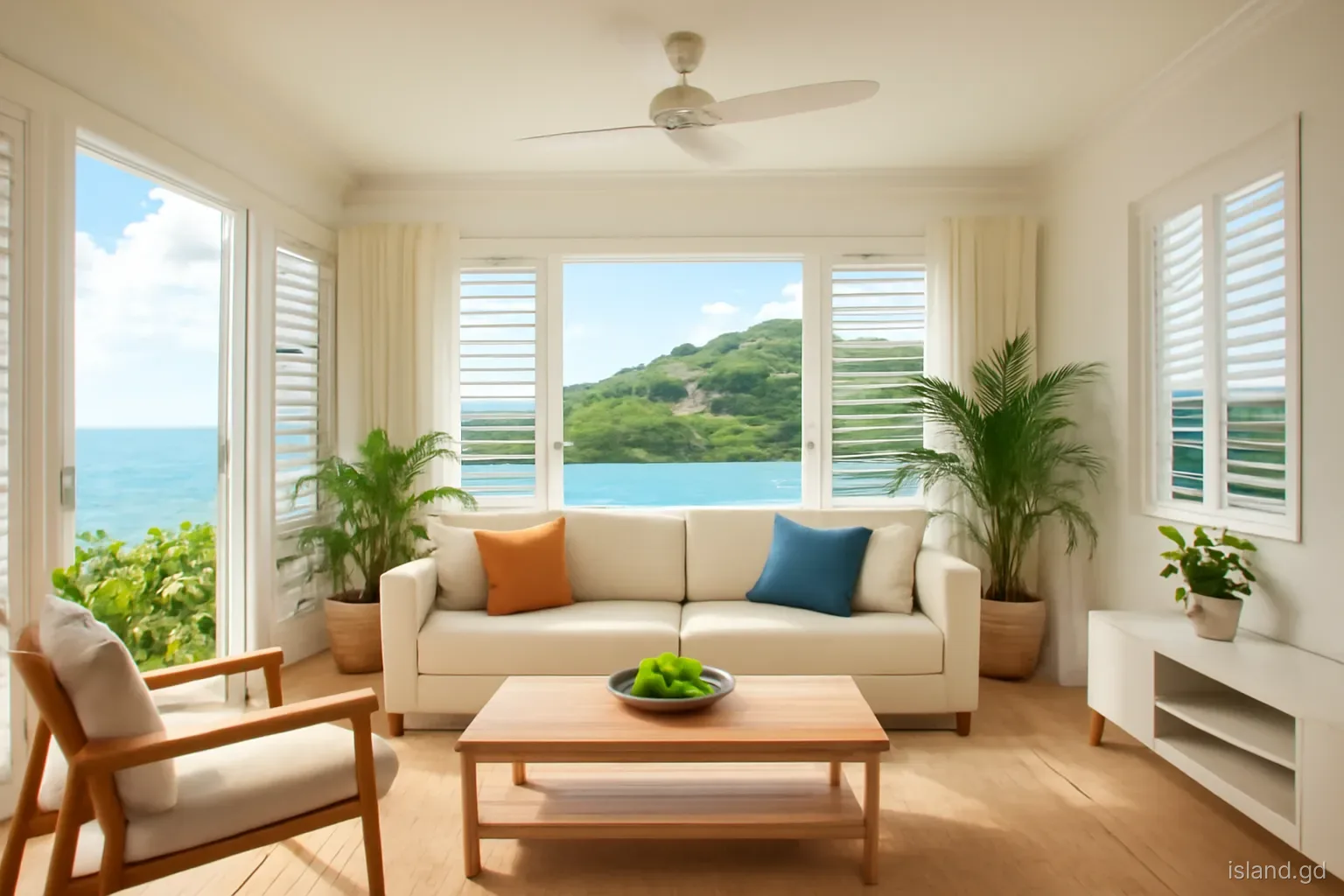
Island living looks effortless in photographs: open windows, sea breezes, bare feet on cool tiles. The reality includes a constant battle with heat, humidity, salt and insects. Shoes grow mould in the wardrobe, laptops and air conditioners corrode, ants find the sugar within an hour, termites quietly eat a bookshelf and mosquitoes arrive at dusk.
None of this is a reason not to move to Grenada, and residents learn to manage it with simple habits. But newcomers who arrive unprepared often lose belongings, spend money on repairs and feel overwhelmed in their first rainy season. This guide sets out what the climate does to homes, possessions and bodies, and the practical routines that help.
Heat and humidity
Grenada is hot all year, with daytime temperatures typically in the high twenties to low thirties Celsius and only a little cooler at night. Humidity is high, especially in the rainy season, roughly June to December, when the air can feel heavy and still. The trade winds provide relief, which is why houses are traditionally built to catch the breeze, with high ceilings, louvred windows and verandas.
For newcomers, the first months can be draining. Drink plenty of water, more than you think you need, and add electrolytes on hot days or after exertion. Plan physical work and exercise for early morning or late afternoon. Lightweight, loose clothing in natural fabrics helps, and a hat and sunscreen are essential: the sun is strong at this latitude.
Air conditioning is common in newer homes and bedrooms, but it is expensive to run given the cost of electricity. Ceiling fans, good cross-ventilation, shade from trees and verandas, and light-coloured roofs reduce reliance on it. Many long-term residents find they adapt and use air conditioning mainly for sleeping.
Mould and damp
Mould is the most persistent household problem, particularly in the rainy season and in houses in wetter areas such as the interior and the hills. It grows on leather shoes and bags, clothing in closed wardrobes, books, mattresses, walls and ceilings, and it can affect health, especially for people with asthma or allergies.
Prevention is about air movement and dryness. Keep wardrobes and cupboards ventilated, leaving doors slightly open or fitting louvred doors. Use moisture absorbers or silica gel in closed spaces, and run a dehumidifier or air conditioning in rooms where valuables are stored. Store important documents and electronics in sealed plastic boxes with desiccant.
Dry laundry thoroughly before putting it away, and air out clothes, shoes and bags regularly. Clean mould early with a vinegar or appropriate cleaning solution before it spreads. When renting or buying, check for signs of damp: stains on ceilings, musty smells, peeling paint and dark patches in corners.
Salt air and corrosion
What it attacks. Salt-laden air near the coast corrodes metal remarkably quickly: car bodies, air conditioning units, appliances, electronics, door hinges, window fittings, roofing screws and outdoor furniture.
Electronics. Laptops, phones and televisions can fail sooner than expected near the sea. Keep them in air-conditioned or enclosed rooms where possible, and use surge protectors, which also protect against power fluctuations.
Cars. Wash vehicles regularly, especially the underside, and treat rust early. Cars kept close to the sea deteriorate faster.
Building materials. For construction and renovations, choose marine-grade stainless steel, galvanised or coated fittings, and paints designed for coastal conditions. Cheap metal fixtures may rust within months.
Air conditioners. Outdoor units suffer badly from salt. Regular servicing and cleaning extend their life, and coastal-rated models are worth the extra cost.
Distance matters. Houses on the waterfront or on exposed headlands face far more corrosion than those a little inland or sheltered from the prevailing wind.
Insects and other household visitors
Ants are everywhere and find food fast. Store sugar, flour, cereals and snacks in sealed containers, wipe surfaces after cooking and do not leave dishes in the sink overnight. Some ants bite or sting; fire ants in particular can give painful stings in gardens.
Termites are a serious threat to wooden structures, furniture and books. Both drywood and subterranean termites are present. Look for small piles of droppings, mud tubes on walls or hollow-sounding wood, and have properties inspected and treated by a professional. Choose treated or termite-resistant timber for construction.
Cockroaches are common, especially in older buildings and during the rainy season. Good hygiene, sealed bins and baits help. Centipedes and scorpions occasionally come indoors; shake out shoes, towels and clothes left on the floor, and wear gloves when moving wood or stones outside.
Geckos and small lizards in the house are helpful, eating insects, and are best left alone.
Choosing and adapting a home for the climate
Much of the struggle with heat and damp can be reduced by choosing the right home. Houses that catch the trade winds, usually from the east, stay cooler and drier. Cross-ventilation, high ceilings, wide eaves that shade walls and windows, and a veranda make a big difference. Homes in sheltered hollows or surrounded by dense vegetation tend to be hotter and damper.
When viewing a property, check the roof and gutters, the condition of window frames and metal fittings, signs of termite damage and evidence of leaks or mould. Ask about water storage, backup power and how the house fared in recent storms. Ground-floor rooms below a slope may suffer from damp seeping through walls.
Simple changes help an existing home: adding screens, installing ceiling fans, painting roofs a light colour, improving drainage around foundations and replacing cheap metal fittings with corrosion-resistant ones. A well-maintained concrete house with good ventilation, sound roofing and adequate water storage is the most comfortable and resilient choice for most residents.
Mosquitoes, sandflies and health
Mosquitoes are a health issue as well as a nuisance. Grenada has experienced outbreaks of dengue fever, and chikungunya and Zika have also affected the region in past years. The mosquito species that spreads these diseases breeds in small amounts of standing water around homes and bites mainly during the day.
- Remove standing water weekly: empty plant saucers, buckets, old tyres, blocked gutters and anything that collects rain.
- Cover water storage tanks and barrels securely, and fit mesh to overflow pipes.
- Fit window and door screens, and use bed nets or air conditioning at night if mosquitoes are a problem.
- Use insect repellent, especially in the early morning and late afternoon, and wear long sleeves in high-risk times.
- Sandflies, tiny biting insects, are active at some beaches and mangrove areas around dawn and dusk. Repellent and long clothing help.
- Seek medical advice promptly for fever, severe headache, joint pain or rash, particularly during dengue outbreaks, and avoid self-medicating with aspirin or ibuprofen until dengue has been ruled out.
Storms, dust and the wider climate
Hurricane season runs from June to November. While storms are not an annual certainty, every household needs a plan: secure roofing, shutters or plywood for windows, stored water and food, a battery radio, torches and important documents in waterproof storage. Hurricane Ivan in 2004 and Hurricane Beryl in 2024 showed how severe the impact can be.
Saharan dust arrives periodically, mainly in the middle of the year, turning skies hazy and affecting people with respiratory conditions. Keeping windows closed on heavy dust days and wiping surfaces more often helps.
On parts of the Atlantic coast, rafts of sargassum seaweed wash ashore in some years. As it rots it gives off hydrogen sulphide, with a smell of rotten eggs, which can tarnish metal and electronics in nearby homes and bother people with breathing problems. If you are considering a house on the east coast, ask neighbours how often the bay is affected.
Heavy rain can cause flooding, landslides on hillsides and road closures, particularly in the interior and on steep slopes. When choosing a home, consider drainage, slope stability and access roads, and avoid building or renting in obvious flood paths or below unstable banks. Power and water interruptions also happen, especially after storms, so backup water storage and a plan for outages are sensible in any home.
Frequently asked questions
How do you stop mould in a house in Grenada?
Keep air moving with fans and ventilation, use moisture absorbers or dehumidifiers in closed spaces, dry laundry fully, store valuables in sealed containers with desiccant, and clean mould early. Air conditioning in storage rooms helps during the wettest months.
Does salt air damage electronics in Grenada?
Yes. Salt air near the coast can corrode electronics, appliances and air conditioning units faster than in drier climates. Keep devices in enclosed or air-conditioned rooms, use surge protectors and service outdoor units regularly. Homes further from the sea suffer less.
Are termites a problem in Grenada?
Termites are a common and serious problem for wooden structures and furniture. Look for droppings, mud tubes and hollow wood. Professional inspection and treatment, along with treated or resistant timber in construction, are the best protection.
Is dengue a risk in Grenada?
Dengue occurs in Grenada, with outbreaks in some years. The mosquito that carries it breeds in standing water around homes and bites during the day. Removing standing water, using repellent and screens, and seeking medical care promptly for fever reduce the risk.
How hot does it get in Grenada?
Daytime temperatures are typically in the high twenties to low thirties Celsius year-round, with high humidity, especially from June to December. Nights are only slightly cooler. Trade winds and shade make conditions more comfortable, particularly at higher elevations and on breezy coasts.