
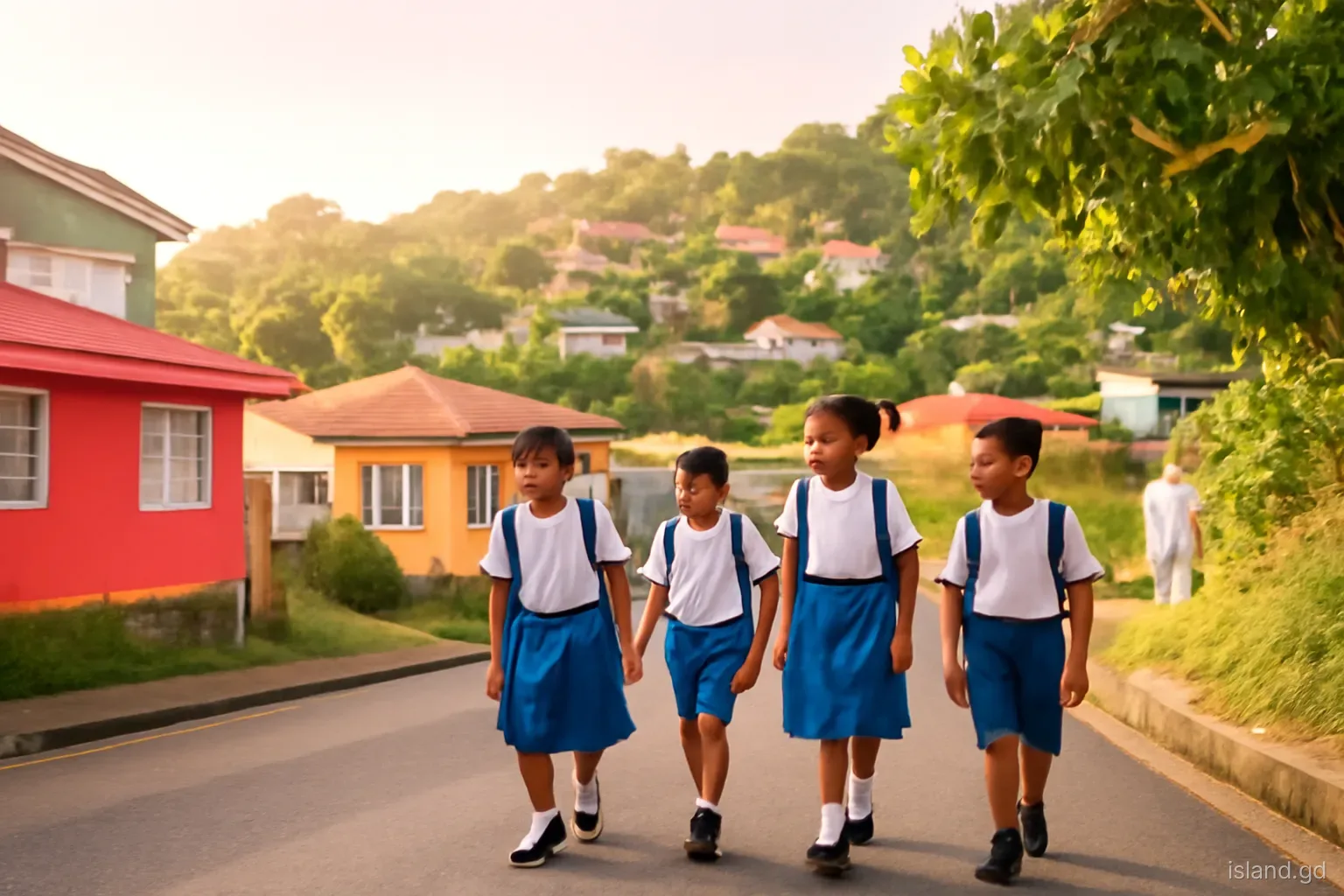
In a Grenadian village the day starts before the sun. The roosters begin in the dark, the first route buses rattle down the hill before six, and by the time the light comes up over the ridge, kettles are on and school shoes are being polished. Life follows the light and the heat: a busy early morning, a slower middle of the day, and an evening that belongs to the street, the step and the rum shop.
Sunrise and sunset change little through the year this close to the equator, around six o'clock in the morning and between six and half past six in the evening, which gives the day a steady shape. What follows is a portrait of that rhythm as it plays out in villages from St Patrick to St David, and what it means for anyone who comes to live in one.
Before six: roosters, kettles and the first bus
Village mornings are loud. Roosters crow from about four, dogs answer each other across the valley, and as soon as there is light the birds start. Most households are up by half past five. Many people take tea first thing, and in Grenada "tea" can mean any hot drink: cocoa tea made from a grated cocoa ball, bush tea from leaves in the yard, or a cup of instant coffee.
Work starts early to beat the heat. Farmers head to their land at first light, carrying a cutlass and a bag, and may be back by late morning having done the hardest work of the day. Construction workers gather at the roadside to wait for transport. Those working in St George's, the south or Grenville catch an early route bus, because traffic into town builds quickly and the buses fill up.
Breakfast may be bakes or bread with saltfish, buljol, cheese or egg, or simply bread and butter with tea. In many homes, the cooking for the day is also started early, when the kitchen is cooler.
Morning: school runs, buses and errands
From about seven, the roads fill with children in school uniforms, each school with its own colours, walking in groups, waiting at bus stops or squeezed into family cars. School usually begins around eight, and the sight of neatly pressed uniforms on dusty village roads is one of the defining images of a Grenadian morning.
Route buses are the backbone of village transport. They run from early morning, with music playing and a conductor calling out the destination, and they will stop almost anywhere along the route when hailed. In more remote villages, services thin out after the morning rush, so people plan trips around them.
Mid-morning is for errands. The village shop does steady business in bread, rice, cooking gas and phone top-up. People head to the health centre, the post office or the bank in the nearest town. Those who stay at home do washing early so it dries before afternoon showers, and the clothes lines along the hillside fill up.
Midday: heat, shade and the lunch hour
The pace drops. By late morning the sun is fierce, and the village slows. Outdoor work pauses, animals move into shade and the roads quieten. This is not idleness but a sensible response to the heat.
Lunch is the main meal for many. A hot lunch, often rice or provisions with stewed meat, fish or chicken, lentils and salad, is common. Workers in towns buy lunch boxes from cookshops; at home, the pot started in the morning is ready.
The fish vendor. In coastal villages, fresh fish may arrive by pickup truck or van, sometimes announced by a horn or a call, and people come out with bowls to buy. In some places the vendor blows a conch shell, an old practice that still survives here and there.
The veranda. Older residents spend the hottest hours on the veranda or under a mango tree, watching the road, greeting passers-by and keeping track of village life.
Rain. In the wet season, a sudden afternoon downpour can stop everything for half an hour. People wait under shop awnings and verandas until it passes, and conversation fills the gap.
Afternoon: school out, sport and the second wind
From around three, schoolchildren pour back onto the roads. They stop at the shop for snacks, walk home in groups, and later change out of uniform to play. The village playing field comes alive: cricket in the dry season, football at other times, and small children in every direction.
Adults returning from work arrive on crowded buses in the late afternoon. As the heat eases, people come back outside. Gardens are watered, animals moved, and yard work done. Goats and sheep tethered on verges are brought in, and chickens head for their roosts.
This is also when many villages hold their meetings, practices and gatherings: church groups, steel band or drumming practice, sports training, and community committees. In the run-up to Carnival, festivals or a village celebration, evenings may be filled with preparation.
Evening: the step, the rum shop and the night
Darkness falls quickly between six and half past, and the evening has its own sound: the whistling frogs, crickets, televisions, music from a passing car and voices from the road. Families eat a lighter evening meal, and many sit outside on the step or veranda to catch the breeze and talk to neighbours.
The rum shop is the village's informal community centre. Men, and some women, gather to drink a flask of rum or a beer, play dominoes with loud slaps of the tiles, argue about cricket and politics, and catch up on news. Dominoes in particular is played with great seriousness and noise.
Church services, prayer meetings and choir practices fill some evenings. On weekends, a fete, a village dance, a fundraiser barbecue or a funeral wake may keep the village up late. On ordinary weeknights, though, most villages are quiet by ten, since the morning will start early again.
Saturdays are different
Saturday breaks the weekday pattern. With no school and many people off work, the morning is for chores and shopping: houses are cleaned, cars washed, yards swept and laundry hung out early. Many people go to the market in the nearest town for fresh produce, meat and fish, or to the supermarket to stock up before Sunday, when most shops close.
Saturday food has its own traditions. In many places it is a day for a pot of soup, souse or a heavier breakfast, and roadside vendors sell barbecue and snacks from the afternoon. Sports matches, village cricket and football, and community events often take place on Saturday afternoons.
Saturday night is the main night out. Fetes, dances, barbecues and parties draw people from surrounding villages, and music can carry across the valley until late. For Seventh-day Adventist families, though, Saturday is the Sabbath, observed from Friday evening to Saturday evening with church and rest, a reminder that even a small village contains more than one rhythm.
What newcomers to a village should know
Living in a Grenadian village is very different from living in a resort area or the south-coast suburbs. A few realities are worth knowing in advance.
- Expect noise: roosters before dawn, dogs at night, music on weekends and church loudspeakers on Sundays. Earplugs help in the first months.
- Greet everyone you pass. Villages notice who says good morning and who does not, and reputations form quickly.
- Learn the bus schedule. In rural areas, missing the last bus can mean a long walk or an expensive taxi.
- Support the village shop and local vendors. Small purchases build goodwill and local knowledge.
- Accept that privacy is limited. Neighbours will know when you leave, who visits and what is delivered.
- Join in: attend a village event, contribute to a fundraiser and show up at funerals of people you knew. Belonging is earned by participation.
Frequently asked questions
What time does the day start in a Grenadian village?
Very early. Roosters often crow from about four in the morning, and most people are up by half past five or six. Farmers and workers start early to avoid the midday heat, and school runs and buses are busiest between seven and eight.
What is a rum shop in Grenada?
A rum shop is a small neighbourhood bar, often attached to a shop or house, where people drink rum or beer, play dominoes, and talk. It works as an informal social centre, especially for men, and is a good place to hear local news.
Is village life in Grenada noisy?
Often, yes. Roosters, dogs, music, passing buses and church services all contribute. Nights are usually quieter, filled with frog and insect sounds. Many newcomers find the noise takes a few weeks to get used to.
Do route buses reach every village in Grenada?
Most villages on the mainland are served by route buses, but frequency varies a great deal. Services are best in the mornings and late afternoons on main routes. Remote villages may have limited buses after the morning rush and on Sundays.
What do Grenadians eat for breakfast?
Common breakfasts include bakes or bread with saltfish, buljol, egg or cheese, often with cocoa tea or bush tea. On weekends, a heavier breakfast with fried fish or provisions is common. Habits vary by household and by how early people start work.