On an island of around 2.4 square kilometres and roughly a thousand people, every service has to be thought about differently. There is no supermarket of the mainland kind, no hospital, no secondary school, no airport and no bank on the scale of Carriacou's. Yet Petite Martinique functions, and has done so for generations, by combining a small set of local services with constant boat links to Carriacou and Grenada.
Understanding how this works helps anyone planning a longer stay, considering a move or simply curious about how small-island life operates. It also explains why the island's people are so focused on reliable sea transport, water and power.
This article looks at the practical side of daily life: schooling, health care, utilities, shopping and getting around. Hurricane Beryl in July 2024 disrupted almost all of these services, and some were still recovering afterwards, so treat specific arrangements as something to confirm locally.
Schooling
Petite Martinique has a primary school, which serves the island's children from their early years until they move on to secondary education. With a small population, classes are small, and the school is a centre of community life, hosting events and serving other functions when needed.
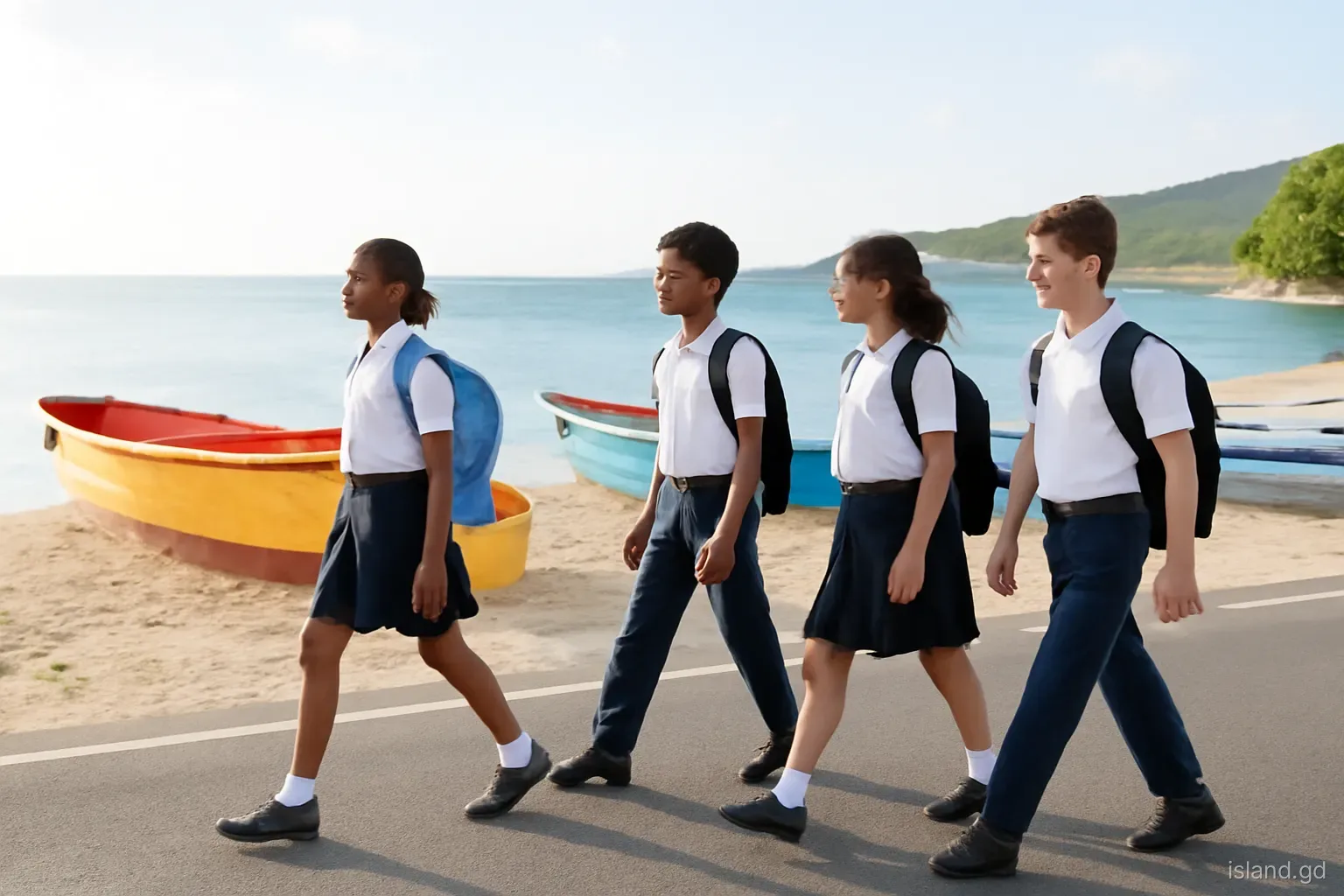
There is no secondary school on the island. Students travel to Carriacou to attend secondary school, which means a daily boat crossing or other arrangements depending on the family and the period. This makes reliable, affordable sea transport an educational issue as well as an economic one, and parents and community leaders have long pressed for safe, regular crossings for students.
For further and tertiary education, young people usually go to Grenada's main island, for example to the T.A. Marryshow Community College, or overseas. Many do not return to live permanently, which is one reason the island's population has stayed small and its diaspora large.
Health care
The island has a health facility staffed for primary care, offering clinics, basic treatment and maternal and child health services, with visiting doctors and nurses as arranged by the Ministry of Health. It handles routine needs but not serious emergencies, specialist care or major investigations.
For anything more serious, patients go to Carriacou, where the Princess Royal Hospital in Belair is the main hospital for the sister islands; Beryl damaged its facilities in 2024, so services may be limited. Critical cases may then be transferred to the General Hospital in St George's on the main island, by sea or air depending on circumstances. Every step of that chain depends on weather and transport.
For residents and visitors alike, the practical advice is the same: bring an adequate supply of any medication you take, carry a basic first-aid kit and know that emergency help may take time to arrive. Travel insurance that covers medical evacuation is strongly recommended for visitors. In an emergency, the national emergency number is 911.
Water and electricity
Rainwater first. Most homes collect rainwater from their roofs into cisterns, a system that has served the Grenadines for centuries. A full cistern at the start of the dry season is a household's security; a cracked one is a crisis.
Desalination. Desalination plants have been used to supplement rainwater, turning seawater into drinking water. They need power and maintenance, and the island's supply was badly disrupted when Beryl damaged equipment in 2024.
Saving water. Short showers, careful use of taps and reusing water where possible are normal habits on Petite Martinique. Visitors should follow them, especially in the dry months.
Electricity. Grenada Electricity Services (Grenlec) supplies power across Grenada, Carriacou and Petite Martinique. Outages after storms can be long on the sister islands, and many residents keep generators or have installed rooftop solar with batteries.
Communications. Mobile and internet services are provided by the main regional telecoms companies. Coverage was knocked out by Beryl and restored in stages. Near the border, phones can pick up networks from St Vincent and the Grenadines, so check roaming settings.
Shopping and supplies
Petite Martinique's shops are small, general stores selling groceries, drinks, household goods and hardware. Fresh produce is limited, because little is grown locally, and stock depends on deliveries. Fish, lobster and lambi come straight from local boats and are the island's freshest food.
Most goods arrive by sea, either on the passenger ferry, on cargo boats or on residents' own boats bringing supplies from Carriacou or Grenada. Prices are higher than on the main island to cover transport. Residents often stock up when they travel and rely on relatives to send goods. Barrels shipped from relatives abroad, filled with food, clothes and household items, are a familiar part of island life.
For visitors, this means bringing any special foods, toiletries or other items you cannot do without, carrying enough cash in Eastern Caribbean dollars, and accepting that choices will be narrower than you are used to. It also means that a shop's stock varies from week to week.
Getting around and away
Petite Martinique's connections to the outside world are almost entirely by sea, and life is organised around them:
- On the island. A road runs around much of the coast. Many people walk; there are some private vehicles. Distances are short, and nowhere is far from the sea.
- To Carriacou. The passenger ferry from St George's calls at Petite Martinique on its route via Carriacou, and local boats and water taxis cross between the island and Windward on Carriacou's north-east coast.
- To Grenada. The passenger ferry links Petite Martinique with St George's via Carriacou. From Carriacou, small planes also fly to Maurice Bishop International Airport on the main island.
- Government business. Most official business, from passports to land matters, involves travel to Carriacou or St George's. The ministry responsible for Carriacou and Petite Martinique affairs is based in Hillsborough.
- Weather. Rough seas can halt crossings. Residents plan journeys with the forecast in mind and allow extra days around important appointments.
Church, community and public order
Churches are central to the week on Petite Martinique. Sunday services are well attended, church halls host meetings and events, and religious festivals such as Christmas, Easter and Whitsuntide shape the island's calendar. Funerals and weddings draw the whole community and relatives from abroad, and a visitor on the island during one will notice the shore road fall quiet.
Community groups, sports teams, church organisations and informal networks of neighbours do much of the work that larger places assign to councils and agencies, from organising events to helping families after a storm. The Royal Grenada Police Force serves the sister islands, and crime levels on PM are generally low, though sensible precautions with valuables and dinghies still apply. Disputes tend to be settled within the community, and reputation travels fast on an island where everybody's family is known.
What small-island living really involves
Life on Petite Martinique has real rewards: safety, a strong community, the sea on every side and a pace that leaves time for people. It also has real costs. Services that city dwellers take for granted require planning. A medical appointment may mean a day's travel. A broken part may take weeks to arrive. Storms can cut the island off entirely.
Everyone knows everyone, which brings support and also scrutiny. Newcomers are noticed, and acceptance comes through respect, patience and involvement in community life, from church to helping at a boat launch.
Anyone considering a longer stay should visit more than once, in different seasons, talk to residents about practical realities, and think carefully about water, power, health care and transport before committing. Those who adapt to the rhythm usually find that the island gives back far more than it asks.
Taxi services and private boats can be arranged for trips that the scheduled boats do not cover, but they cost more, and in rough conditions skippers may sensibly refuse to go. Residents tend to keep a short list of trusted boat owners for urgent trips, and visitors staying longer quickly learn to do the same through their hosts.
Frequently asked questions
Is there a hospital on Petite Martinique?
No. The island has a health facility for primary care and routine treatment. Serious cases go to the Princess Royal Hospital in Belair on Carriacou, and critical patients may be transferred to the General Hospital in St George's. Bring your own medication and consider insurance that covers evacuation.
Where do Petite Martinique children go to secondary school?
There is a primary school on the island, but no secondary school. Students travel to Carriacou for secondary education, so dependable sea transport is essential for families. Tertiary education usually means moving to Grenada's main island or abroad.
Where does Petite Martinique get its water?
Homes collect rainwater from roofs into cisterns, and desalination plants supplement the supply. Water is precious, especially in the dry season from about January to May, so residents and visitors use it sparingly. Supply was disrupted by Hurricane Beryl in 2024.
Are there shops on Petite Martinique?
Yes, small general stores sell groceries, drinks, household goods and hardware. The range is limited and prices are higher than on the main island because goods are shipped in. Bring cash in Eastern Caribbean dollars and any special items you need.
Is there electricity on Petite Martinique?
Yes. Grenlec supplies electricity across all three islands of Grenada, including Petite Martinique. Outages can be long after storms, so many residents have generators or rooftop solar with batteries. Visitors should bring a torch and a power bank.