Ask a Grenadian what they did on Sunday and the answer may be: "We went to lime by the river." Liming is the Eastern Caribbean word for spending relaxed, unstructured time with other people, with no fixed purpose beyond enjoying the company. A lime might involve food, drink, music or a game of dominoes, or none of these. What matters is the gathering itself.
The word is shared across Trinidad and Tobago, Grenada and much of the region, and the practice is woven into everyday life. Understanding it explains a lot about how Grenadians socialise, how friendships form and why an invitation to "come and lime" is worth accepting.
What makes something a lime
A lime is defined more by its spirit than by its activity. It is unhurried, informal and open-ended. There is no fixed start or end, no programme, and nobody is in charge. People arrive, greet everyone, settle in and leave when they are ready. Conversation flows, jokes and stories are traded, and the time passes without anyone checking the clock.
Liming can happen anywhere: on a street corner, outside a shop, at a bus stop, on a beach, by a river, on a veranda or in a rum shop. A few friends sitting on a wall in the evening are liming. So is a group of families spending the whole of Sunday on a beach with a pot of food.
Crucially, liming is social, not solitary, and it is not the same as doing nothing. It is time invested in relationships. In a small society where people depend on one another, the hours spent liming maintain the networks that matter when someone needs help with a house, a job or a crisis.
The main kinds of lime
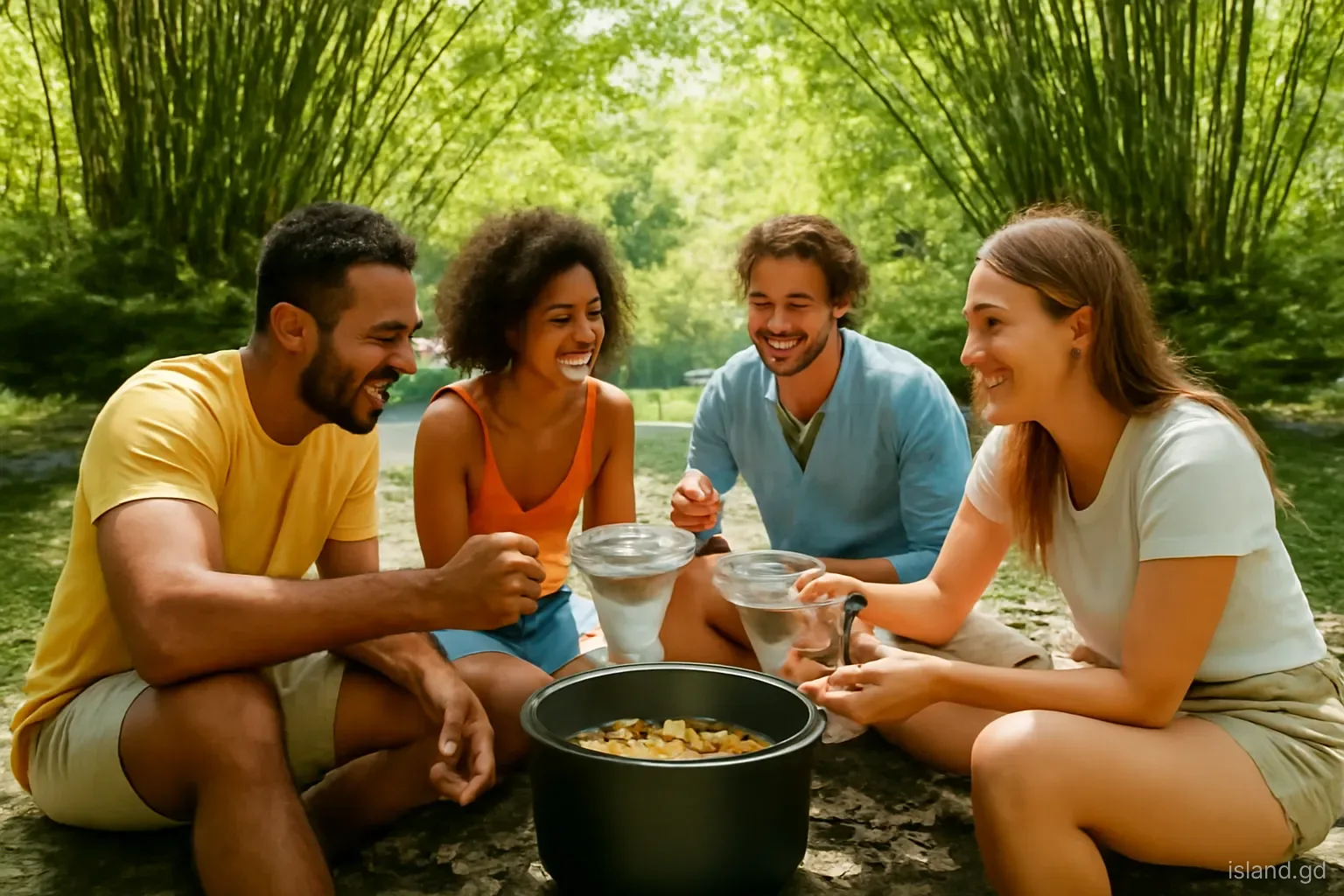
The river lime. Perhaps the most cherished. Friends or families head to a river or waterfall in the interior, often on a Sunday or public holiday, bathe in the cool water and cook a big pot on a wood fire on the bank, frequently an oil down or a pot of soup. It can last from late morning until dusk.
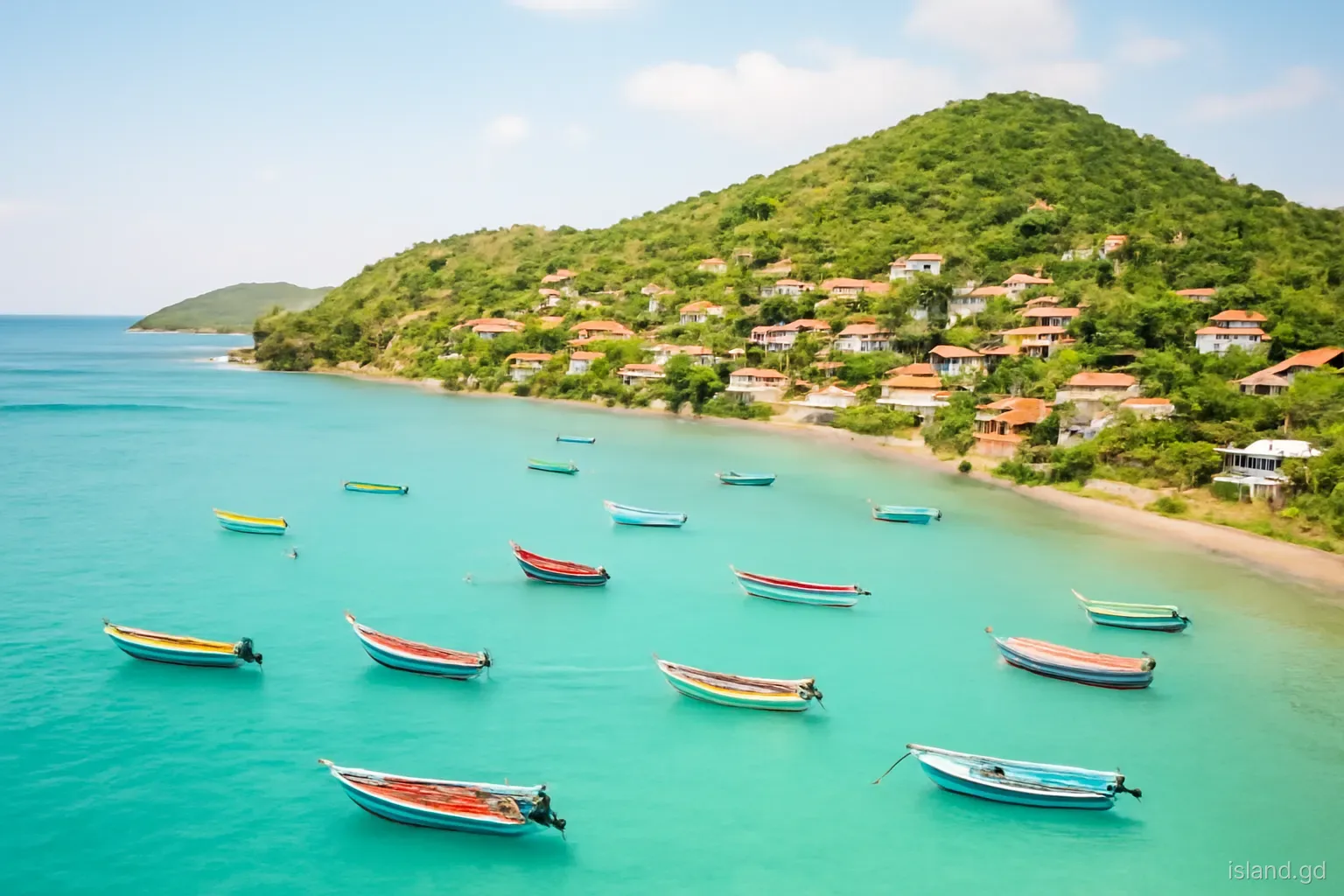
The beach lime. Similar, but at the sea. Families and groups gather under trees on popular beaches, especially on weekends and holidays, with coolers, music and food. Grand Anse on a Sunday afternoon is a classic example.
The roadside or corner lime. Small groups gather in the evening at a junction, outside a shop or on a wall to talk and watch the world go by. It is the everyday, informal version.
The rum shop lime. A fixed venue, a few drinks, dominoes and debate. Rum shop limes can become loud and passionate, particularly over cricket, football and politics.
The house lime. Friends gather at someone's home, often in the yard or on a veranda, with food cooked on the spot and music playing. It may be planned or simply happen when people drop by.
Food, drink and music at a lime
Food is often the anchor, especially at a river or beach lime. The classic is oil down, Grenada's national dish, cooked in a large pot with breadfruit, salted meat, dumplings, callaloo, turmeric and coconut milk until the liquid is absorbed into the ingredients. Cooking it outdoors takes time, and that time is part of the lime. Barbecued chicken, fish broth, corn soup and bakes are also common.
Drinks vary: rum, local beer, soft drinks, coconut water, homemade juices such as sorrel or passion fruit, and plenty of water on hot days. Bringing something to share, whether a bottle, a bag of ice or a dish, is expected and appreciated.
Music is usually present, often from a portable speaker or a car stereo, ranging from soca and calypso to dancehall, reggae and gospel depending on the crowd and the day. On some limes, a guitar or drum appears. But music never replaces the conversation, which is the real heart of the gathering.
Liming, friendship and getting things done
Liming is more than leisure. In a small society, many important connections are made and maintained over a drink at the rum shop or a pot by the river. People hear about jobs, land for sale, a reliable mason or a good mechanic while liming. Disputes can be smoothed over and favours arranged in a relaxed setting rather than a formal meeting.
For newcomers, this means that time spent liming is time spent building a network. Someone who never joins in remains an outsider, however polite. Someone who shows up, shares food and listens gradually becomes part of the web of relationships that makes life in Grenada work.
Liming also plays a role in the community's emotional life. After a funeral, people gather and lime; after a good harvest, a win at cricket or the end of exams, the celebration is a lime. In difficult times, such as after a hurricane, gathering and talking is part of how people cope and organise to help each other.
Liming through the year
Some days are made for liming. Public holidays such as Easter Monday, Emancipation Day in early August, Boxing Day and the long Carnival period bring the biggest beach and river limes of the year, with whole families and groups of friends out from morning until evening. Popular spots can be crowded on these days, so people often go early to claim a shady place.
The dry season, roughly January to May, is the easiest time for river limes, as rivers are lower and calmer and the weather more reliable. In the rainy season, limes shift more to verandas, rum shops and sheltered beach spots, and river outings need careful attention to weather.
The Christmas season is another high point, with house limes, parang music in some communities and plenty of food and sorrel. In August, the build-up to Carnival brings a constant round of fetes and limes, and the line between the two blurs.
Unwritten rules of liming
Liming is informal, but it has its own etiquette. Visitors and newcomers who understand these rules are welcomed more readily.
- Greet everyone when you arrive, even people you do not know. A general "good afternoon" to the group, followed by individual greetings, is good form.
- Contribute something: food, drinks, ice, help with cooking or cleaning up. Arriving empty-handed repeatedly is noticed.
- Do not rush. Arriving with a fixed time to leave and checking the clock spoils the mood. If you have to go, say so on arrival and leave graciously.
- Join the conversation, but listen too. Teasing and banter are common, and taking a joke well matters.
- Respect the place. At rivers and beaches, take rubbish home and leave the site clean. Fires should be put out properly.
- Know your limits with rum. Being merry is fine; becoming a problem is not.
Liming safely and respectfully
Some practical points apply, particularly for river and beach limes. Rivers in the interior can rise quickly after heavy rain upstream, sometimes even when it is sunny where you are. Avoid river limes during or right after heavy rain, keep an eye on water colour and level, and move away from the riverbed if the water turns muddy or starts rising.
Many river spots are on or near private land or estates, and some have long-established local access. Ask locals where people usually lime, and be respectful of landowners. Do not cut trees or damage crops for firewood.
Drinking and driving remains a serious problem on Grenada's winding roads, and limes often involve alcohol. Arrange a designated driver or use a taxi or route bus. At beaches, be aware of sea conditions, particularly on the Atlantic side, where currents can be strong.
Finally, if you are invited to a lime, take it as a sign of friendship. Saying yes, turning up and participating is one of the best ways to become part of a community in Grenada.
Frequently asked questions
Where does the word lime come from?
The term is widely used in Trinidad and Tobago, Grenada and the wider Eastern Caribbean to mean hanging out. Its exact origin is debated, with several popular theories, none confirmed. In Grenada it is simply the everyday word for spending relaxed time together.
What is a river lime in Grenada?
A river lime is a gathering by a river or waterfall, usually on a weekend or holiday, where people swim, relax and cook a pot of food, often oil down, on an open fire. It typically lasts most of the day and is a much-loved Grenadian pastime.
Can visitors join a lime?
Yes, if invited. Grenadians are generally welcoming, and joining a lime is a good way to experience local life. Bring something to share, greet everyone, relax and join in the conversation. Do not expect a fixed schedule or a quick departure.
What should be brought to a lime?
Something to share is appreciated: drinks, ice, a dish, snacks or ingredients for the pot. For a river or beach lime, bring water, sun protection, a towel and a bag for rubbish. Offering to help with cooking or cleaning up is also welcome.
Is liming the same as partying?
Not exactly. A fete or party is an organised event with music and dancing. A lime is informal and relaxed, focused on conversation and being together. Limes can become lively, but their core is unhurried company rather than entertainment.