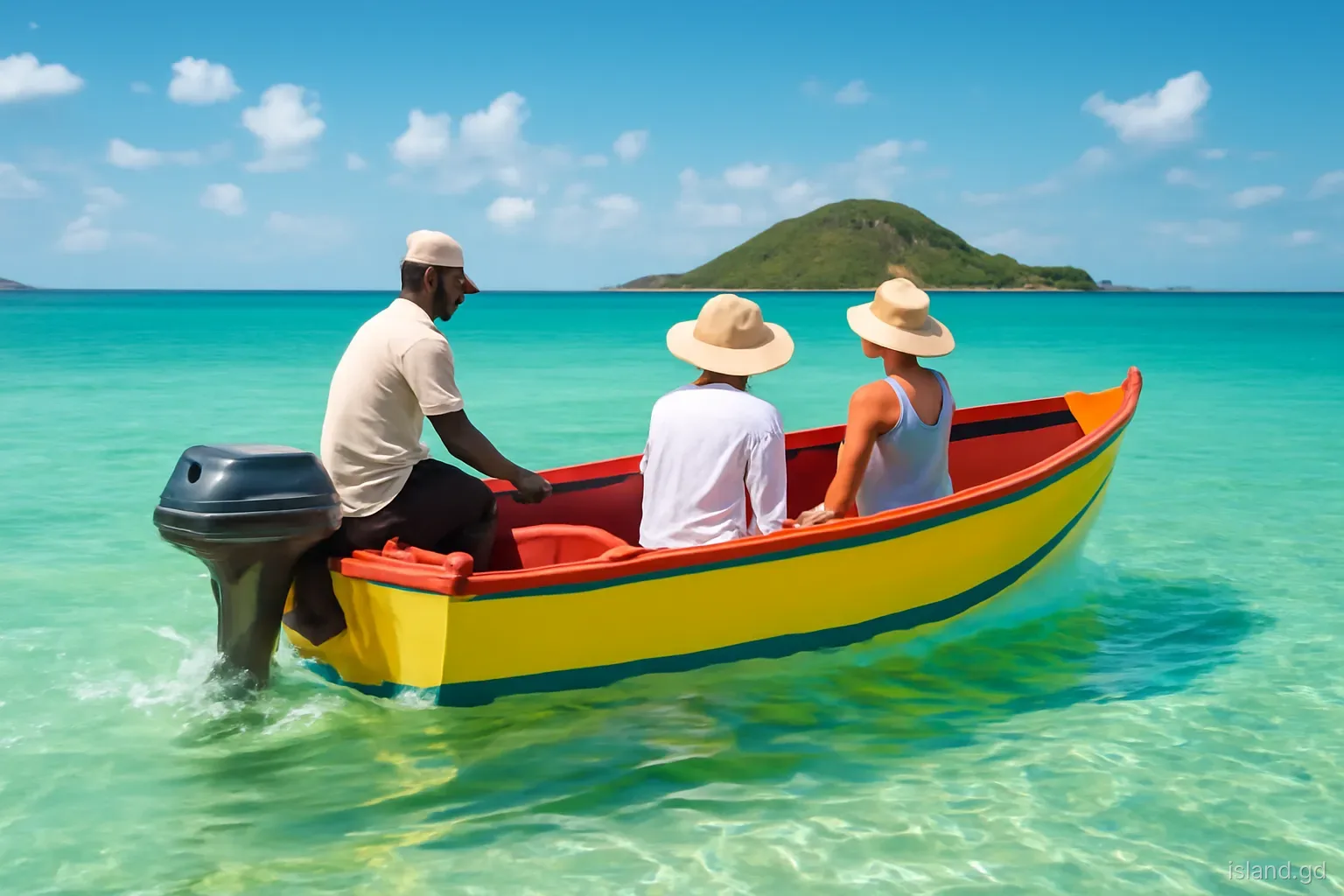
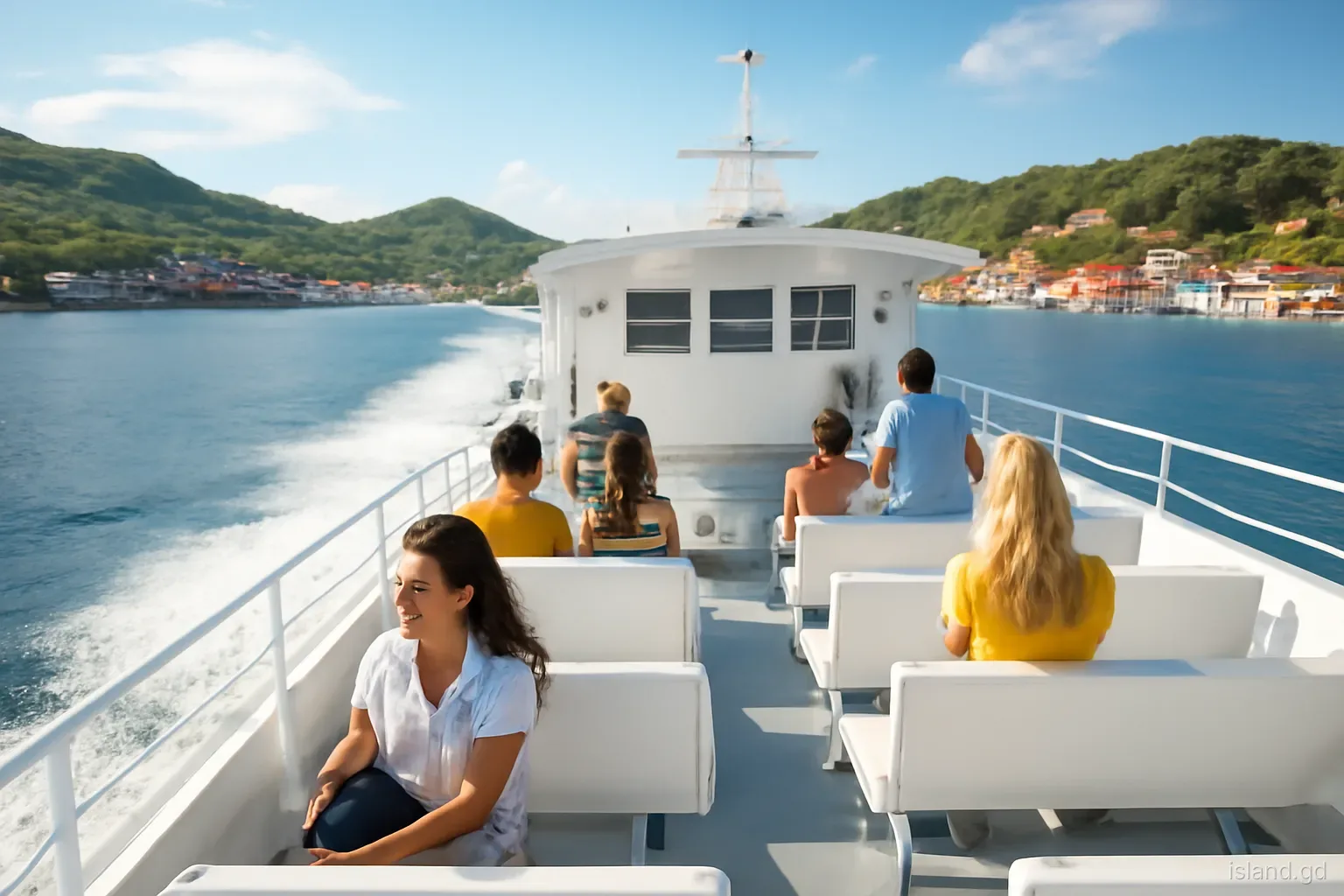
The ferry is how most people, Grenadians and visitors alike, get between Grenada and its two sister islands. A fast passenger catamaran leaves from the Carenage in St George's, runs up the west coast of Grenada, crosses the open stretch of water past the northern tip of the island, and docks on Carriacou, traditionally at the main jetty in Hillsborough, although since Hurricane Beryl the boat has also used Tyrrel Bay, so confirm the landing point when you book. Some sailings continue on to Petite Martinique, a short hop further north-east. The service has for many years been run by Osprey Lines, and locals often just call the boat "the Osprey".
On a calm day the crossing is a pleasant couple of hours with flying fish skipping off the bow. On a rough one it is the most memorable part of a trip for the wrong reasons. Knowing what each stage of the passage feels like, and where on the boat to be for it, makes a real difference. This piece walks through the journey itself; schedules, fares and operators change, so always confirm the current timetable before you plan around it.
Leaving St George's: the sheltered first hour
Boarding happens on the Carenage, the horseshoe harbour at the heart of St George's. Arrive well before departure: there is a ticket window and a short queue to load bags, and on Fridays, Sundays and around public holidays the boat fills with Carriacouans going home, students, traders with boxes of goods and the occasional crate of live chickens. Tickets can usually be bought on the day, but on busy weekends and at festival times such as Carriacou Carnival, Regatta in early August and Parang at Christmas, buying ahead is wise.
For the first part of the journey the boat runs north along Grenada's leeward coast, past Grand Mal, Happy Hill, Gouyave and Victoria. The island shelters this stretch from the trade winds, so the water is usually smooth and this is the time to enjoy the view: the steep green ridges dropping into the sea, fishing villages tucked into each bay, and Mount St Catherine's summit often wrapped in cloud. If you want photographs of the coastline, take them now, because the second half is no place to be holding a camera at the rail.
The open channel: where the boat starts to move
Once the ferry clears Grenada's northern tip near Sauteurs, it leaves the shelter of the island and meets the full Atlantic swell coming through the gap between Grenada and the Grenadines. This is the stretch that gives the crossing its reputation. The waves here roll in on the starboard (right-hand) beam, and a fast catamaran answers with a mix of pitching and corkscrewing that can last most of an hour. The islets of Ronde, Caille and the Sisters appear to port and starboard, and somewhere beneath the surface lies Kick 'em Jenny, the active submarine volcano that ferries route around when its alert level rises.
Conditions vary a great deal. In the calmer months, often from roughly April to June and again in some autumn weeks, the channel can be gentle. From December to March the strong trade winds that Grenadians call the Christmas winds build a steeper, shorter sea, and northerly swells in winter add their own push. Rough does not mean dangerous on a properly run vessel, but it does mean wet decks, closed outside areas on bad days and a cabin where a few people will be unwell.
Where to sit and how to avoid seasickness
Choose the middle and the low point. Motion is smallest near the centre of the boat and lowest down. The front of the cabin rises and falls the most; the upper open deck gives fresh air but sways more and catches spray.
Keep the horizon in view. Seasickness is driven by a mismatch between what your eyes and inner ear report. A seat with a window and a steady horizon helps more than any snack. Reading or scrolling a phone in the channel is the quickest way to feel bad.
Take medication early. Over-the-counter tablets or patches only work if taken well before the boat leaves, usually 30 to 60 minutes ahead, following the packet. Taking a pill once you already feel ill rarely helps. Ginger sweets are popular and cost nothing to try.
Eat lightly, not nothing. A plain breakfast sits better than an empty stomach or a heavy fried one. Avoid alcohol the night before if the forecast looks lively.
Accept the bag. Crew hand out sick bags as a matter of routine. Taking one quietly before you need it is normal and nobody will look twice.
Arriving in Hillsborough and the Petite Martinique leg
When the boat uses the main jetty in Hillsborough, Carriacou's only town, you step off right on Main Street; if it lands at Tyrrel Bay instead, Hillsborough is a short taxi or minibus ride north. Taxis and minibuses wait at the head of the jetty, and the town's shops, bank and government offices are a few minutes' walk away, so arriving without a plan is manageable as long as you have cash. Expect a short wait while hold luggage is unloaded by hand onto the jetty, and keep an eye on your own bags as they come off; tags are simple and similar suitcases are common.
Sailings that continue to Petite Martinique usually stop only briefly at Hillsborough before running the remaining distance across to the dock on Petite Martinique's western side, a much shorter and normally gentler leg past the southern edge of Petit St Vincent, which belongs to St Vincent and the Grenadines. Not every departure goes on to Petite Martinique, and schedules on that leg have changed over the years, so check before you buy. After Hurricane Beryl struck Carriacou and Petite Martinique in July 2024, services and the facilities at both ends were disrupted for a period; confirm current arrangements before you travel.
Travelling with children, goods or limited mobility
Families cross with small children every day, but a little preparation helps. Seat young children low and central inside the cabin, bring water and a change of clothes, and keep a light snack for the sheltered first hour rather than the open channel. Pushchairs fold into the hold; a baby carrier is easier for boarding and for getting off at Hillsborough, where the jetty can be busy as luggage is unloaded.
Many Carriacouans use the ferry as a supply line, carrying boxes of groceries, hardware and gifts from St George's. Visitors renting a villa sometimes do the same, since prices on Carriacou can be higher and the range smaller. Pack goods in sturdy, taped boxes with your name clearly written on them, and expect a modest charge for bulky items. Passengers with reduced mobility should tell staff when buying a ticket: boarding involves a gangway and steps, and in a swell the crew will usually help people on and off at a quieter moment. Toilets on board are small and become hard to use in rough water, so plan around the open channel.
Before you sail: a short checklist
Most problems on the ferry are avoidable. These are the points people most often miss:
- Check that day's sailing. Departures can be cancelled for heavy weather, mechanical issues or a Kick 'em Jenny alert, and Sunday and public holiday schedules differ from weekdays.
- Carry identification. This is a domestic route, but staff may ask for ID with a ticket, and you need your passport anyway if you intend to cross on from Carriacou into St Vincent and the Grenadines.
- Pack for spray. Put electronics and documents in a dry bag or sealed pouch; even cabin bags can get damp when the outside deck is in use.
- Know the luggage rules. Large suitcases, boxes and bulky items generally go in the hold and may carry a small extra charge. Bicycles, building materials and household goods normally travel by cargo boat instead.
- Bring cash in East Caribbean dollars. Card acceptance varies on the jetty and in Carriacou taxis.
- Allow margin for flights. If you are connecting to an international flight out of Maurice Bishop International Airport, do not plan on the last ferry of the day before departure; one cancellation can cost you the flight.
Frequently asked questions
How long does the ferry from Grenada to Carriacou take?
In normal conditions the fast ferry takes roughly two hours from St George's to Carriacou, a little more if the sea is rough or the boat stops elsewhere. The onward hop to Petite Martinique adds a short extra leg. Check the operator's current timetable, as journey times and routes can change.
Is the Carriacou ferry rough?
The first hour along Grenada's west coast is usually calm. The open channel north of Sauteurs is exposed to Atlantic swell and can be rough, especially in the windy months from December to March. Sitting low and central with a view of the horizon helps a great deal.
Is a passport needed for the Carriacou ferry?
The route is domestic, so there is no immigration check between Grenada and Carriacou. Carrying ID is still sensible, and a passport is essential if your plans include crossing from Carriacou to Union Island or elsewhere in St Vincent and the Grenadines.
Can you take a car to Carriacou on the passenger ferry?
No. The fast ferry carries foot passengers and luggage only. Vehicles, large freight and building materials go on separate cargo vessels. Most visitors rent a car or use taxis and minibuses once on Carriacou instead of bringing a vehicle across.
Does the ferry still run to Petite Martinique?
Petite Martinique has historically been served by some ferry sailings continuing beyond Hillsborough, alongside local boats from Windward on Carriacou. Hurricane Beryl in 2024 disrupted services, so confirm the current schedule for that leg directly with the operator before travelling.