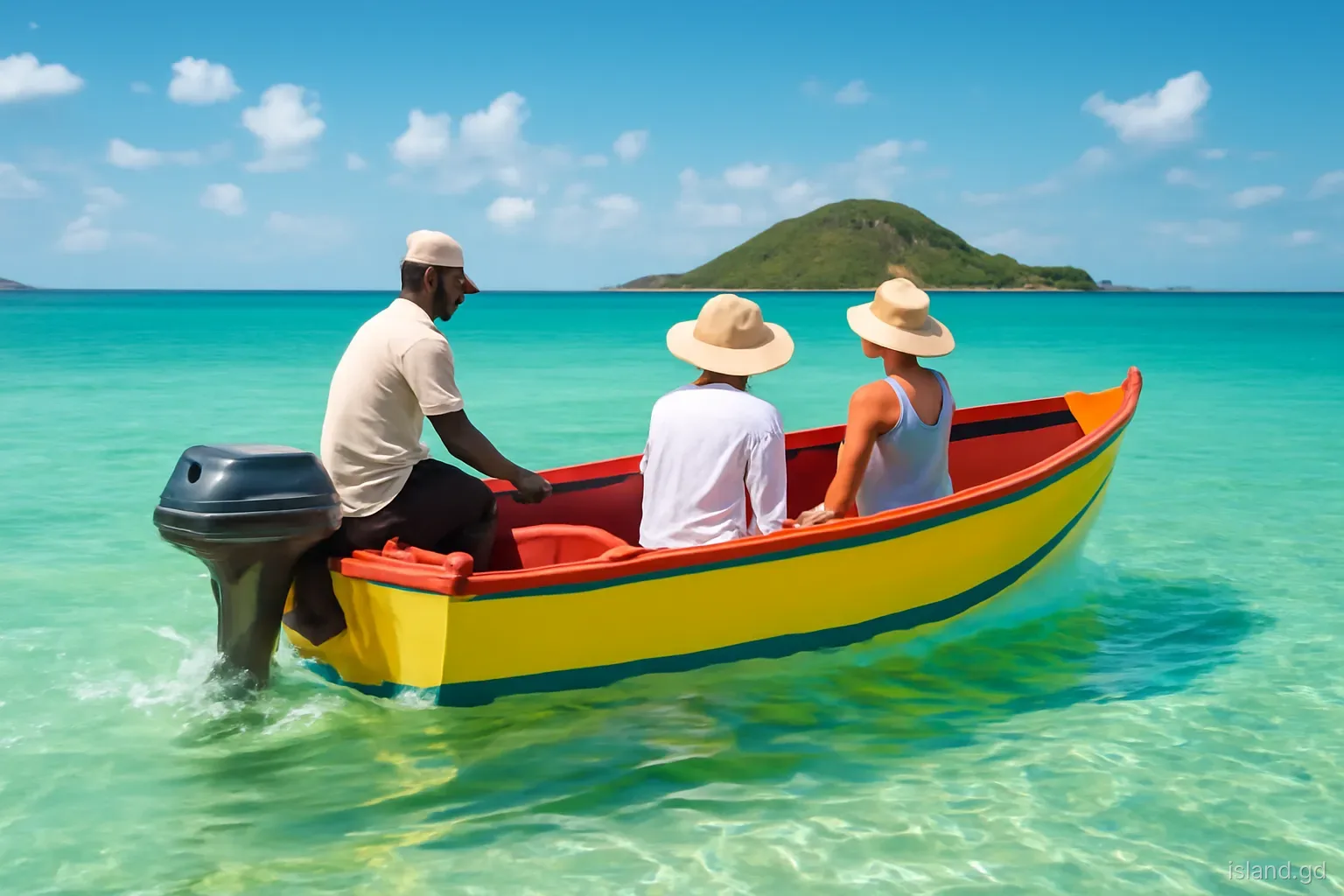
On Carriacou and Petite Martinique, a small open boat with an outboard engine does the job that taxis and buses do on land. Water taxis take visitors to Sandy Island and the southern islets, ferry people between bays, run across from Windward to Petite Martinique and pick up yacht crews from anchorages. For many short trips they are the only realistic option, and they are part of the islands' working life rather than a tourist product.
That informality is part of the charm and part of the risk. There is no central booking office, fares are agreed person to person, and boats range from well-kept and well-equipped to tired. This piece explains where water taxis operate, how arrangements usually work, what to check before you step aboard and how to avoid the misunderstandings that most often sour a trip. Since Hurricane Beryl damaged boats, jetties and livelihoods in July 2024, the numbers and locations of operators may differ from what older guides describe.
Where the boats leave from
On Carriacou the busiest water-taxi points are on the south and west coasts. At Hillsborough, boatmen work from the beach and the jetty area in town and take passengers out to Sandy Island, which lies just offshore. At L'Esterre, boats wait on Paradise Beach, the shortest run to Sandy Island and a common starting point for trips to White Island and Saline Island in the south. At Tyrrel Bay, water taxis serve the anchorage, ferrying sailors between their boats and the shore, and can be hired for trips along the coast or to the mangroves in the north of the bay.
On the north-east coast, Windward is the traditional crossing point for Petite Martinique. The village faces the smaller island across a short channel, and boatmen from both communities run passengers and goods back and forth. On Petite Martinique itself, boats leave from the main dock and the beach near it. On Grenada, water taxis also operate from the Carenage in St George's to Grand Anse and Morne Rouge, a useful alternative to the road, though that service is outside the scope of the smaller islands discussed here.
How to arrange a trip
Arrangements are simple once you know the usual sequence. Most misunderstandings come from skipping one of these points:
- Ask around first. Your accommodation, a dive shop or a beach bar can usually recommend a boatman they trust. Recommendations count for more than whoever approaches you first.
- Agree the destination precisely. Say exactly where you want to go and whether any stops are included, for example Sandy Island only, or Sandy Island with a snorkelling stop on the way back.
- Agree the fare and what it covers. Clarify whether the price is per person or for the whole boat, and whether it is one way or return. Fares are normally quoted in East Caribbean dollars; if a US dollar figure is given, check the conversion.
- Fix the pickup time. For return trips, agree a specific time to be collected and make sure the boatman knows where to find you. Bring a phone with credit and swap contact details.
- Pay on the return. For a return trip, paying when you are back ashore is common practice and gives both sides an incentive to keep the arrangement. A small deposit is sometimes requested; that is reasonable.
- Tip for good service. Tipping is not compulsory, but adding something for a helpful, punctual boatman who carries bags or points out snorkelling spots is appreciated.
Safety checks before you step aboard
Life jackets. Look for enough life jackets for everyone, including child sizes if you have children with you. Ask to see them before departure; they should be in reasonable condition and accessible, not buried under fuel cans.
The boat and engine. A sound hull, a reliable-sounding engine and, ideally, a spare engine or oars matter more than fresh paint. On longer runs, such as to Petite Martinique or the southern islets, ask whether the boat carries a radio or phone.
Passenger numbers. Overloading is a real risk on small boats. If a boat looks crowded with people and goods, wait for the next one.
Sea conditions. The channel between Windward and Petite Martinique and the exposed sides of the islands can be rough when the trade winds are strong. A good boatman will say no or wait; respect that judgement and do not push for a crossing in poor conditions.
Sun and spray. Open boats give no shade. Wear a hat that will not blow away, apply sunscreen before you leave and keep phones and documents in a dry bag.
Snorkelling stops. If the boat stops for snorkelling, agree how long you will stay, keep within sight of the boat and ask the boatman to keep the engine off while people are in the water.
Crossing between Windward and Petite Martinique
The short run from Windward to Petite Martinique is one of the most useful water-taxi trips for visitors, because it offers a way to visit the smaller island without relying on ferry timetables. Boats leave when there are passengers and the weather allows, and the crossing passes reefs and the islets lying between the two islands, with Petit St Vincent, part of St Vincent and the Grenadines, visible nearby. The trip takes a short time in good conditions but can be bumpy, and spray is almost guaranteed when the trade winds blow.
Because this is a domestic route within Grenada, there are no immigration formalities. That changes if a boat goes on to Petit St Vincent or Union Island; any trip into Vincentian waters needs proper clearance on both sides, and passengers should not accept an informal hop across the border. For a day visit, agree a return time with the same boatman or ask on Petite Martinique who is heading back to Windward later. Petite Martinique was badly affected by Hurricane Beryl, so check on facilities, food and shade before visiting, and carry water.
Water taxis for sailors, divers and day-trippers
For yacht crews anchored in Tyrrel Bay or off Hillsborough, water taxis offer an alternative to launching the dinghy, especially in a chop or when leaving the boat for a night ashore. Boatmen can take crews to shore, to the fuel dock or around to Hillsborough for customs, and some run regular circuits of the anchorage. Agree prices in advance, as you would ashore, and be clear about where and when to be collected.
Divers usually travel with their dive centre's own boats, which are better equipped for the job, but water taxis are handy for independent snorkelling trips to Sandy Island, the reefs near White Island or along the coast near L'Esterre. Day-trippers from Grenada who arrive on the morning ferry and leave on the afternoon boat can use water taxis to fit in a few hours on Sandy Island, provided they leave a comfortable margin to get back to the ferry's landing point. In all cases, the same rule applies: confirm the trip, the price and the return time before leaving the shore.
Fares, fairness and common misunderstandings
There is no official fare table for most water-taxi trips, so prices vary with distance, fuel costs, group size and season. Rather than quoting figures that can date quickly, the practical advice is to ask two or three sources, such as your guesthouse and a boatman, before agreeing. Prices rise with fuel costs, and they have to cover the boatman's waiting time on return trips, which is why a return to Sandy Island costs more than the short distance might suggest.
Most disputes come from vague agreements: a price thought to be per boat that turns out to be per person, a return pickup that never arrives because the time was not fixed, or an extra stop that was assumed to be included. A brief, friendly confirmation before leaving, repeating destination, price, pickup time and who pays what, prevents nearly all of these. If something goes wrong, stay calm and courteous; communities are small, reputations matter and a fair complaint to your accommodation is often the most effective route.
Frequently asked questions
How do you get from Carriacou to Sandy Island?
Water taxis run to Sandy Island from Hillsborough and from Paradise Beach at L'Esterre, the shortest crossing. Agree a return pickup time and the fare before leaving, and take water, shade and sunscreen, as the island has little or no shade. Pay on return if possible.
Can you take a water taxi from Carriacou to Petite Martinique?
Yes. Boats cross from Windward on Carriacou's north-east coast to Petite Martinique in a short ride, leaving when there are passengers and weather allows. The route is domestic, so there are no immigration formalities. Agree the fare and return arrangements before setting off.
Are water taxis in Carriacou safe?
Many boatmen are experienced and careful, but standards vary. Check for life jackets, avoid overloaded boats and listen when a boatman says the sea is too rough. Asking your accommodation for a recommended operator is the simplest way to improve your odds.
Should you pay water taxi fares in EC dollars or US dollars?
East Caribbean dollars are the norm and avoid confusion over exchange rates. US dollars are often accepted, but change usually comes back in EC dollars and the rate offered may be rounded. Carry small notes, as boatmen may not have change for large ones.
Do water taxis run at night?
Some boatmen will run short trips after dark, particularly between yachts and shore in Tyrrel Bay, but longer crossings at night are not advisable in small open boats. Plan return trips from Sandy Island or Petite Martinique well before sunset, which is around six in the evening year-round.