Ask an older Grenadian about walking home at night along a country road, and you may hear about La Diablesse: a beautiful woman in a wide hat and long dress who leads men astray, hiding a cow's hoof beneath her skirt. Ask about a house where a baby is sickly, and someone might mention maljo, the evil eye, and the black bead bracelet that wards it off. Folklore in Grenada is not only a set of children's stories; it shaped manners, warnings and household habits for generations.
The island's spirits draw on French Creole, West African and broader Caribbean sources. Many have relatives in Trinidad, St Lucia, Dominica and Martinique, but Grenadian versions carry local detail and are tied to particular places, such as Grand Etang Lake. This guide introduces the main figures, the storytelling customs around them and where they still surface in daily life.
The main figures
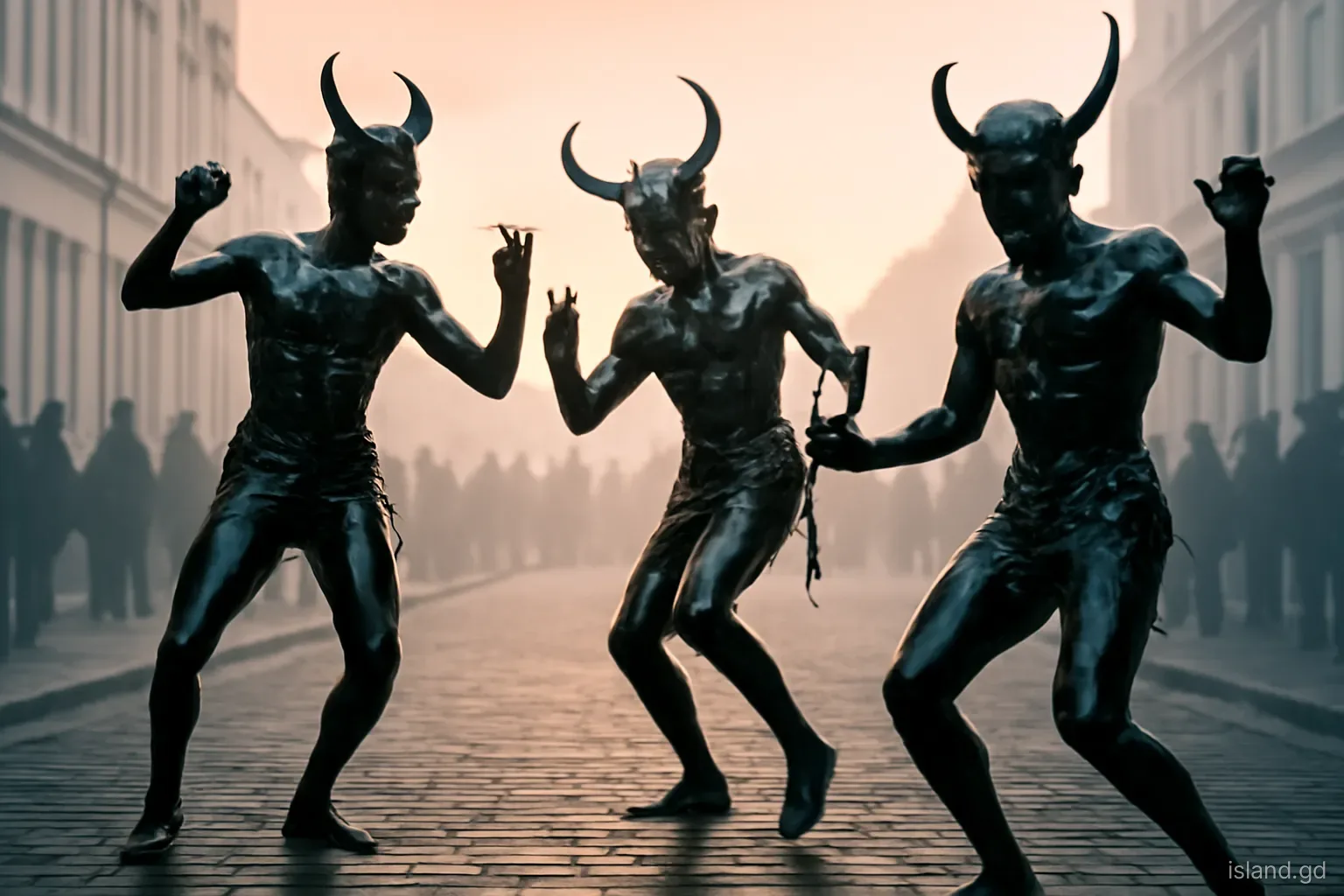
La Diablesse. A woman of striking beauty, usually dressed in old-fashioned finery with a broad hat and long skirts, who appears on lonely roads at night. She charms a man into following her, then leads him into the bush, a ravine or a river. Beneath the hem, one foot is a cow's hoof. The story carried clear warnings about wandering, drinking and trusting strangers at night.
Ligaroo. From the French loup-garou, the Ligaroo is a person, often an elderly man or woman, who sheds their skin at night and travels as a ball of fire to suck the blood of victims. Folk remedies included scattering rice or sand so the creature would be compelled to count every grain before dawn, and salting the discarded skin so it could not be put back on.
Soucouyant. Closely related to the Ligaroo, the soucouyant is usually described as an old woman who becomes a fireball at night. Bruises found in the morning might be blamed on her visits. Many Grenadians use the two names with overlapping meanings.
Mama Glo. From the French maman de l'eau, mother of the water, Mama Glo is a water spirit, half woman and half fish or serpent, who lives in rivers, waterfalls and lakes. In Grenada she is strongly associated with Grand Etang Lake in the central mountains, where legends speak of a mermaid in the crater lake.
Douens and jumbies. Douens are the spirits of children who died unbaptised, sometimes described with feet turned backwards, who lure other children into the forest. Jumbie is a general term for spirits or ghosts, used widely across the English-speaking Caribbean.
Where the stories come from
Grenada was French until 1763 and again briefly between 1779 and 1783, and French Creole was the everyday language of much of the population into the twentieth century. That legacy shows in the names: loup-garou, la diablesse, maman de l'eau. The structure of many stories, with shape-shifting beings, water spirits and dangerous crossroads, also echoes West African belief systems carried by enslaved people.
Over time the figures became Caribbean rather than strictly French or African. They reflected the landscape: dense forest, ravines, rivers and dark roads without street lights. They reflected social concerns too, from jealousy and illness to the dangers faced by children and women. A sickness with no clear cause, a baby that would not thrive or a man who disappeared for a night could all be explained through the folklore.
Similar figures appear in Trinidad, St Lucia and Dominica, partly because people, songs and stories moved freely among these islands. Grenadian versions sometimes differ in detail, such as how a Ligaroo is caught or which places are said to be haunted.
Storytelling customs
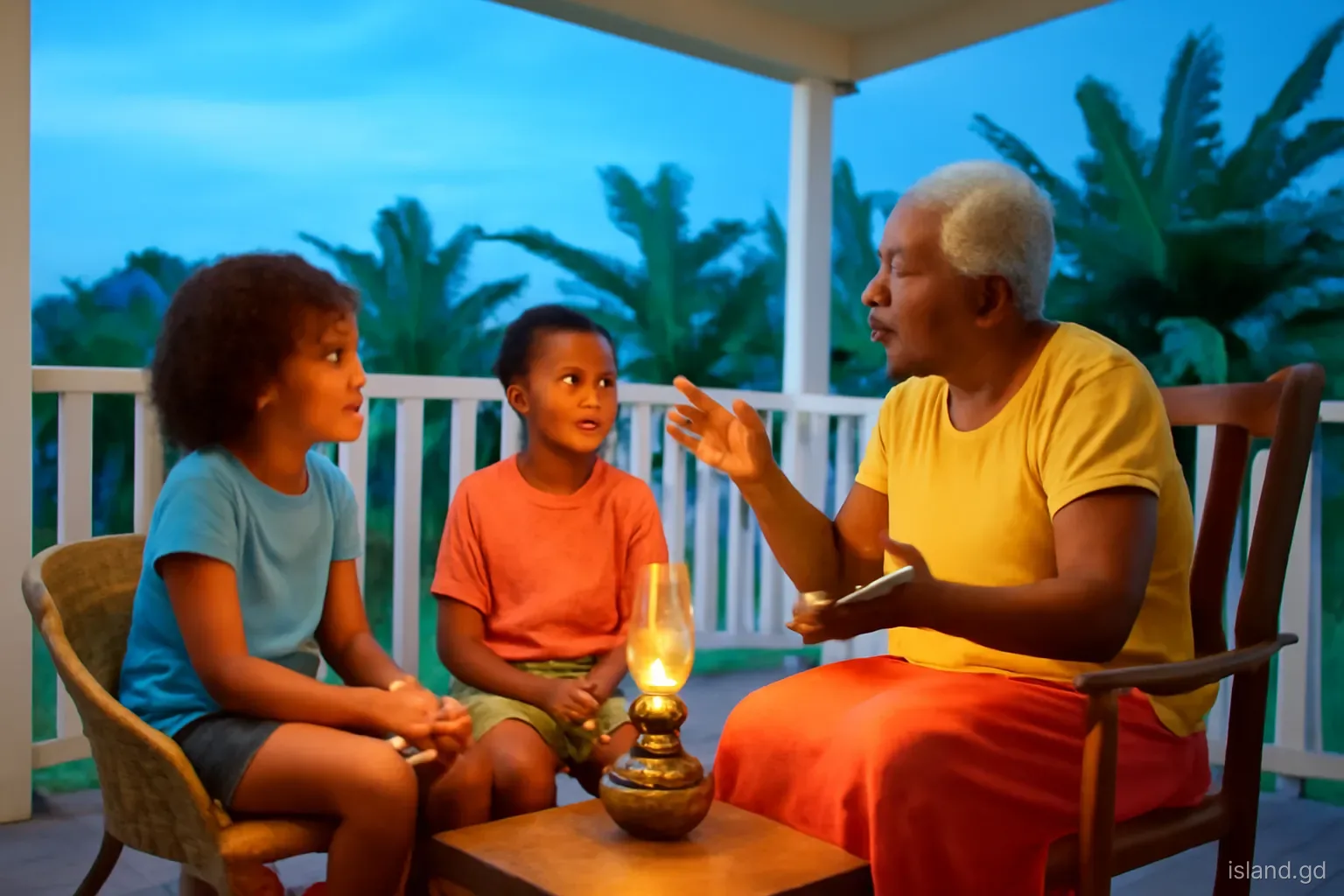
Stories were traditionally told in the evening, often on verandas or around a lamp before electricity reached every village. Elders entertained, warned and educated children with tales of Anansi the spider, the clever trickster from West African tradition, alongside spirit stories. Anansi stories teach cunning and caution; spirit stories teach respect for the night and the unknown.
Many Caribbean storytellers open with a call and response: the teller says 'Crick!' and listeners answer 'Crack!', signalling readiness. Closing rhymes bring the story back to the present. These patterns, shared with French Creole islands, still appear in school performances, cultural shows and community events in Grenada.
Wakes were another setting. Long nights sitting with the bereaved encouraged stories, riddles and songs, and spirit tales fitted naturally into an evening already focused on the dead. Some older Grenadians remember wakes as the place where they heard the most frightening stories of their childhood.
Maljo and everyday protection
What maljo is. Maljo, from the French mal yeux or the evil eye, is the belief that envy or admiring looks can cause harm, especially to babies, livestock, crops or a new possession. A baby who cries constantly or falls ill after being praised might be said to have maljo.
Black bead bracelets. A common protection is a small bracelet of black beads, traditionally of jet or a similar material, placed on a baby's wrist. Many families still use them, sometimes alongside a blessing at church.
Other protections. Some households hang particular items over doors, sprinkle salt or keep certain plants near the house. Practices differ widely by family and village.
Polite admiration. Some older people prefer that visitors not praise a baby too extravagantly, or that they touch the child lightly after praising it. Such habits sit comfortably alongside modern medicine and church life.
Not the same as obeah. Maljo is an everyday folk belief about envy. Obeah refers to a broader system of spiritual practice that has had a complicated legal and social history in the Caribbean; the two should not be confused.
Places linked to the legends
Grenada's landscape supplies the settings for many stories. Tales vary, but these are some of the places that come up:
- Grand Etang Lake. The crater lake in the central mountains is associated with Mama Glo and stories of a mermaid in its waters. Mist, forest and silence make the legend easy to understand on a grey afternoon.
- Rivers and waterfalls. Pools such as those along rivers in St Andrew and St John are often connected with water spirits. Children were warned not to bathe alone, partly for good practical reasons.
- Crossroads and lonely roads. La Diablesse and other spirits are associated with crossroads and dark stretches between villages. The stories offered sensible warnings about walking alone at night.
- Silk cotton trees. Across the Caribbean, large silk cotton trees are often considered haunted or home to spirits. Some Grenadians still prefer not to cut them down or pass beneath them at night.
- Old estates and ruins. Abandoned estate houses and mills carry ghost stories connected to the plantation era.
Folklore today
Belief in folklore spirits has faded among younger, urban Grenadians, but the stories have not disappeared. They appear in school projects, cultural shows, calypso lyrics, children's books and carnival costumes. Mama Glo and La Diablesse occasionally feature as characters in Spicemas bands and in performances at Independence celebrations in February.
For many families, the folklore persists in small habits: a black bead bracelet on a newborn, a reluctance to whistle at night, advice to shut doors after dark. These are rarely explained as belief in literal spirits, more as things 'the old people used to do'. Visitors who ask respectfully about them often hear entertaining family anecdotes.
If you hear a story, listen rather than debunk. The tales carry history, language and humour, and for older Grenadians they are a link to the world of their grandparents. Treating them as part of the island's heritage, rather than as superstition to be corrected, opens many good conversations. Older relatives, village elders and cultural groups are the best sources, and their versions will rarely match exactly, which is part of the charm.
Frequently asked questions
Who is La Diablesse in Grenadian folklore?
La Diablesse is a beautiful woman in old-fashioned dress and a wide hat who appears on dark roads at night and lures men away into the bush or a river. One foot is a cow's hoof hidden under her skirt. The story served as a warning about wandering alone at night.
What is a Ligaroo?
A Ligaroo, from the French loup-garou, is a person who sheds their skin at night and travels as a ball of fire to suck victims' blood. Traditional defences include scattering rice or sand for it to count and salting its discarded skin. It overlaps with the soucouyant in many accounts.
Is there a legend about Grand Etang Lake?
Yes. Grand Etang, the crater lake in Grenada's central mountains, is linked with Mama Glo, a water spirit described as half woman and half fish or serpent. Stories of a mermaid in the lake are part of local folklore and add to the lake's misty, quiet atmosphere.
What is maljo in Grenada?
Maljo is the belief in the evil eye, where envy or excessive praise can harm a baby, animal or possession. Many families protect newborns with a small black bead bracelet. The custom remains common and is usually seen as a harmless family tradition alongside medical care.
Are Grenadian folklore stories the same as in Trinidad?
They are closely related, with shared names such as La Diablesse, soucouyant and douen, because of common French Creole and African roots and movement between the islands. Details often differ, including how a creature is caught or which places are associated with it.
How do Caribbean storytellers start a story?
A common opening is a call and response: the storyteller says 'Crick!' and the audience answers 'Crack!' to show they are ready. This custom, shared with other French Creole-influenced islands, still appears in school performances and cultural shows in Grenada.