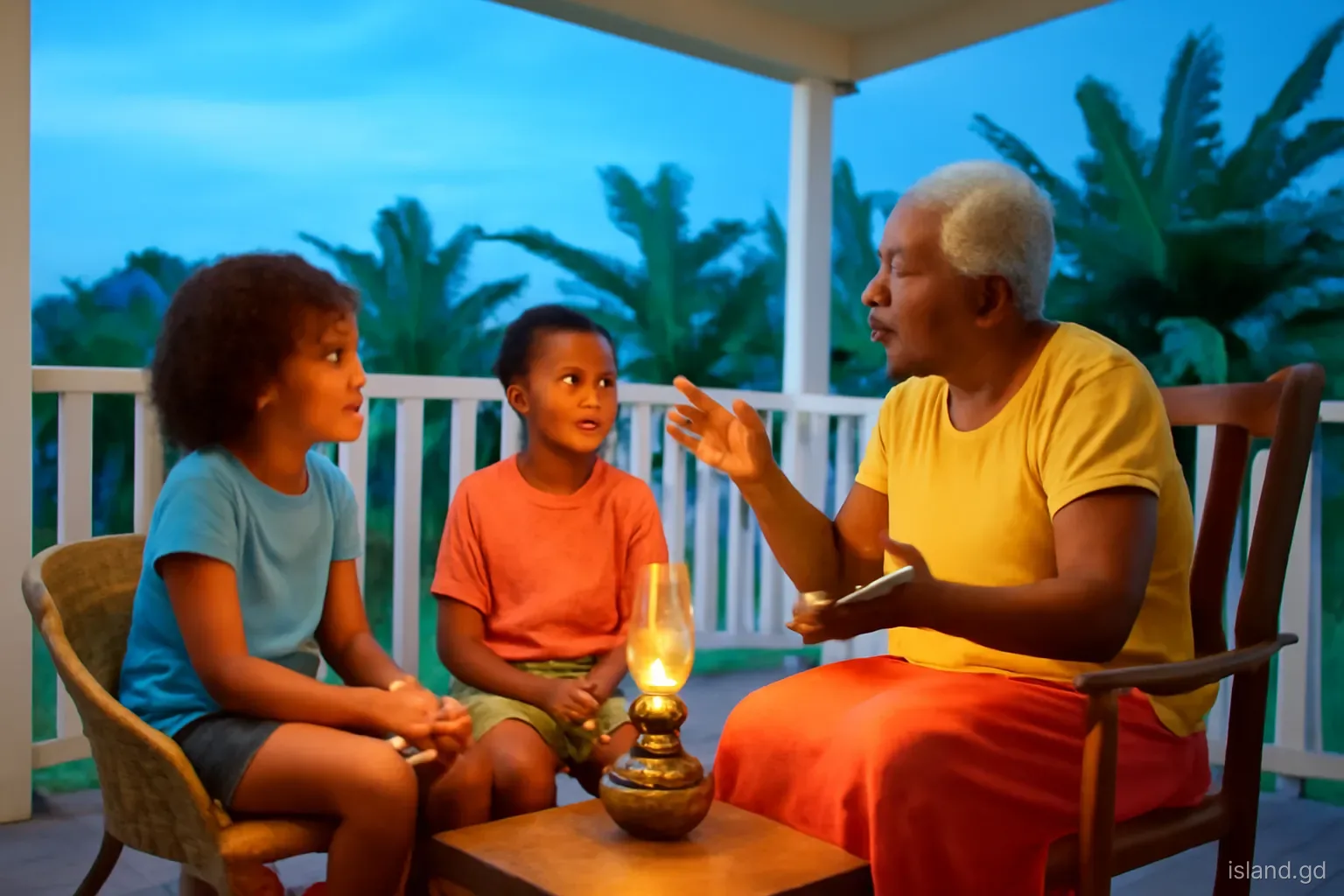
The word maroon usually brings to mind communities of people who escaped slavery. In Carriacou it means something else: a communal feast and thanksgiving, traditionally held toward the end of the dry season, when villagers cook together, share food, pray and dance in the hope of good rains for the planting season. The food is cooked outdoors and often has a distinctive smoky taste, and the music ranges from the Big Drum to the island's old string bands.
Since the early 2000s, the custom has also been showcased in the Carriacou Maroon and String Band Music Festival, usually held in the late dry season around April. It has become one of the island's signature cultural events and one of the easiest ways for visitors to hear music that is rarely performed elsewhere. This guide separates the village tradition from the festival and explains what to expect from each.
A thanksgiving for water on a dry island
Carriacou has no permanent rivers and a long dry season, roughly January to May. Historically, households depended on rain for drinking water, for kitchen gardens and for crops such as corn and pigeon peas, the island's traditional staples. A late or weak rainy season meant genuine hardship, and the maroon developed as a community response: give thanks for what has been received and ask for rain to come.
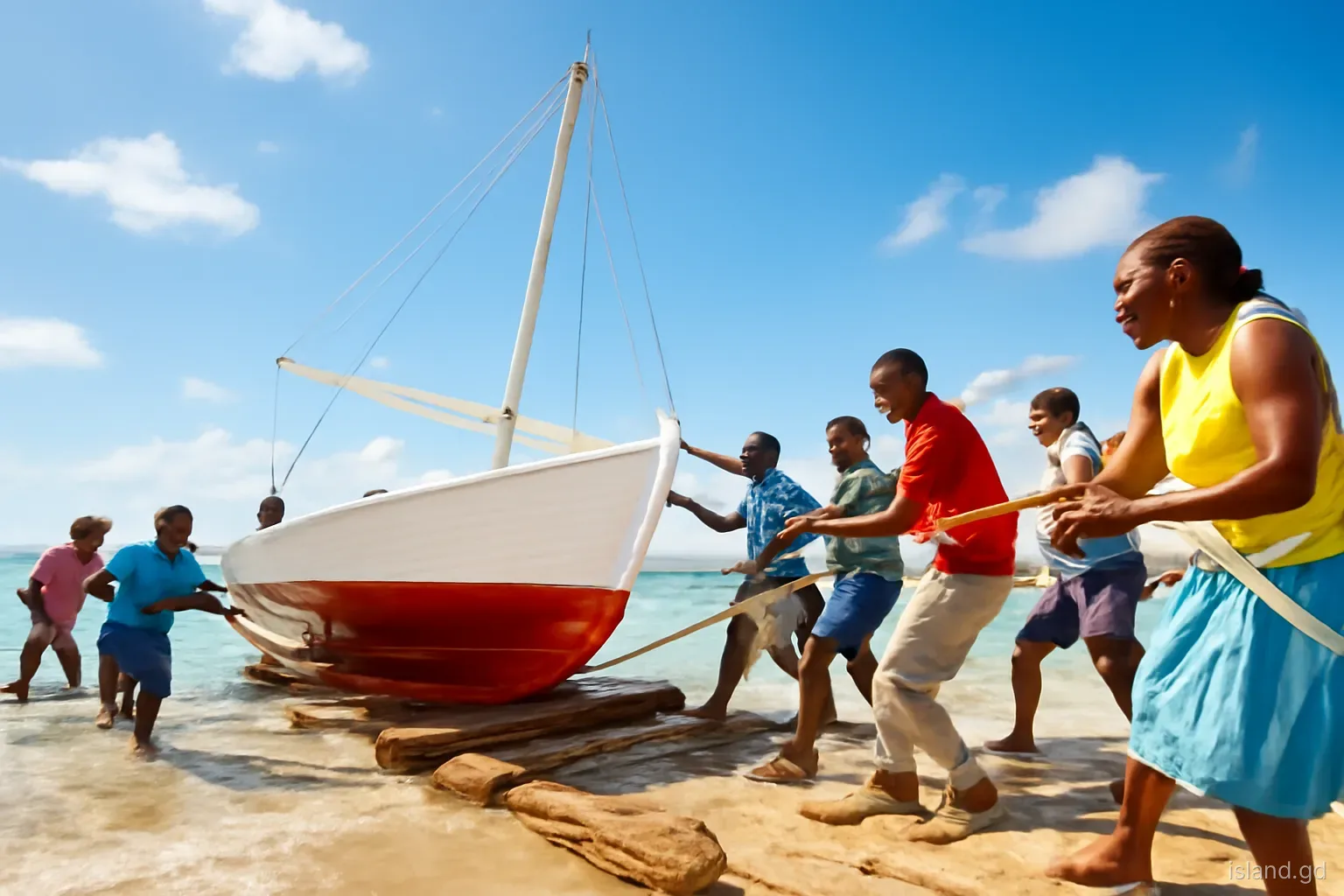
A traditional maroon gathers people from a village or district at an agreed spot, often a hillside, a crossroads or an open field. Families contribute ingredients, firewood and labour. Cooking is done collectively in large pots, and the meal is shared among everyone present. Prayers, hymns and offerings to the ancestors may be part of it, in the same spirit as a saraka.
The word's origin is debated. Some link it to the idea of people going out into the hills, away from houses, to hold the feast; others connect it to French or Creole terms. What matters on the island is the practice: shared food, shared effort and a collective appeal at the hungriest time of year.
What gets cooked at a maroon
Smoked and wood-fired dishes. Food is prepared over open wood fires, which gives much of it a smoky flavour. Meat such as goat, pork, chicken or fish may be smoked or stewed, and corn-based dishes reflect the island's agricultural past.
Rice and peas. Pigeon peas, a crop closely tied to Carriacou's dry-season farming, appear in rice dishes and stews. Large pots of rice and peas are a constant at communal meals.
Coo-coo and ground provisions. Cornmeal coo-coo, yam, sweet potato and other provisions are traditional. Corn, once widely grown on the island, carries special weight in a feast tied to planting.
Cakes and sweets. Home-baked cakes, sweet breads and local sweets are often shared, especially where women's groups and church groups contribute.
Drinks. Local rum, including the strong white rums common on the island, circulates among adults, along with soft drinks, juices and coconut water. Water and rum may also be poured as a libation.
String bands: Carriacou's other musical heritage
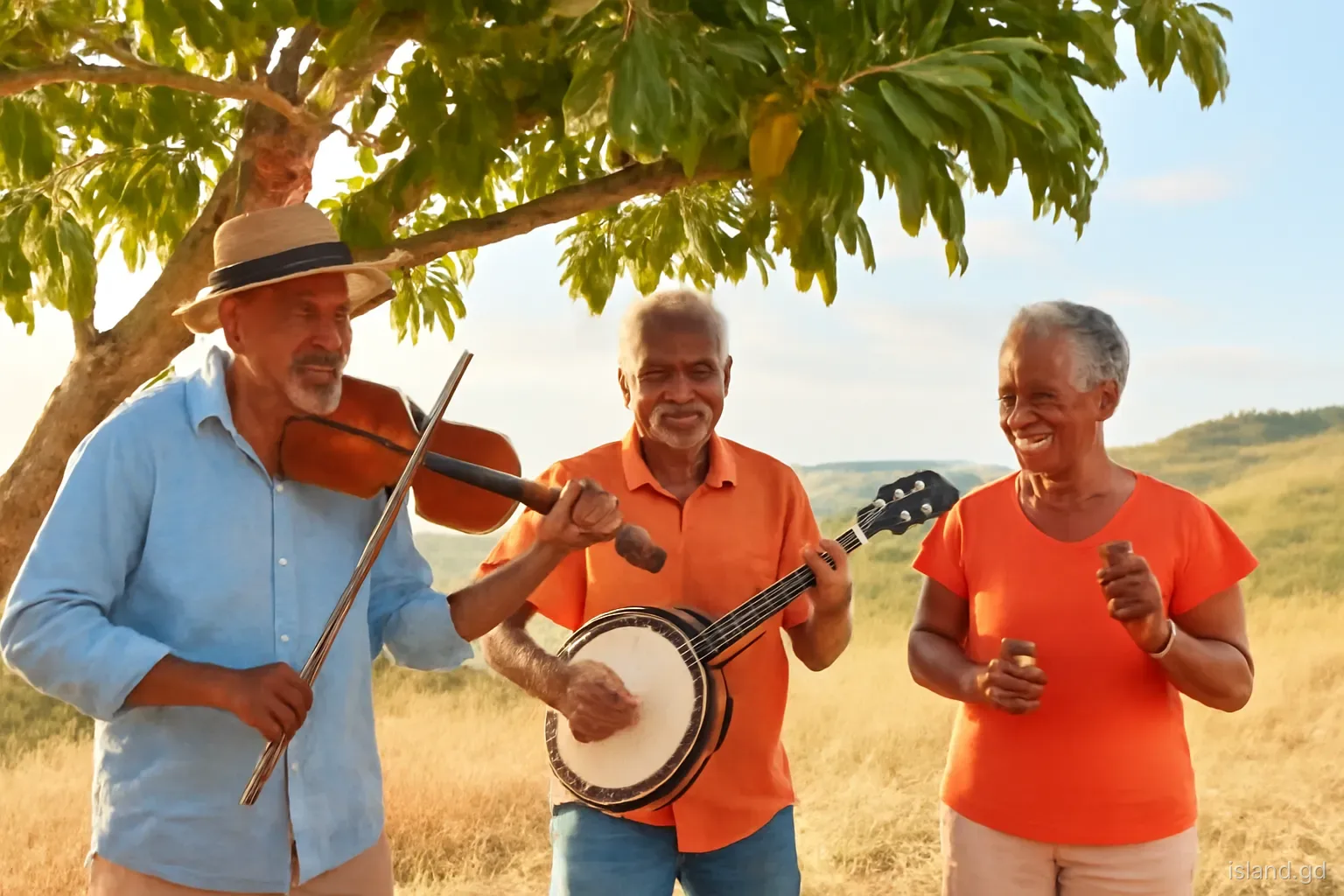
Alongside the African-rooted Big Drum, Carriacou preserves a European-influenced tradition: the string band and the quadrille. String bands typically combine violin or fiddle, banjo, guitar or cuatro, sometimes a bass instrument and percussion such as shakers and a triangle. Their repertoire includes quadrille figures, waltzes, polkas, reels and local songs, played for dancing at weddings, feasts and parties.
The quadrille arrived during the colonial period as a fashionable European set dance and was adopted and reshaped by Caribbean communities. In Carriacou it survived as a formal dance performed in sets of couples, each figure with its own music and steps. Older dancers maintain it, and cultural groups teach it to younger people.
String bands also accompany parang in December. Because these musicians are often older, events such as the Maroon festival play a significant role in keeping the music audible and in encouraging young players to learn fiddle and banjo parts by ear from those who know them.
What the festival weekend usually includes
The festival programme varies from year to year, and after Hurricane Beryl in 2024 organisers have had to adapt to damaged venues, displaced households and a stretched budget. Treat the list below as a picture of what the weekend has typically offered rather than a promise of this year's line-up. Elements that have regularly featured include:
- Performances by string bands from Carriacou, Petite Martinique and visiting groups from mainland Grenada and other islands.
- Big Drum performances, often with the opening Cromanti and a selection of nation and Creole dances.
- Quadrille demonstrations by village dance groups.
- A traditional maroon feast with smoked food and local dishes, sold or shared at village venues.
- Evening concerts with contemporary Caribbean acts alongside traditional music, sometimes held at venues around Hillsborough or in villages such as Belair or Harvey Vale.
- Craft and food stalls run by local vendors.
Planning a trip around the festival
The festival is small and the island has limited capacity, so preparation pays off. A practical sequence:
- Check the dates as early as possible with the Carriacou tourism office or the festival organisers. The festival is usually in late April, but dates and format can change, especially during post-Beryl recovery.
- Book the inter-island ferry or a flight from Grenada early. Services fill up on festival weekends, and ferry schedules should be confirmed shortly before travel.
- Reserve accommodation in Hillsborough, L'Esterre, Tyrrel Bay or Bogles. Carriacou has a modest number of guest rooms, and some properties damaged by Beryl may still be rebuilding.
- Carry cash in Eastern Caribbean dollars. Card acceptance is patchy at food stalls, and queues at the island's few cash machines can be long on festival days.
- Plan for heat and dust. April is the height of the dry season: bring a hat, sunscreen and water, and expect village venues to be outdoors.
- Leave room for spontaneity. Some of the best music happens at informal gatherings around the official programme. Ask your hosts where people are going in the evenings.
Why the rain prayer still matters
Modern Carriacou has public water supplies, desalination and household cisterns, so a weak rainy season no longer threatens survival the way it once did. Yet the island remains one of the drier parts of the state, and many households still collect roof water in tanks and rely on it through the dry months. A late start to the rains is felt in gardens, livestock and water bills.
Climate scientists expect the southern Caribbean to see more variable rainfall and hotter dry seasons, which gives the old purpose of the maroon a new relevance. A feast built around collective effort, sharing food and preparing for scarcity is, in practical terms, a small rehearsal of the habits that help an island community get through hard seasons.
The thanksgiving element also took on fresh weight after Hurricane Beryl, when villages that had lost roofs, trees and gardens found themselves cooking and eating together in the weeks after the storm. For many islanders, the line between tradition and practical solidarity is thin, and the maroon sits right on it.
What visitors get wrong
Expecting a slick festival. This is a community event on a small island. Start times slip, sound systems may struggle and programmes change. The value is in the music and food, not the production.
Mixing up the meanings of maroon. In Grenada and Carriacou the word refers to a communal feast, not to Maroon communities of escaped slaves as in Jamaica or Suriname. Asking about rebellions at a maroon will cause confusion.
Skipping the string bands. Many visitors come for the Big Drum and wander off when the fiddles start. The string bands are just as rare and arguably more endangered.
Not eating the food. The smoked food and shared dishes are the heart of the maroon. Try what is offered rather than waiting to find a restaurant afterwards.
Assuming everything is in Hillsborough. Many events take place in villages. Ask locally and consider hiring a taxi for an evening, since route buses run less often after dark.
Frequently asked questions
What is a maroon in Carriacou?
It is a communal feast and thanksgiving, traditionally held toward the end of the dry season to give thanks and pray for rain before planting. Villagers cook together outdoors, share the food and often hold a Big Drum. It is unrelated to the Maroon communities of escaped slaves elsewhere.
When is the Carriacou Maroon and String Band Music Festival?
It has usually taken place in the late dry season, around the end of April, over a long weekend. Dates and formats change from year to year, so confirm with the Carriacou tourism office or organisers, especially as the island continues to recover from Hurricane Beryl.
What instruments does a Carriacou string band use?
Typical line-ups include violin or fiddle, banjo, guitar or cuatro, sometimes a bass instrument, and percussion such as a shak-shak and triangle. They play quadrilles, waltzes, polkas and local songs for dancing, and they also feature heavily in December parang music.
What is the quadrille in Carriacou?
The quadrille is a set dance of European origin performed by couples in formation through a series of figures, each with its own music. It came to the Caribbean in the colonial period and was adapted locally. In Carriacou it is kept alive by village dance groups and string bands.
Is the Maroon festival suitable for families?
Yes. Daytime events with music, food and dance are relaxed and family-friendly, and children are part of village life at these gatherings. Evening concerts can run late and get loud, so families with young children often stick to afternoon and early-evening programmes.
How do you get to Carriacou for the festival?
From mainland Grenada, the options are the inter-island ferry from St George's to Carriacou or a short domestic flight to Lauriston Airport. Both are busier on festival weekends. Confirm current schedules close to departure and book ahead where possible.