Grenada has no winter or autumn in the temperate sense, but its wildlife runs on a clear annual rhythm. The dry season, roughly January to May, and the wet season, roughly June to December, change what flowers, what breeds and what moves. Add the arrival of North American migrants in the northern autumn and the turtle nesting season on the Atlantic beaches, and the island offers different wildlife at different times.
This calendar is a guide to patterns rather than a promise. Weather varies from year to year, and the start of the rains can shift by weeks. Use it to decide what to look for during a visit, and to understand why the forest sounds so different in October from the way it sounds in March.
January to March: dry season, flowering trees and turtles on the way
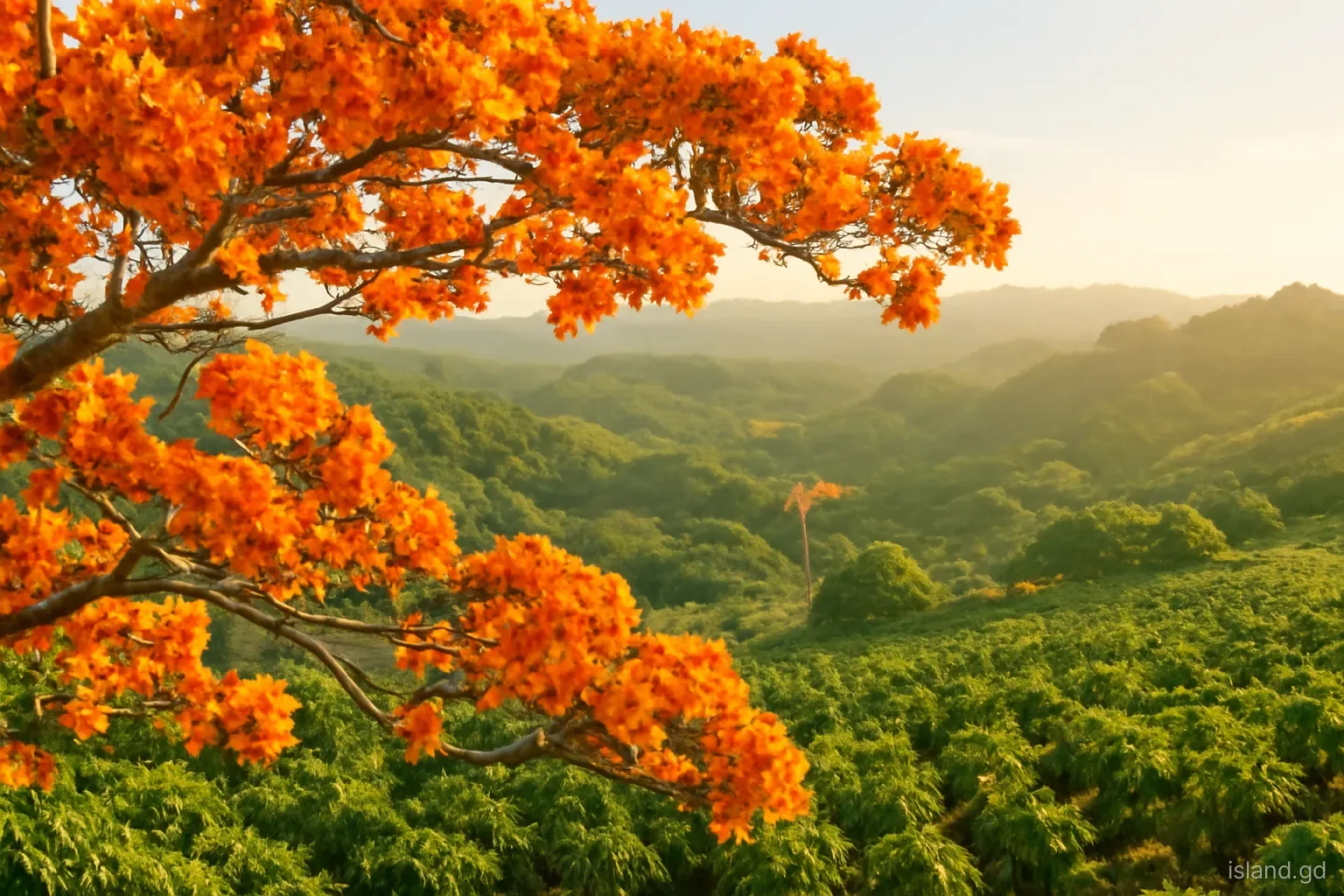
The new year usually brings drier, breezier weather and clearer trails. On the hillsides and cocoa estates, the immortelle trees, planted long ago to shade cocoa, burst into orange flower in the early dry season. They become feeding stations for green-throated caribs, bananaquits and other nectar-feeders, and a flowering immortelle at eye level is one of the best birdwatching spots on the island.
Wintering North American birds are still present: warblers in gardens and mangroves, sandpipers and plovers on salt ponds and beaches. In the dry forest, some trees drop their leaves, which makes birds easier to see. Whales may pass through Grenada's waters in the early months of the year, though sightings are irregular.
By March, the first leatherback turtles begin coming ashore on north-eastern beaches such as Levera and Bathway, marking the start of a nesting season that runs through the middle of the year. Early-season nesting is sparse, so serious turtle watchers usually aim for later months.
April to June: peak dry season, turtles and mango time
April and May are typically the driest and hottest months. Water sources shrink, and birds and mammals concentrate around remaining pools, rivers and fruiting trees. The dry season is also the time of greatest fire risk in scrub and grassland, which can affect habitat in dry areas.
This is the heart of the leatherback nesting season, generally busiest from around April to June. Organised night-time turtle watching on the north-east coast is the way to see it, following the rules of local monitoring groups. Hawksbill turtles also nest on some beaches in Grenada and Carriacou, with activity extending later into the year.
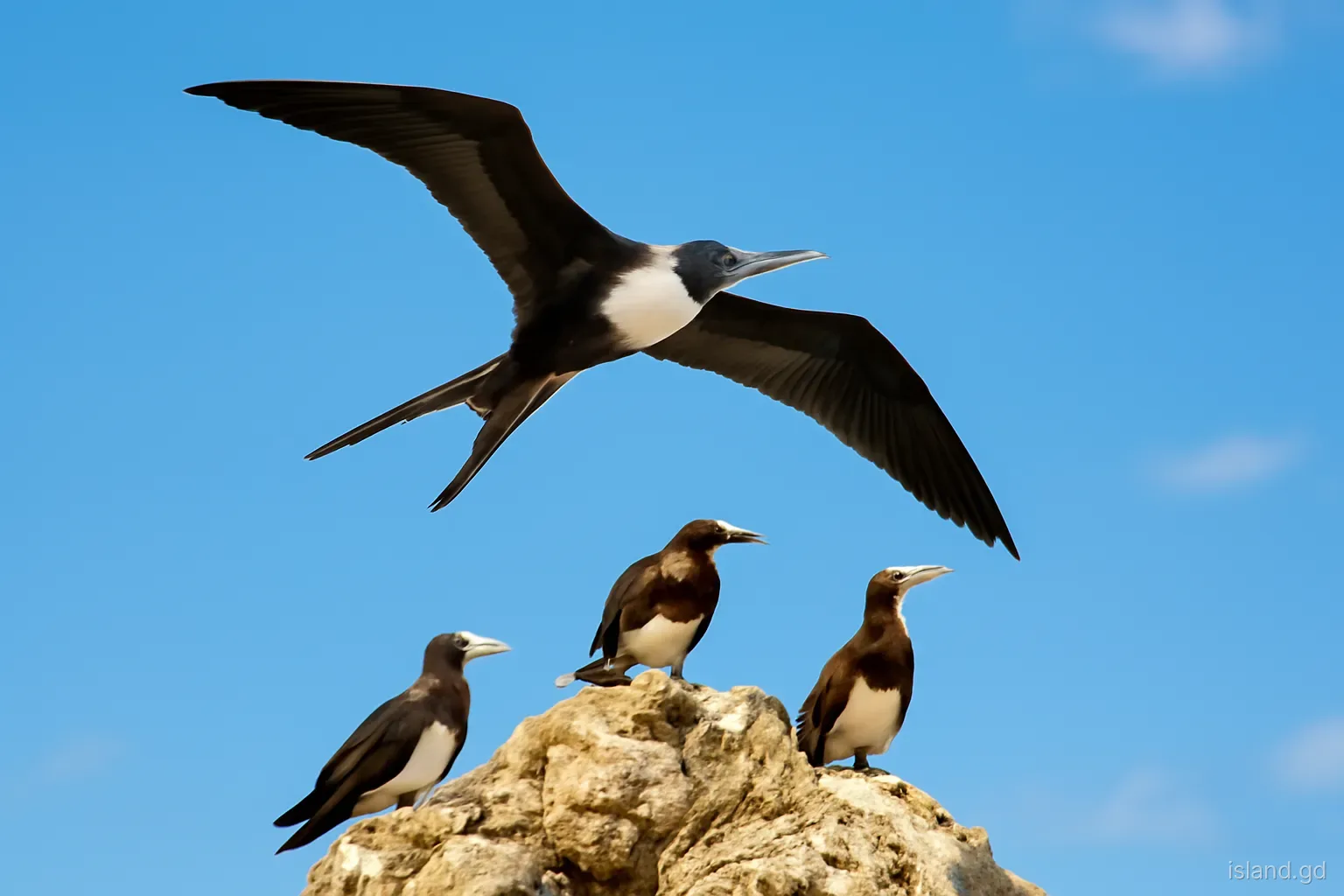
Mango and other fruit seasons get going, drawing mona monkeys to fruit trees at the forest edge and keeping bats busy at night. Laughing gulls return and become common in bays, and terns gather around offshore rocks as the seabird breeding season begins. When the first heavy rains arrive, usually in late May or June, the island changes almost overnight: the frogs start calling and many birds begin to sing more.
July to September: rains, hatchlings and returning migrants
Hatchlings. Turtle nests laid in spring hatch through the summer, and hatchlings make their way to the sea at night. Lights near beaches confuse them, which is why beachfront properties are asked to keep lighting low.
Night chorus. Whistling frogs become deafening on warm, wet evenings, and toads gather around puddles. The rainforest is at its greenest, and streams and waterfalls are full.
Land crabs. Land crabs become more active with the heavy rains, moving at night and turning up on roads and in yards in some coastal areas. Their movements are linked to the rainy season and breeding.
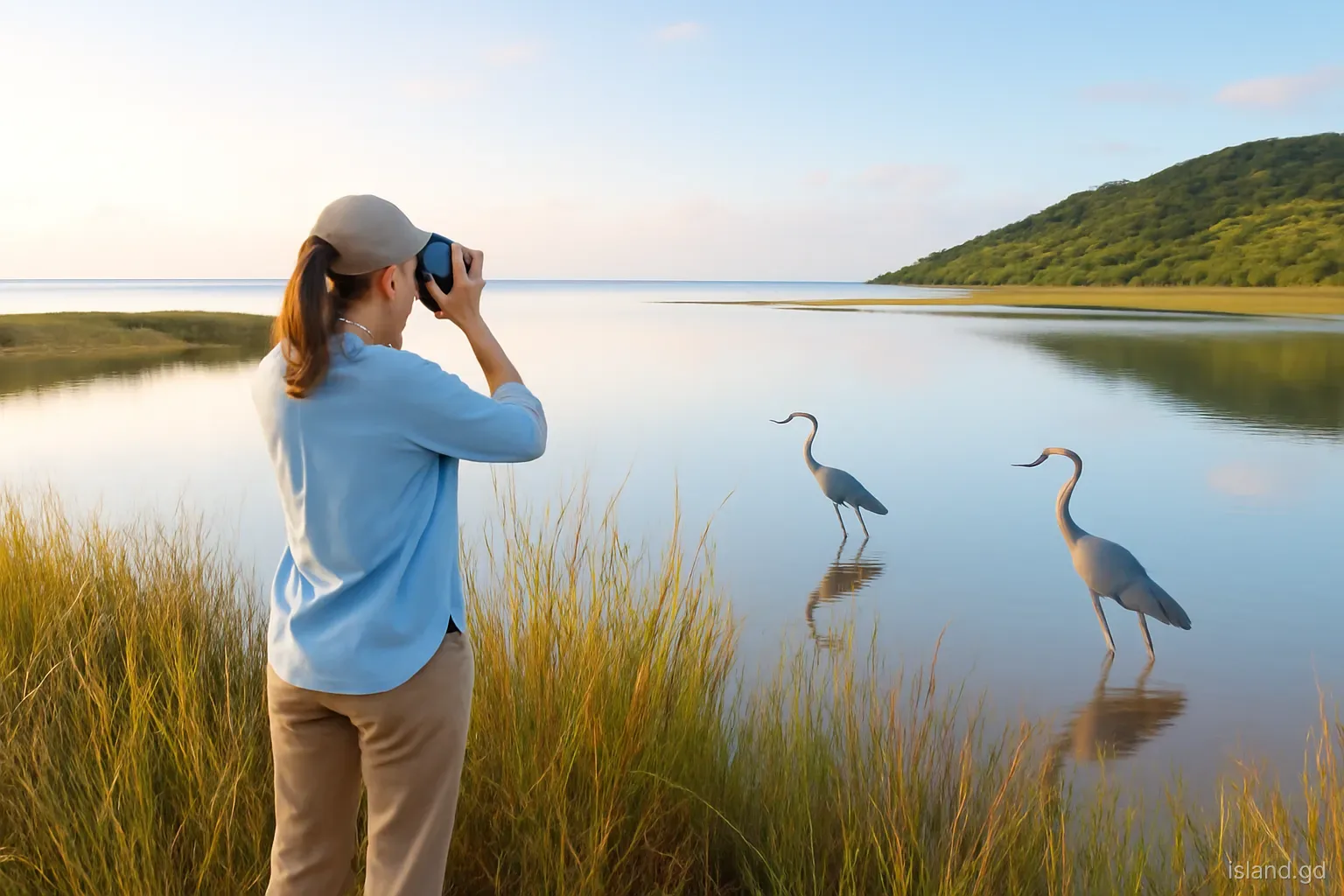
Shorebird migration. From August, North American shorebirds begin returning south. Salt ponds and wetlands such as Levera Pond and La Sagesse can hold sandpipers, plovers and yellowlegs, and numbers change from week to week.
Hurricane season. These months are also hurricane season, which peaks around August to October. Storms can strip forests and affect wildlife for months afterwards, as Hurricane Ivan did in 2004 and Hurricane Beryl did on Carriacou and Petite Martinique in 2024.
October to December: wet forest, wintering birds and the run-up to the dry season
The rainy season continues through much of the last quarter, with heavy showers and humid days. This is a good time to see amphibians and to hear the Grenada dove calling in the dry forest, as breeding activity for many resident birds rises with the rains. Trails are muddy, but the forest is lush and quiet.
North American migrants are now settled for the winter. Warblers such as the northern waterthrush and American redstart may be seen in mangroves and woodland, and wetlands host a mix of herons, egrets and shorebirds. Kingfishers that breed further north turn up along rivers and coasts.
By December, as the trade winds strengthen and showers become less frequent, the dry season is approaching. Hunting season for some species has traditionally fallen in this part of the year under wildlife regulations, so visitors to rural areas may notice it in conversation or at local events. Christmas also brings out sorrel and other seasonal plants, a reminder that the island's calendar is shared between nature and people.
Carriacou and Petite Martinique through the year
The smaller islands are lower and drier than the mainland, and the dry season bites harder there. By April and May the hills of Carriacou turn brown, many trees are leafless and wildlife gathers where water and shade remain. Iguanas and tortoises are often easiest to see when they are out basking or searching for food in the morning, and seabirds are a constant around the coast and the surrounding islets.
With the rains, the islands green up quickly. Land crabs, frogs and insects become more active, and the mangroves and lagoons around Tyrrel Bay and elsewhere attract herons and shorebirds as northern migrants arrive from August onwards. Turtle nesting also takes place on some Carriacou beaches, where local groups have long been involved in monitoring.
Hurricane Beryl, which struck Carriacou and Petite Martinique in July 2024, caused heavy damage to trees, mangroves and coastal habitats. Recovery is ongoing, and some areas will look and behave differently from descriptions written before the storm. Anyone planning a wildlife-focused visit should check current conditions and local guiding arrangements before travelling.
Choosing when to visit for wildlife
Each kind of wildlife has its own best season, and the windows overlap less than people expect. A visitor hoping to combine nesting turtles with wintering shorebirds, for example, has only a narrow overlap in spring. This quick summary helps match a trip to an interest; treat every window as approximate and confirm organised activities, such as turtle watching, before booking.
- Leatherback turtles nesting: roughly April to June for the best chances; March to August for any chance.
- Turtle hatchlings: roughly June to September.
- Forest birds and monkeys: year-round, with easier trails from January to May.
- Migrant shorebirds and wintering warblers: roughly August to April.
- Flowering immortelles and nectar-feeding birds: early dry season, roughly January to March.
- Frogs, rainforest at its fullest and the most bird song: the wet season from June onwards.
- Seabird colonies at their busiest: roughly spring through summer.
Seasonal mistakes to avoid
The most common error is planning a wildlife trip around a single famous event without checking its season. Visitors arriving in December hoping to see nesting leatherbacks will be disappointed, and those who come in the heart of the dry season expecting full waterfalls and a roaring frog chorus will find the opposite. A second mistake is assuming the dry season means no rain in the mountains: Grand Etang can be wet and misty in any month.
Heat is underestimated in April and May. Wildlife activity drops sharply by mid-morning, so a walk that starts at ten finds the forest quiet and the walker exhausted. Start at first light, carry more water than seems necessary and rest in the middle of the day.
In the wet season, the risks shift to mud, swollen rivers and mosquitoes. Rivers can rise quickly after heavy rain in the hills, so do not cross fast-flowing water on trails, and use repellent at dawn and dusk. Check the weather forecast during hurricane season and follow official advice from the National Disaster Management Agency if a storm is approaching.
Frequently asked questions
What is the best month to see wildlife in Grenada?
It depends on the interest. April to June is best for nesting leatherback turtles, January to March for dry, easy trails and flowering trees, and August to April for migrant shorebirds. Forest birds and mona monkeys can be seen at any time.
When do turtles nest in Grenada?
Leatherbacks nest on north-eastern beaches such as Levera and Bathway from about March to August, peaking from roughly April to June. Hawksbills nest on some beaches with activity later in the year. Hatchlings emerge about two months after eggs are laid.
Is the rainy season a bad time for wildlife watching in Grenada?
Not at all. Trails are muddier and showers frequent, but the forest is lush, frogs are active, many birds are breeding and migrant shorebirds start arriving from August. Mornings are often clear before afternoon rain.
When do the immortelle trees flower in Grenada?
Immortelles usually flower in the early dry season, roughly January to March, covering hillsides and cocoa estates in orange blossom. They attract hummingbirds, bananaquits and other birds, and are worth seeking out for photography and birdwatching.
How does hurricane season affect Grenada's wildlife?
Major storms can strip trees of leaves and fruit, flatten forest and damage mangroves and reefs. Animals that depend on fruit, such as monkeys and fruit bats, can decline sharply after a big hurricane. Recovery usually takes years as vegetation regrows.