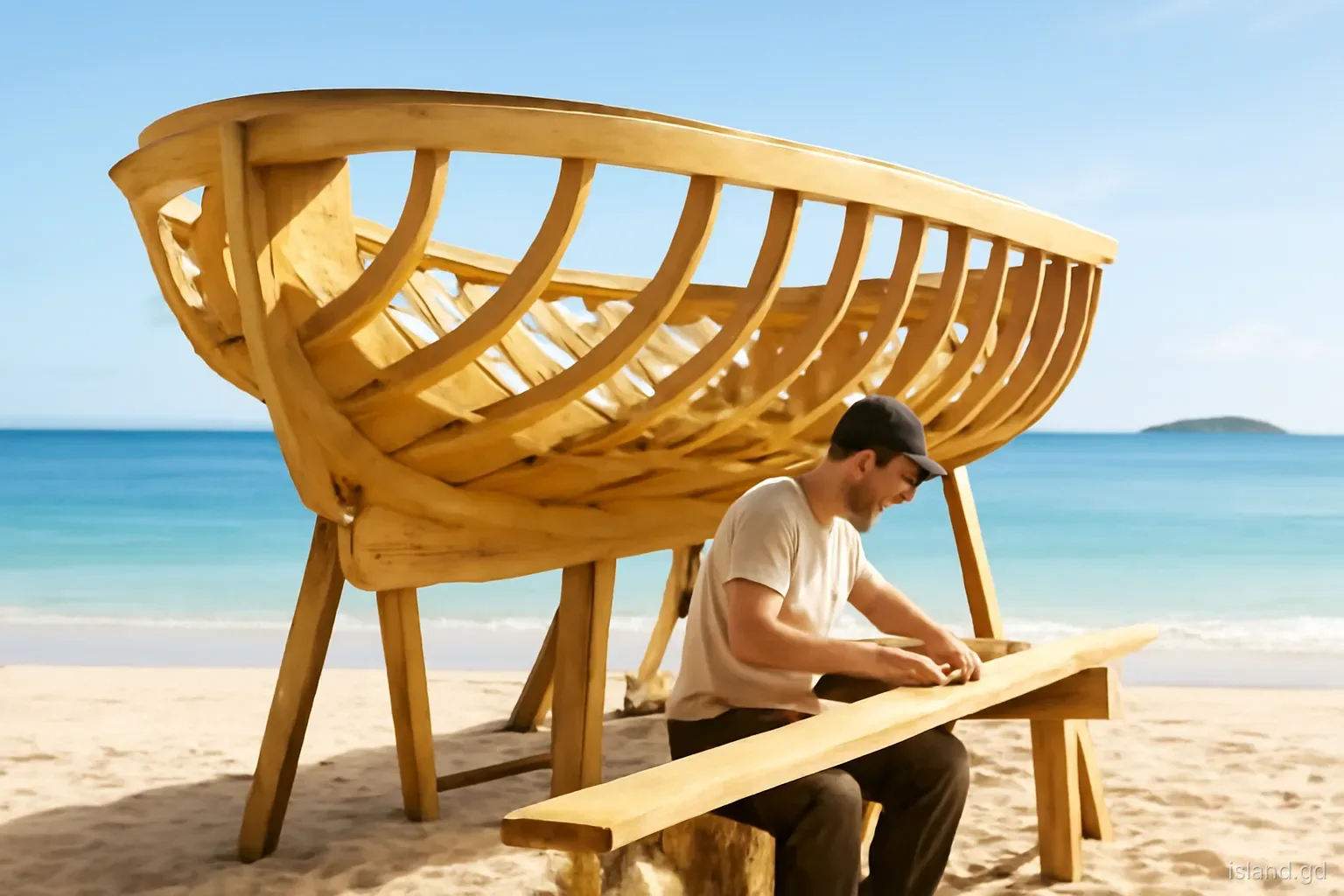
On a few beaches in the southern Grenadines, wooden boats are still built the way they were a century ago: on the sand, under a shade of tarpaulin or palm fronds, from a keel laid by hand and shaped largely by eye. Petite Martinique and the village of Windward on Carriacou, a short crossing apart, are the two places most closely tied to this craft.
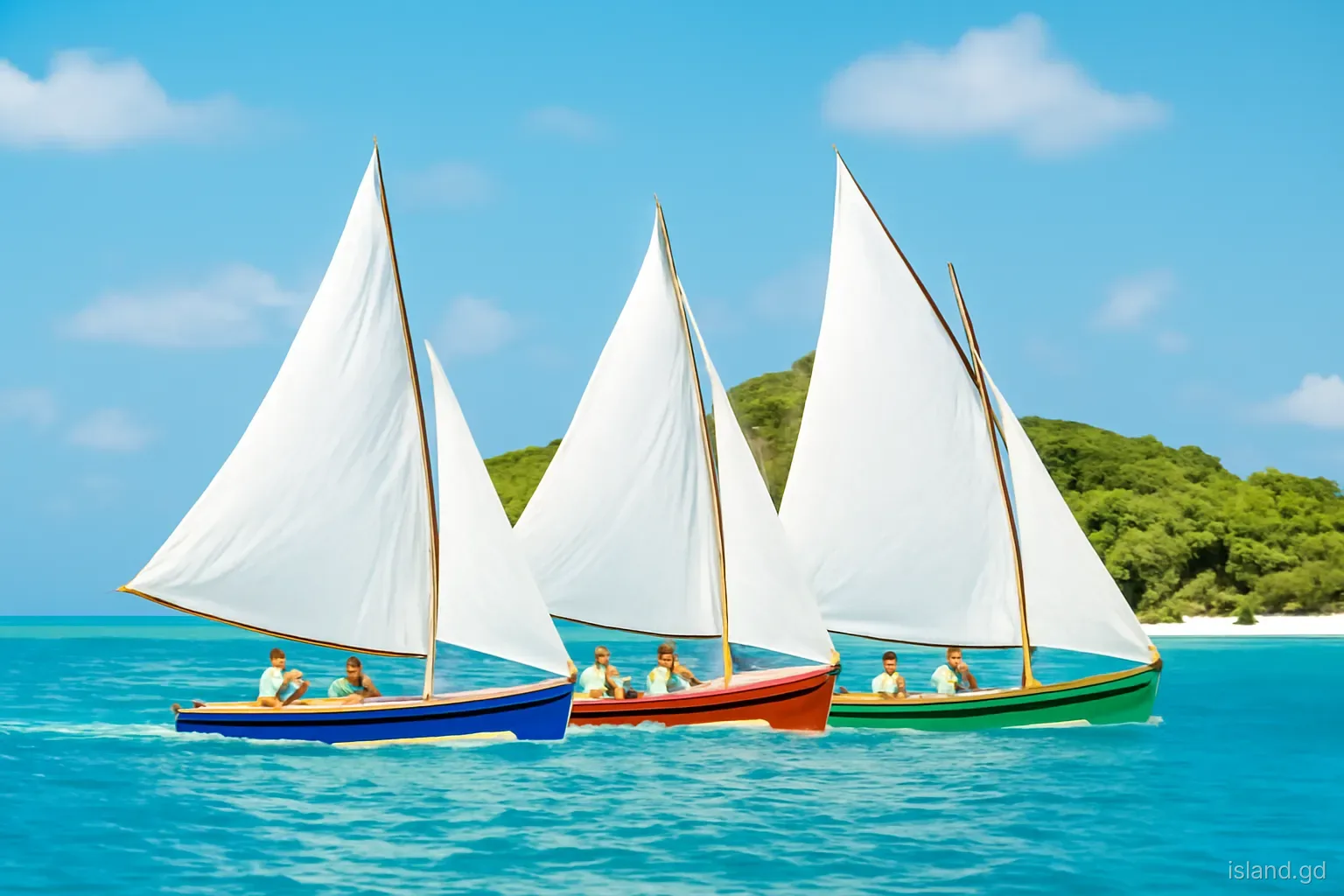
The boats that came off these beaches once carried cargo, livestock and passengers across the Eastern Caribbean, and the best of them still race at the Carriacou Regatta and the Petite Martinique Whitsuntide celebrations. The work is slower and rarer than it was, and Hurricane Beryl destroyed boats and work areas in July 2024, but the knowledge has not disappeared.
This article explains how the tradition works: who builds, what goes into a hull, how a launching happens and how a visitor can watch without getting in the way.
Where the tradition comes from
Boatbuilding in Carriacou and Petite Martinique is commonly traced to the colonial period, when shipwrights of Scottish background are said to have settled around Windward and passed their methods to local builders. Whatever the exact origins, the craft became a family inheritance. Skills moved from fathers and uncles to sons and nephews, and particular families became known for particular kinds of boat.
The islands had good reasons to build. They had little farmland and limited rainfall, but they sat on a busy sea. A well-built sloop or schooner turned that position into a living, carrying produce, animals and goods between Grenada, St Vincent, Trinidad and other islands. For Petite Martinique in particular, owning and sailing boats was the main route to a better income for generations.
Petite Martinique and Windward face each other across a short stretch of water, and builders, crews and families have always moved between them. It makes more sense to think of one maritime community split by a channel than of two separate traditions.
What goes into a hull
The keel and frames. Construction starts with the keel, the backbone of the boat, laid on blocks on the beach. Ribs, or frames, rise from it. Builders have traditionally favoured naturally curved pieces of tough local hardwood, with white cedar from the islands often mentioned, because a branch that already grows in the right curve is stronger than a straight timber cut to shape.
Planking. Planks are fitted along the frames, bent and fastened to give the hull its shape. Imported timber has long been used for planking because suitable straight-grained local wood is scarce. Choosing, steaming or soaking and fitting planks is skilled work that takes much of the building time.
Caulking and finishing. Seams between planks are packed and sealed to keep the water out, then the hull is painted, often in bright colours with a contrasting trim. Decks, cabin, mast and rigging follow, depending on whether the boat is for fishing, cargo or racing.
Building by eye. Many builders work from experience and half-models rather than full drawn plans. The proportions of a good boat live in the builder's judgement, which is exactly why the skill is hard to pass on quickly and easy to lose.
Time and money. A large wooden boat can take many months or more than a year to complete, often built in stages as money comes in from fishing, work abroad or the owner's family. It is a long-term investment rather than a quick purchase.
From keel to sea: the usual sequence
Practice varies from builder to builder, but the life of a new sloop on a Grenadines beach tends to follow the same broad order.
- The owner and builder agree on the type and size of boat, usually based on its intended work: fishing, carrying cargo or racing.
- Timber is gathered over time, with curved pieces for the frames selected carefully and planking wood bought in.
- The keel is laid on blocks above the high-water line, with stem and stern posts raised at each end.
- Frames are set up along the keel, and the shape of the hull is checked repeatedly by eye from every angle.
- Planking goes on, seams are caulked, and the hull is faired and painted.
- Deck, mast and fittings are added, sometimes after launching if money is short.
- A launching date is set, and the community is invited to help push the finished hull down to the water.
The launching: a community event
A boat launch on Petite Martinique or Carriacou is far more than moving a hull into the sea. It is a celebration that draws relatives, neighbours and friends, and it often includes prayers or a blessing, sometimes by a priest. Traditional elements associated with launches in these islands include the preparation of a saraca, a shared meal offered in honour of ancestors, and in Carriacou, Big Drum music and dance.
The physical launch is collective labour. Ropes, rollers and many pairs of hands move the boat down the beach, often with singing and shouting to keep everyone pulling together. When the hull floats free, the crowd celebrates and the boat is named. Food and drink are shared, and the day can run well into the evening.
If you are on the island when a launch happens, ask whether visitors are welcome. Usually they are, but follow your hosts' lead: dress respectfully, offer to help only if asked, keep children well clear of the hull and rollers, and ask before photographing people, especially during any prayers or offerings.
Pressures on the craft today
Fishing in Grenada now relies mainly on fibreglass boats with outboard engines, which are quicker to buy and easier to maintain than a wooden hull. Cargo moves on steel vessels. That leaves wooden boatbuilding sustained largely by racing, pride and the commitment of a small number of builders, rather than by everyday commercial demand.
Timber is harder to find, younger people often seek work abroad or in other trades, and the long build times do not fit easily into modern working lives. Hurricane Beryl added a new blow, wrecking boats on moorings and on land and damaging the beaches and sheds where work was done.
There have been efforts to document the tradition and encourage young builders, and the regattas remain a powerful motivation: a fast wooden sloop is still a source of family and island pride. For visitors, the most useful thing is simple interest and respect. Watching builders at work, asking good questions and buying from local businesses all help keep the island's maritime economy alive.
Watching and learning respectfully
There is no museum of boatbuilding on Petite Martinique and no scheduled demonstration. What you can see depends on whether anyone is building or repairing a boat when you visit. Ask around at the jetty or the shops; people generally know which beach has a hull on the blocks. Approach the builder first, introduce yourself and ask whether it is a good time. A builder concentrating on fitting a plank does not want an audience at that moment, but may happily talk during a break.
Good questions are welcome: what the boat is for, how long it has been under way, where the timber came from, who taught the builder. Avoid touching tools, timber or the hull, never climb on props or scaffolding, and keep a clear space around anyone working with an adze or saw. If you want photographs, ask, and respect a refusal. Some families are proud to show their work; others prefer privacy.
For a fuller picture, combine a visit to PM with Windward on Carriacou and, if your dates allow, the Carriacou Regatta or the Petite Martinique Whitsuntide celebrations, when finished boats race and the builders' work is on show.
Frequently asked questions
Are wooden boats still built on Petite Martinique?
Yes, though on a smaller scale than in the past. Most working fishing boats are now fibreglass, and wooden building is kept going by a small number of skilled builders, racing enthusiasts and families who value the tradition. Hurricane Beryl in 2024 also set the craft back.
What kind of boats are built there?
The best known are wooden sloops, single-masted sailing boats used historically for fishing and inter-island cargo, and now prized for racing at regattas. Larger schooners were also built in the past, along with smaller open boats for fishing close to shore.
Can visitors watch boatbuilding?
Often yes, if there is work under way. Ask the builder before approaching, keep a safe distance from tools and props, and ask before taking photographs. There is no fixed visitor programme, so it depends entirely on what is being built when you are there.
What happens at a boat launch?
A launch usually brings the community together to push the new hull into the sea using ropes and rollers. Prayers or a blessing, shared food and music are common, and on Carriacou the event may include a saraca meal and Big Drum. It is a celebration rather than a formal ceremony.
Where else in Grenada can you see traditional boatbuilding?
Windward on Carriacou's north-east coast is the other main centre, and it faces Petite Martinique across a short channel. The Carriacou Regatta, usually held around the start of August, is the best time to see the finished boats racing.