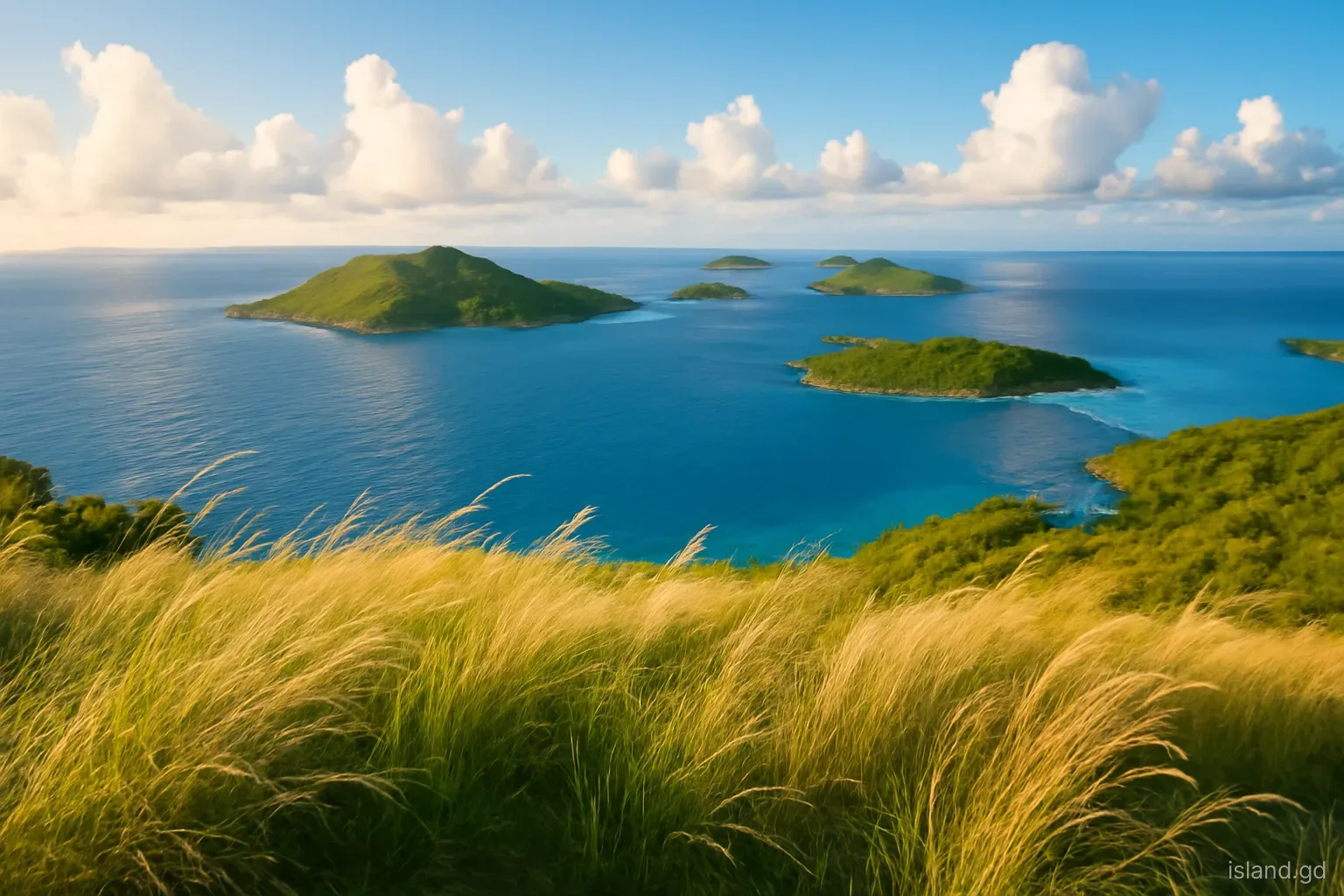
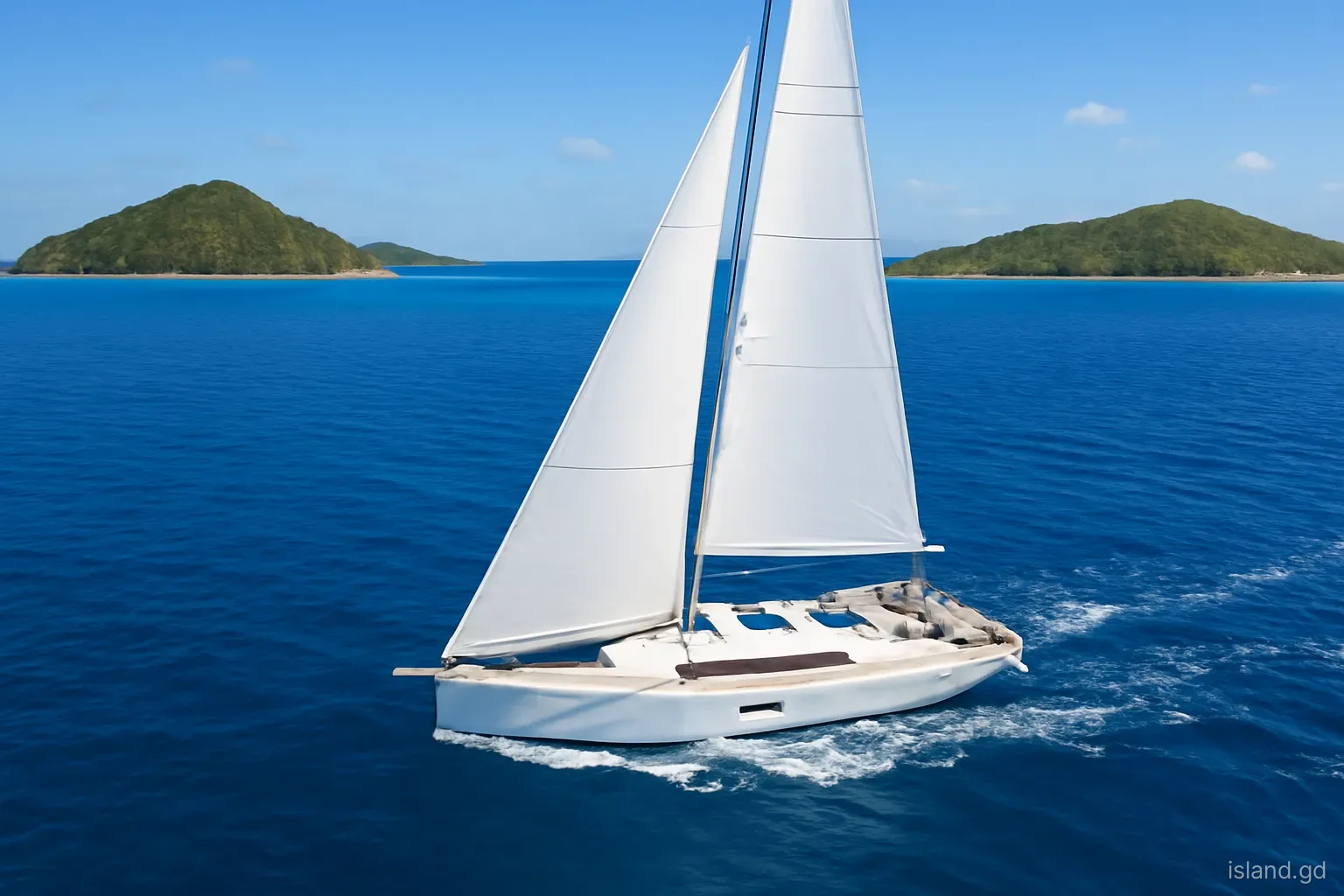
For a cruising yacht, Carriacou is the natural springboard into the most celebrated sailing waters in the eastern Caribbean. Within a day's sail to the north lie Union Island, the reef-ringed Tobago Cays, Mayreau, Canouan, Mustique and Bequia, all part of St Vincent and the Grenadines. Distances are short, the islands are close together and the passage runs across or slightly into the trade winds, which keeps most legs to a few hours.
This piece is a passage overview for skippers who already know the Grenada side. It covers clearing out of Grenada, the order in which most boats take the islands, the marine park rules that matter in the Tobago Cays, and the stretch up to Bequia. It is not a substitute for current charts, a recent cruising guide and local advice: reefs here are unforgiving, conditions change through the year and facilities on several islands were damaged by Hurricane Beryl in 2024.
Clearing out of Grenada at Carriacou
Before heading north, a yacht must clear out of Grenada. Carriacou is a convenient place to do so: customs and immigration have long operated in Hillsborough, and in recent years clearance has also been available at Tyrrel Bay, where many boats anchor. Confirm which offices are open and their hours before you plan the morning of departure. The skipper presents the boat's papers, crew passports and the clearance from the previous port; Grenada participates in the regional online pre-notification system for yachts, and completing it in advance usually speeds things up.
Customs normally expects you to leave promptly after clearing out, typically within 24 hours, without stopping elsewhere in Grenadian waters. That rules out a final night at Sandy Island or a lunch stop at Petite Martinique after you have your papers. Plan the last Grenadian stops before clearance, then go. If weather holds you back, check with the officers rather than assuming a delay is acceptable.
Union Island and the Tobago Cays
Clifton, Union Island: clearing in. The first stop for most boats heading north is Clifton, where customs and immigration handle entry into St Vincent and the Grenadines. The harbour is protected by a reef that demands careful pilotage; enter in good light with someone on the bow. Ashton Harbour and Chatham Bay on the west side are alternative anchorages once you have cleared in.
The approach to the Tobago Cays. From Union it is a short sail to the Tobago Cays, a cluster of small uninhabited islands, Petit Rameau, Petit Bateau, Baradal, Jamesby and Petit Tabac, sheltered behind the long arc of Horseshoe Reef. Use the approach routes shown in a current cruising guide and arrive in good light; reef patches lie close to the surface.
Marine park rules. The Cays form the Tobago Cays Marine Park. Park rangers collect a per-person daily fee, mooring buoys are provided in parts of the park, and anchoring is prohibited in some zones such as the turtle-watching area off Baradal. Fishing, collecting shells or coral and dumping waste are banned. Fees change, so carry cash and confirm the current rate with the rangers.
Wildlife in the Cays. The turtle area off Baradal is famous for green turtles grazing on seagrass, and snorkellers often see rays and reef fish around the islands. Swim within the marked zones, keep away from dinghy channels and never touch or chase turtles.
Mayreau, Canouan and the middle islands
Mayreau sits just west of the Tobago Cays and has two well-known anchorages: Salt Whistle Bay at the northern end, a horseshoe of sand sheltered from the swell, and Saline Bay on the west side, where the island's one small village climbs the hill. Mayreau is small, without much in the way of services, so treat it as an anchorage and a walk rather than a provisioning stop. Both bays can roll when the swell comes round from the north in winter.
Canouan, further north, combines an older village at Charlestown Bay with large resort developments that occupy much of the island. Anchoring and landing rules near the resort areas and marina can be restrictive, so read your guide and ask locally before going ashore. Beyond Canouan, the passage to Bequia passes Mustique, a privately managed island with strict anchoring and mooring rules in Britannia Bay; boats can visit, but there are fees and restrictions, and many skippers simply sail past. Expect stronger winds and bigger seas in the channels between the islands than in the lee of each one, and reef in early when crossing open stretches.
Bequia: the end of the classic route
Bequia, the largest of the northern Grenadines, is the end of the run for many boats heading north from Grenada. Admiralty Bay is a wide, deep anchorage sheltered from the trades, with Port Elizabeth spread along the shore, and it is a port of entry, so boats that have not cleared in elsewhere can do so here. The island has a long seafaring tradition, from wooden boatbuilding to a small, regulated traditional whaling culture that remains controversial outside the island.
Bequia is also where many crews swap people. Its proximity to Argyle International Airport on St Vincent, a short ferry ride away, makes it a practical place for friends to join or leave the boat, and the ferries between Port Elizabeth and Kingstown run several times a day on normal schedules.
Port Elizabeth offers provisioning, water, fuel, laundry and chandlery services, ferries to Kingstown on St Vincent, and walking trails to Princess Margaret Beach and Lower Bay. From Bequia, boats either continue north to St Vincent and beyond or turn back south. The return trip is generally easier on the wind, as the trades blow from the east and broadly favour a southbound passage, with the strong current through the channels needing attention in places. Many skippers plan the northward run in stages and the southward run in fewer, longer days.
Choosing your season for the Grenadines
The main cruising season in the Grenadines runs from about December to May, when the risk of tropical storms is low and the trade winds are steady. December to March brings the strongest winds, often 15 to 25 knots with higher gusts, and steep seas in the open channels; experienced crews enjoy the fast sailing, while families and newer sailors often prefer the gentler conditions from April to early June. This is also when northerly swells are less frequent, making anchorages such as Salt Whistle Bay more comfortable.
Hurricane season runs officially from 1 June to 30 November. Grenada lies near the southern edge of the main hurricane track, which is why many boats spend the season there, but the Grenadines are not immune, as Hurricane Beryl showed in 2024. Sailing north in summer is possible with close attention to forecasts and a clear plan for where to run if a system develops. Insurers often set conditions on where a boat may be during these months, so check your policy before heading north of Grenada between June and November.
Pitfalls and checks for the passage
Most trouble on this route comes from a handful of predictable sources:
- Reef pilotage in poor light. Clifton, the Tobago Cays and several anchorages need the sun high and behind you to read the water. Arrive by early afternoon.
- Outdated information. Hurricane Beryl changed shorelines and businesses on Union, Mayreau and Carriacou. Older guides may describe moorings, bars and services that no longer exist.
- Assuming clearance can wait. Arriving in Vincentian waters and stopping in the Cays before clearing in at Clifton or Bequia is not permitted and can lead to fines.
- Winter swell. Northerly swells from December to March make some anchorages, including Salt Whistle Bay, uncomfortable or untenable.
- Boat boys and services. Vendors in small boats offer fruit, ice, bread and moorings. Agree a price before accepting anything and check that a mooring is official before paying for it.
- Fuel and water planning. Supplies are thinner on the smaller islands, especially since the hurricane. Fill up in Carriacou or Bequia when you can.
Frequently asked questions
Where do yachts clear out of Grenada to sail north?
Yachts leaving Grenada for St Vincent and the Grenadines usually clear out in Carriacou, either at Hillsborough or at Tyrrel Bay, where clearance has also been offered in recent years. Confirm current office hours and leave promptly after clearing, without further stops in Grenadian waters.
Where is the first port of entry in St Vincent's Grenadines?
For boats sailing north from Carriacou, Clifton on Union Island is the nearest port of entry. Bequia, at Port Elizabeth in Admiralty Bay, is another common one. You should clear in at a port of entry before stopping anywhere else, including the Tobago Cays.
Is there a fee to anchor in the Tobago Cays?
Yes. The Tobago Cays Marine Park charges a daily fee per person, collected by park rangers, and uses moorings in parts of the park. Anchoring is prohibited in some zones, including the turtle-watching area. Fees are revised from time to time, so carry cash and confirm locally.
How far is it from Carriacou to Bequia by yacht?
The run from Carriacou to Bequia is roughly 30 to 40 nautical miles in a straight line, but most cruisers break it into stages with stops at Union Island, the Tobago Cays, Mayreau or Canouan. With the trade winds on the beam, each leg is usually a few hours.
Is it easier to sail north or south through the Grenadines?
With the prevailing easterly trade winds, both directions are often reaching legs, but southbound passages tend to feel easier and faster. Currents and gusts in the channels between islands affect both. Many skippers take more time going north and cover the return in fewer, longer days.