In Carriacou, when something important is about to happen or has just gone right, a family may decide to 'make a saraka'. Relatives gather the night before, a goat or sheep is killed, rice, peas and ground provisions go into large pots over wood fires, and by the time the food is ready, a share has been set aside for the dead. Neighbours, children and anyone passing are fed. There may be a Big Drum after dark.
The word is also spelled saraca or sarakha, and similar terms appear in other Caribbean islands. Its likely root is an Arabic word for alms or charitable offering that travelled through West African languages. In Carriacou the saraka has a precise character: it is a thanksgiving and an offering, a way of keeping the living and the 'old parents' in a good relationship. This article explains what happens, when families hold one and what a guest should know.
What a saraka is for
The saraka belongs to a world view in which the ancestors remain present and concerned with family affairs. They can bless or warn, and they expect to be remembered. A saraka is one of the main ways to do that, alongside the Big Drum and the stone feast. Families describe it as giving thanks, asking protection and settling obligations.
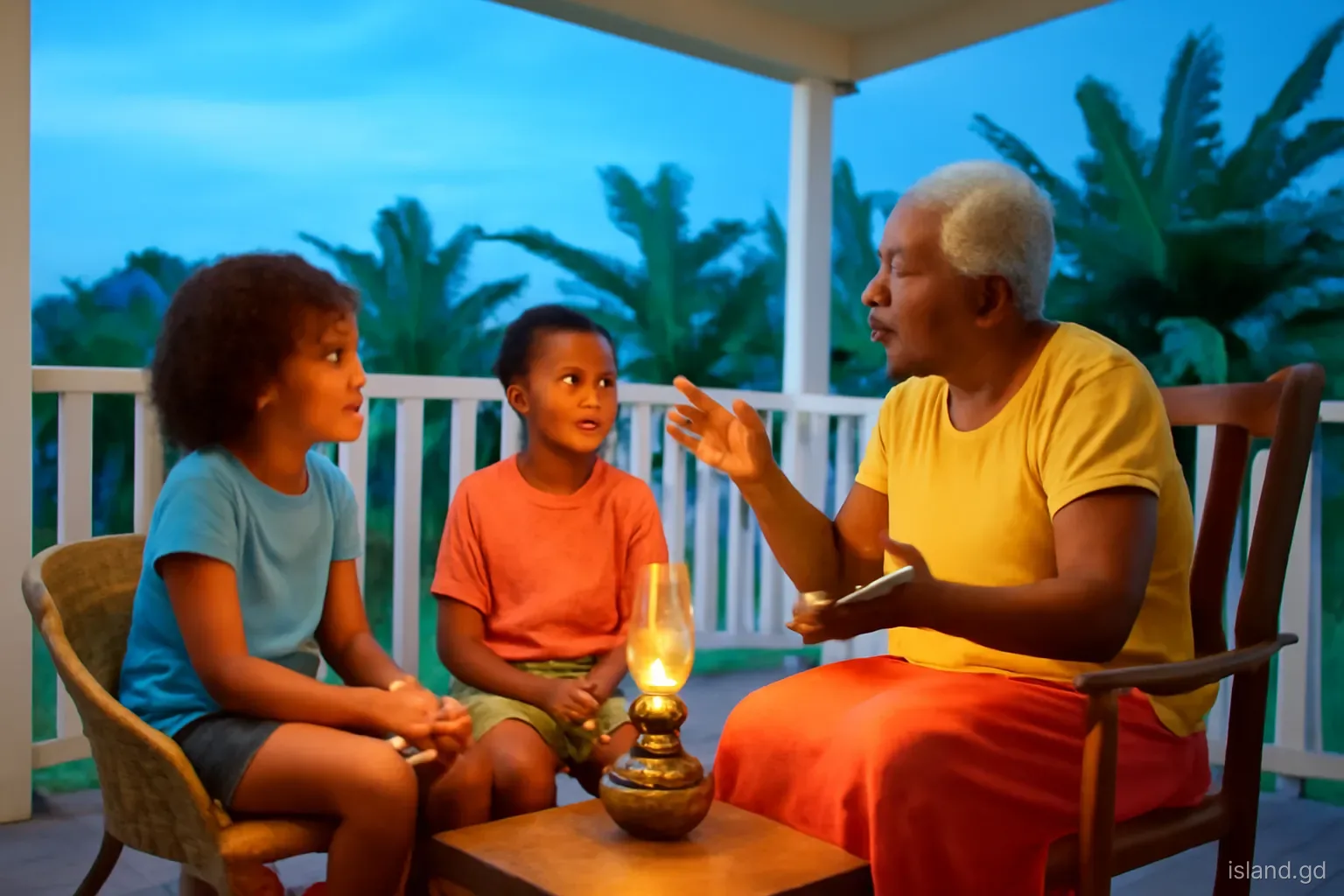
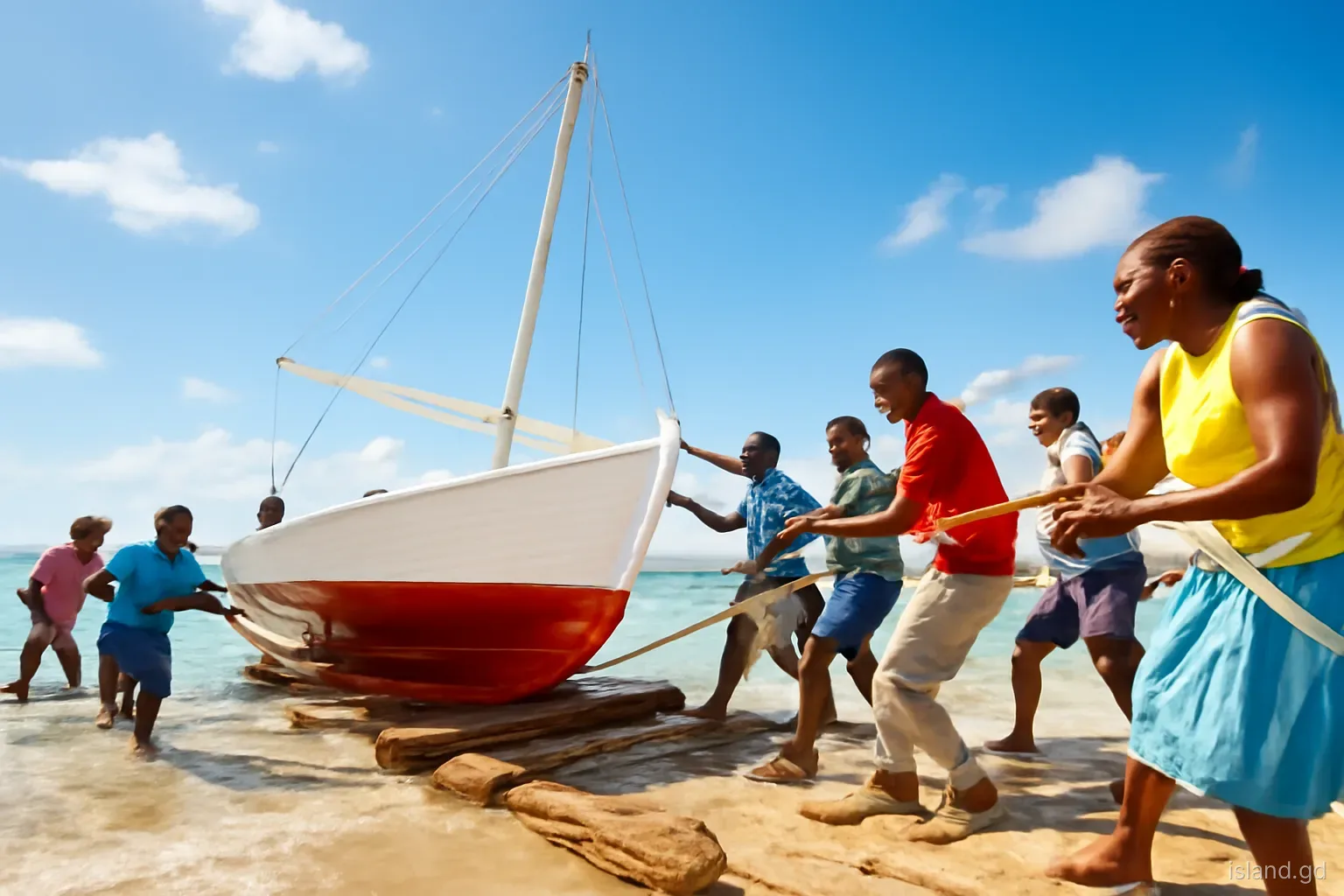
Occasions vary widely. A family might hold one before a member emigrates or goes away to study, when a boat is about to be launched, when a new house is finished, after recovery from illness, to give thanks for a good harvest or catch, or because an ancestor appeared in a dream asking to be fed. The dream motive is taken seriously; a saraka is the respectful reply.
Churches play a role too. Carriacou is a strongly Christian island, mainly Anglican, Roman Catholic and Methodist with other denominations, and many families combine prayers or hymns with the saraka. Islanders generally do not see the two as contradictory: the saraka is a family duty, the church a weekly practice.
The food and how it is shared
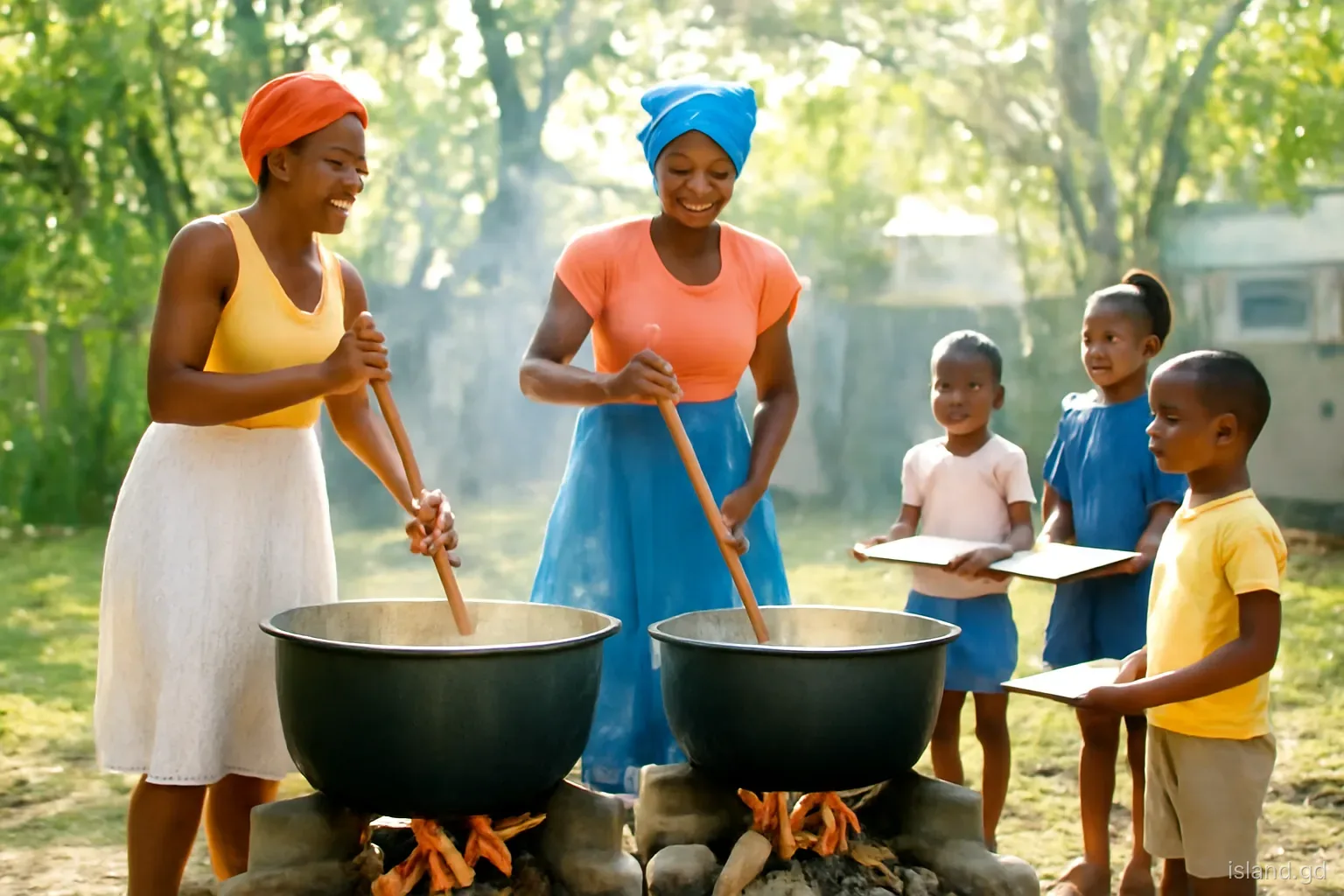
Cooked in quantity. Saraka food is cooked outdoors in big pots over wood fires, often by several women working together from early morning. Rice, pigeon peas, ground provisions such as yam and dasheen, and meat from the slaughtered animal form the base. Cakes, bread and drinks are common.
The plate for the ancestors. Before people eat, a portion is set aside for the dead, sometimes placed on a table in a room of the house, sometimes laid out near where the Big Drum will play. Some families keep the ancestors' food unsalted, following an old belief that the spirits do not take salt.
Children first. In many saraka traditions children are fed before adults, often seated together with plates of food. The custom is linked to the idea that children are close to the ancestors and that feeding them pleases the old people.
Open to everyone. A saraka is generous by design. Neighbours, passers-by and the less well-off in the village are fed, which reflects the original meaning of an offering shared as charity.
Drinks and libation. Rum and water are poured on the ground as a libation, a gesture that also opens a Big Drum. Bottles of rum and soft drinks circulate among adults through the evening.
How the day unfolds
Preparation often starts the evening before, with relatives arriving to help, firewood collected and vegetables peeled. The animal is usually killed early in the morning. Older family members may lead prayers, and someone who knows the customs ensures the ancestors' portion is prepared properly.
By midday or afternoon the food is ready. The plate for the dead is set out, the children are called, and then adults eat. Conversation about the person or reason behind the saraka flows naturally; much of the family's history gets told around those pots.
If the family has engaged drummers, the Big Drum begins in the evening with the Cromanti, the opening dance that greets the ancestors, followed by the nation dances. Not every saraka has a drum, though. Smaller ones may be a family meal with prayers and an offering, no less meaningful for being quiet.
If you are invited to a saraka
Visitors staying with local families, or who become known in a village, are sometimes invited. Good conduct is mostly common sense, but a few points help:
- Accept food when it is offered. Refusing a plate at a saraka can come across as refusing the family's hospitality and its purpose.
- Do not touch or move the ancestors' plate, and do not eat from food that has been set aside. If unsure what is for whom, ask quietly.
- Ask before taking photographs, especially of the offering, prayers or the slaughter of the animal. Some families are relaxed about it; others are not.
- Bring something useful if you can: a bottle of drink, bread, or a contribution toward costs offered discreetly to the host. Large gestures are unnecessary.
- Dress modestly. It is a family and spiritual event rather than a party, even if the evening becomes lively.
- If a Big Drum follows, keep to the outside of the ring and wait to be invited before joining any dance.
Saraka beyond Carriacou
Similar offerings exist elsewhere. In Trinidad and Tobago, the word saraka has been used for feasts of thanksgiving in some communities, and across the Caribbean many families set aside food for the dead or pour libations at important moments. On mainland Grenada, ancestor-related practices survive in different forms, but the full combination of saraka, Big Drum and stone feast is most strongly associated with Carriacou.
The Arabic and West African connection suggests the word travelled with enslaved people from regions where Islam had a presence, including parts of the Sahel and the Guinea coast. Over time the practice in Carriacou absorbed local Christian elements and Caribbean foods while keeping its core purpose: share, give thanks and remember.
Researchers who have studied Carriacou consider the saraka one of the clearest examples of how the island maintained ancestor-centred traditions alongside formal religion. For families, it is less a subject of study than an obligation passed down by parents and grandparents.
How families plan and pay for one
A full saraka is a substantial undertaking. The animal, the rice, peas and provisions, the drinks, the firewood and, where a Big Drum is planned, the drummers and singers all have to be arranged. Families commonly pool resources, and relatives living in Trinidad, New York, Toronto or the United Kingdom often send money toward the cost, sometimes flying home for the event itself.
Timing follows the occasion but also practicalities. A boat launch fixes the date; a thanksgiving can wait for a long weekend when relatives are home, or for a time when the family's finances allow. Respected elders may be consulted about how things should be done, especially if the saraka answers a dream or settles an obligation that older relatives left unfinished.
The work is shared out in a way that mirrors village life generally: men handle the animal and the heavy lifting, groups of women run the pots, and children carry water and plates. For many young people this is where they first learn the songs and the order of the ritual, simply by being present.
Common misunderstandings
It is not witchcraft. Visitors sometimes confuse ancestor offerings with obeah or sorcery. In Carriacou the saraka is a public, communal thanksgiving that involves churchgoers, children and neighbours. There is nothing secret about it.
It is not a fixed festival. There is no single saraka day on the calendar. Families hold one when the occasion demands, so you cannot plan a trip around it the way you might with Carnival or Regatta.
The animal sacrifice is food. The goat, sheep or chickens killed for a saraka are eaten by the guests. The slaughter is part of preparing a feast, handled the way rural Caribbean households have long prepared meat.
Not every feast is a saraka. A wedding reception, a birthday or a cookout is not a saraka. The defining features are the offering to the ancestors and the shared feeding of the community, especially children.
Practice varies. Customs differ between villages and families. What one household considers essential, another may skip. Treat any description, including this one, as a general outline.
Frequently asked questions
What does the word saraka mean?
It is generally traced to an Arabic word for alms or a charitable offering, which passed into several West African languages. Enslaved Africans carried the term to the Caribbean. In Carriacou it now refers to a thanksgiving feast with food offered to the ancestors and shared with the community.
Is saraka the same as a Big Drum?
No, though they often go together. A saraka is the feast and offering; the Big Drum is the drum and dance ceremony. Many sarakas include a Big Drum in the evening, but a family can hold a saraka with only food, prayers and the plate for the ancestors.
Why are children fed first at a saraka?
The custom reflects a belief that children are especially close to the ancestors, so feeding them first honours the old people and brings their blessing. It also fits the charitable nature of the feast. Not every family follows it strictly, but it is widely associated with saraka.
Can visitors attend a saraka?
Only if invited, because it is a private family occasion even when the whole village is fed. Visitors who stay with local families or know people in a village are sometimes welcomed. Accept the food offered, ask before photographing and leave the ancestors' plate untouched.
When do Carriacou families hold a saraka?
There is no fixed date. Families hold one before a journey or a boat launch, after a new house or a recovery from illness, to give thanks for good fortune, or because an ancestor asked for one in a dream. The timing is set by the family's needs.
Is saraka still practised today?
Yes. It remains part of family life in Carriacou, though like many traditions it is affected by emigration, cost and changing habits. After Hurricane Beryl in 2024, many families have had other priorities, but the custom continues to mark important moments.