From the rainforest of Grand Etang it can seem impossible that Grenada would ever run short of water. Yet during the dry season, roughly January to May, rivers shrink, reservoirs drop and NAWASA, the National Water and Sewerage Authority, sometimes has to schedule supply interruptions in parts of the mainland. On Carriacou and Petite Martinique, which have no permanent rivers, water has always been precious, collected from roofs in cisterns and supplemented by desalination.
Climate projections for the southern Caribbean point toward higher temperatures and more variable rainfall, with a risk of longer and more intense dry spells. That makes water security one of the most practical climate issues for the islands. This article explains how water reaches homes, why droughts bite and what households and visitors can do.
How water supply works on the mainland
Most of the mainland's public water comes from surface sources: rivers and streams in the mountainous interior, captured at intakes and treated before distribution. Some areas use groundwater from wells. NAWASA operates treatment plants and a network of pipes that climbs and descends steep terrain, which makes pumping and pressure management complicated.
Rainfall varies dramatically across the island. The central mountains receive heavy rain, while the south and south-west, including the busy area around Grand Anse, Lance aux Epines and the airport, are much drier. Supply in those drier, populous areas depends on water transferred from wetter catchments.
During the dry season, river flows drop while demand rises, especially from tourism, which peaks in the same months. When flows fall too far, NAWASA may introduce scheduled interruptions in some areas. Many households have storage tanks to bridge the gaps.
Carriacou and Petite Martinique: a different reality
Carriacou is lower and drier than the mainland, with no permanent rivers. Historically, every household depended on rainwater collected from roofs and stored in cisterns, often built beneath or beside the house. Public cisterns and wells supplemented private supplies.
Desalination now supports supply on both sister isles, turning seawater into fresh water through reverse osmosis. Desalination is reliable in dry weather but energy-intensive, dependent on electricity and vulnerable to breakdowns and storm damage. After Hurricane Beryl, damaged power and water infrastructure left residents relying on stored water and emergency deliveries.
Because of this history, many Carriacouans are expert water managers: they keep gutters clean, maintain cisterns, ration use in dry months and treat water carefully. Visitors staying in guesthouses should expect that water may come from a cistern and should use it sparingly.
Why droughts are getting harder
Higher temperatures. Warmer air increases evaporation from soil, reservoirs and plants, so the same rainfall goes less far. Hot spells in the dry season also push up demand for drinking, cooling and irrigation at exactly the wrong moment.
Variable rainfall. Climate projections for the region suggest drier conditions on average with more intense rain when it does fall. Heavy downpours run off quickly rather than recharging sources, and they can muddy rivers so badly that intakes have to be shut while the water clears.
Deforestation and land use. Cleared slopes absorb less rain and send more water and sediment downstream, reducing dry-season flows and damaging intakes.
Growing demand. Housing, hotels, yachts and agriculture all draw on the same limited supply, with peak tourism coinciding with the driest months. New housing in the drier south adds demand far from the wetter catchments that feed it.
Ageing infrastructure. Leaks and old pipes lose a significant share of treated water before it reaches customers, a common problem in the region.
Adapting the water system
Grenada has made water a focus of climate adaptation. A major programme known as G-CREWS, the Climate-Resilient Water Sector in Grenada project, was developed with funding from the Green Climate Fund and partners including Germany's development agency GIZ. It has aimed to make the water sector more resilient through infrastructure improvements, better planning, reduced losses and support for rainwater harvesting.
Other measures include protecting watersheds in the central forest reserves, improving storage capacity, upgrading treatment and pumping, reducing leakage and strengthening NAWASA's ability to respond during droughts and after storms. Desalination capacity on the sister isles remains essential.
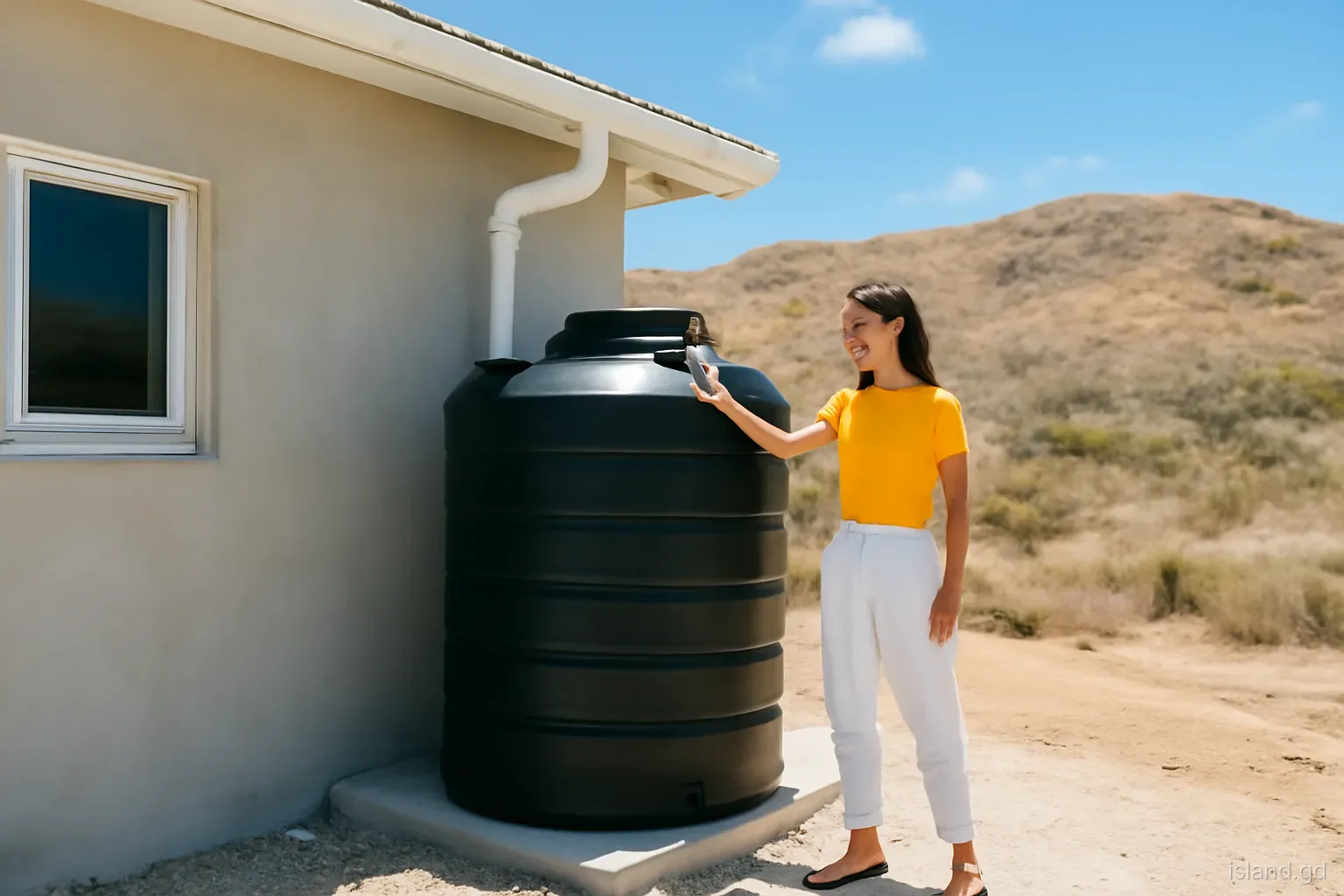
Rainwater harvesting is being encouraged on the mainland too, especially for homes, schools and farms. Catching rain from roofs reduces demand on the public system, provides backup during interruptions and makes households more resilient after hurricanes.
Water after a hurricane
Storms disrupt water supply in several ways at once. Power cuts stop pumps and desalination plants, landslides and fallen trees break pipes and block intakes, and floodwater can contaminate sources. After Ivan and again after Beryl, many households depended for days or weeks on whatever they had stored, on bottled water and on deliveries by truck or boat.
Stored water also becomes a health issue. Roofs and gutters collect debris during a storm, so the first rain afterwards can wash contamination into cisterns. Health authorities typically advise boiling or treating water until supplies are confirmed safe, and checking tanks for damage or dirt before use.
Practical preparation before the season starts on 1 June makes a large difference: fill tanks, store several days of drinking water per person in clean, sealed containers, keep bleach or purification tablets and know how to disconnect gutters if they are likely to carry debris into a cistern.
Farming through longer dry seasons
Agriculture feels drought first. Vegetable farmers in the drier south and on Carriacou depend on rainfall or limited irrigation, and a delayed rainy season can mean failed plantings and higher market prices. Tree crops such as nutmeg and cocoa are more tolerant but still suffer in prolonged dry spells, especially young trees planted after storms.
Farmers are adapting with small ponds and tanks to capture rain, drip irrigation that delivers water directly to roots, mulching, and choosing varieties and planting dates that fit shorter rainy seasons. Extension officers from the Ministry of Agriculture and programmes linked to climate adaptation have promoted many of these approaches.
On Carriacou, traditional dryland crops such as pigeon peas and corn reflect generations of adaptation to scarce water, and the island's maroon tradition of praying for rain at the end of the dry season is a reminder of how central the question has always been.
Setting up household water storage
For residents, a reliable storage system is one of the best investments in resilience. A practical approach:
- Estimate daily household use and decide how many days of storage you want. Many families aim for at least several days, more on Carriacou.
- Choose tanks of food-grade material, placed on a solid, level base, protected from sunlight where possible to reduce algae.
- Connect gutters to tanks with first-flush diverters, which discard the first runoff carrying dust, leaves and bird droppings.
- Fit mesh screens to keep out mosquitoes, leaves and animals. Uncovered water is a breeding site for mosquitoes that spread dengue.
- Clean gutters and tanks regularly, especially before the rainy season and after storms.
- Treat water intended for drinking, by boiling, filtering or chlorination, or use a separate drinking supply.
- Secure tanks against hurricane winds, since empty tanks can blow away.
Saving water as a visitor or resident
Short showers. Brief showers use far less than long ones, and in cistern-fed guesthouses every litre counts. Turning the tap off while soaping or brushing teeth makes a real difference over a week.
Towel and linen reuse. Reusing towels and sheets reduces laundry, a major water use in hotels.
Report leaks. A dripping tap or running toilet wastes large amounts. Tell your host or fix it promptly.
Water gardens wisely. Watering early or late reduces evaporation; native and drought-tolerant plants need less water, and mulch keeps moisture in the soil through the dry months.
Respect interruptions. When supply is scheduled off, use stored water carefully and avoid filling pools or washing vehicles.
Yachts. Boats taking on water should use official sources and avoid waste, particularly on Carriacou and in the dry season.
Frequently asked questions
Does Grenada have water shortages?
Parts of the mainland can experience supply interruptions in the dry season, roughly January to May, when river flows drop and demand rises. NAWASA may schedule interruptions in affected areas. Carriacou and Petite Martinique rely on cisterns and desalination and are more vulnerable during dry periods.
Where does Carriacou get its water?
Carriacou has no permanent rivers. Households traditionally collect rainwater from roofs in cisterns, and desalination plants convert seawater into fresh water for the public supply. Wells and public storage also contribute. Water use is carefully managed, especially in the dry months.
Is tap water safe to drink in Grenada?
Treated public water on the mainland is generally considered safe, but quality can be affected after heavy rain or storms. Many residents and visitors prefer filtered or bottled water for drinking. Cistern water should be treated before drinking. Follow advisories from NAWASA and health authorities.
What is G-CREWS in Grenada?
G-CREWS is the Climate-Resilient Water Sector in Grenada project, funded mainly through the Green Climate Fund with partners including GIZ. It supports infrastructure upgrades, planning, reduced water losses and rainwater harvesting to make Grenada's water supply more resilient to drought and storms.
How big should a household water tank be?
It depends on household size, daily use and how long you want to cover interruptions. Many homes on the mainland use tanks of several hundred to a few thousand gallons, while Carriacou households often have larger cisterns. A plumber or NAWASA can advise on suitable sizes.
Why do mosquitoes matter for water storage?
Uncovered tanks, buckets and containers provide breeding sites for Aedes mosquitoes, which spread dengue and other viruses. Covering tanks, fitting mesh and emptying stray containers regularly reduces this risk, especially during the rainy season.