Grenada's reefs fringe much of the coastline, from the sheltered west coast near St George's to the southern bays and the waters around Carriacou and its islets. They supply sand to beaches, break waves before they reach the shore, support fisheries and draw divers and snorkellers from around the world. They are also under heavy pressure from warming seas, disease, pollution and physical damage.
Caribbean reefs have suffered several mass bleaching events in recent decades, including in 2005, 2010 and the severe global event that began in 2023. Grenada's reefs were affected each time. This article explains what is happening to them, how the country's marine protected areas work and what visitors can do to avoid adding to the damage.
Why reefs matter so much here
Grenada's beaches are made largely of sand derived from reef organisms. Without healthy reefs, sand supply declines, and beaches narrow more quickly under storms and rising seas. Reefs also absorb wave energy, protecting coastal roads, villages and hotels.
Fisheries depend on reefs too. Many reef fish and invertebrates spend part of their lives on or near coral, and the seagrass beds and mangroves connected to reef systems act as nurseries. Fishers in Gouyave, Grenville, Carriacou and elsewhere feel the effects when reef health declines.
Tourism adds another layer. Diving and snorkelling, especially on the west coast, around the Underwater Sculpture Park and around Carriacou, bring income to dive operators, boat captains, guesthouses and restaurants. Reef health is therefore an economic question as well as an environmental one.
The main threats
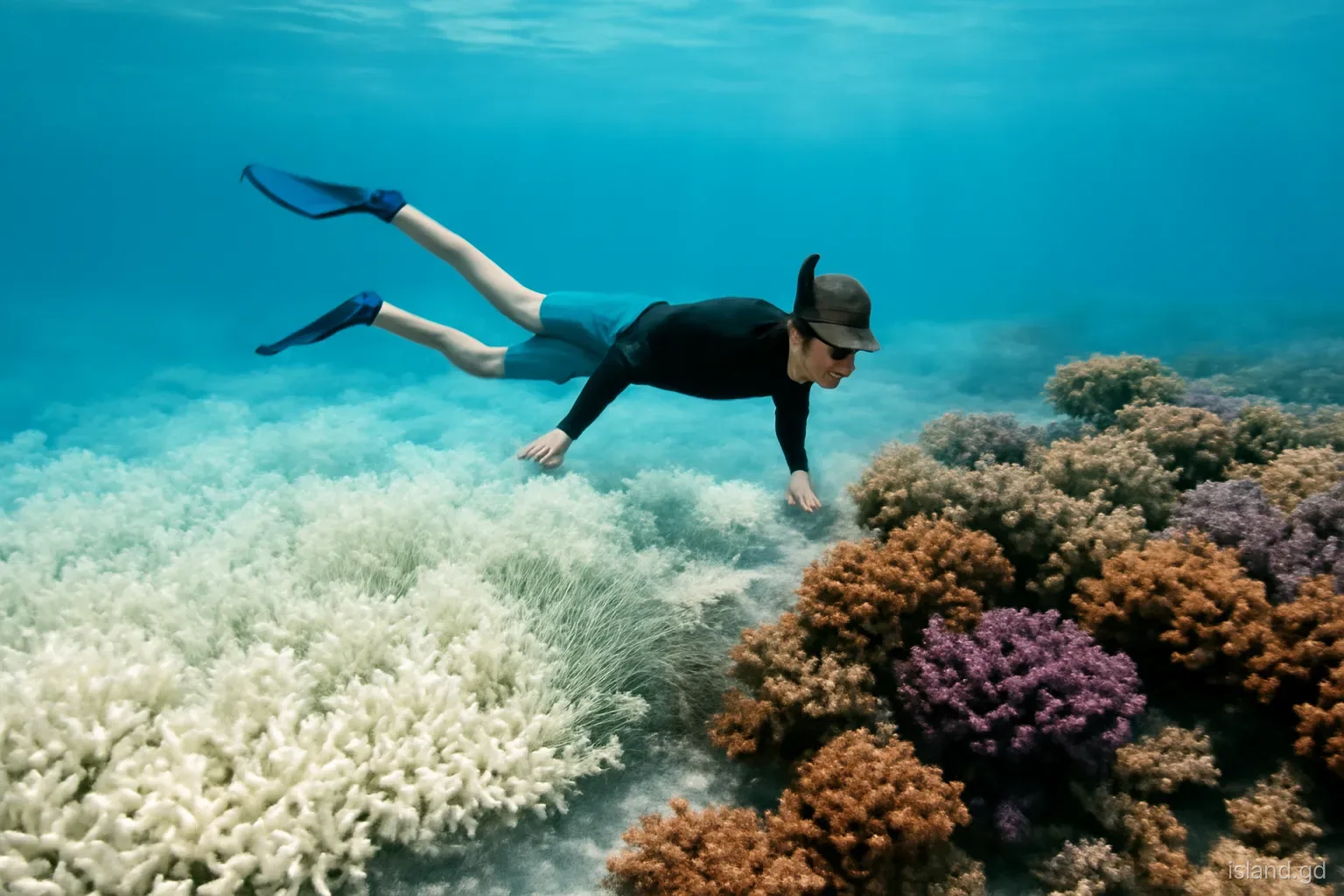
Marine heatwaves and bleaching. When water stays unusually warm for weeks, corals expel the algae that live in their tissues and give them colour and much of their food. Bleached corals can recover if conditions improve, but prolonged heat kills them. Bleaching events are becoming more frequent as ocean temperatures rise.
Disease. Coral diseases have caused major losses across the Caribbean, including stony coral tissue loss disease, which has spread through many islands since it was first identified in Florida in 2014. Local dive operators and the Fisheries Division monitor reefs for signs of disease.
Pollution and runoff. Sediment from cleared land, sewage, fertilisers and plastic waste wash into the sea, especially after heavy rain. Murky, nutrient-rich water favours algae over coral.
Physical damage. Anchors, careless snorkellers and divers, and storm waves break coral. Hurricanes such as Ivan and Beryl caused significant reef damage in their paths.
Invasive species. Lionfish, native to the Indo-Pacific, have spread across the Caribbean and eat large numbers of small reef fish. Fishing and eating lionfish is encouraged.
Grenada's marine protected areas
Grenada has designated several marine protected areas, MPAs, managed by the Fisheries Division with community and partner involvement. The best known are Moliniere-Beausejour on the west coast north of St George's, home to the Underwater Sculpture Park; Woburn Clarks Court Bay on the south coast; and Sandy Island Oyster Bed in Carriacou, which includes Sandy Island, the reefs off L'Esterre and the mangrove-fringed Oyster Bed area in Tyrrel Bay.
MPAs typically regulate fishing, anchoring and other activities, with mooring buoys installed so boats do not drop anchors on coral. Visitors using MPAs, whether diving, snorkelling or anchoring yachts, are generally required to pay a user fee, often collected through dive operators, tour companies or rangers. Fee levels and collection methods change, so check with your operator.
The Underwater Sculpture Park, created by artist Jason deCaires Taylor and opened in 2006 at Moliniere, was partly intended to draw visitors away from natural reefs and provide new surfaces for coral and sponges to colonise. It has become one of Grenada's best-known attractions.
How to dive and snorkel without damaging reefs
Individual behaviour makes a measurable difference, particularly at popular sites visited by many people each day. Follow these steps:
- Choose operators that use mooring buoys, give a proper briefing and keep group sizes manageable.
- Practise buoyancy before going near coral. If you are a new diver, ask for a refresher in sand or open water first.
- Never stand on, touch or kick coral. Keep fins high and away from the reef, and avoid stirring up sediment.
- Use mineral sunscreen with non-nano zinc oxide or titanium dioxide, or cover up with a rash guard and hat to reduce how much sunscreen you need.
- Do not feed fish or collect shells, coral or other marine life. Leave everything as you found it.
- Pay the MPA fee where required. It funds rangers, moorings and monitoring.
- Report injured animals, dumped waste or illegal fishing to your operator or the Fisheries Division.
Coral restoration and monitoring
Coral nurseries. Restoration projects in the Caribbean grow fragments of coral on underwater frames before transplanting them onto reefs. Several initiatives have operated around Grenada and Carriacou; ask dive operators about current projects.
Reef surveys. Volunteer and scientific surveys record coral cover, bleaching and fish populations, providing data on long-term trends.
Lionfish culling. Divers, fishers and restaurants help control lionfish. Order it when it appears on menus to support the effort.
Reducing runoff. Reforestation, better agricultural practices and improved sewage treatment reduce pollution reaching reefs.
Education. School programmes and community groups teach children about reefs, encouraging the next generation of fishers, divers and decision-makers to protect them. Some dive operators run junior programmes that introduce young Grenadians to reefs most have only seen from the shore.
Seagrass, mangroves and the connected system
Reefs do not stand alone. Seagrass meadows in shallow bays and mangroves along sheltered shores are linked to reefs through the life cycles of fish, lobster and conch. Many species shelter as juveniles in mangrove roots or seagrass before moving to the reef as adults. Seagrass also traps sediment and stabilises the seabed, keeping water clearer for corals.
Grenada's south coast bays, Carriacou's Tyrrel Bay and the waters around the Grenadines islets include important seagrass areas. Anchoring in seagrass can tear up meadows, which is why mooring fields and anchoring rules in MPAs matter for yachts as well as dive boats.
Protecting this connected system is more effective than protecting reefs alone. Mangrove restoration, water quality improvements and careful anchoring all support coral health indirectly by keeping nurseries productive and water clear.
Reefs around Carriacou after Beryl
Hurricane Beryl's powerful waves damaged shallow reefs around Carriacou and Petite Martinique, breaking branching corals and moving rubble and sand. Mangroves that help filter water entering bays were also badly hit, and storm runoff carried sediment and debris into the sea.
Reefs have recovered from storms for thousands of years, but recovery takes time and depends on water quality, temperature and the absence of additional stresses. The combination of storm damage and marine heatwaves is particularly hard on corals, because it leaves fewer healthy colonies to repopulate damaged areas.
Dive operators on Carriacou are the best source of current information on reef condition. Some sites may be in better shape than others, and a visit can include sites where recovery or restoration work is visible. Diving with local operators also supports a sector hit hard by the storm.
The bigger picture
Local action helps reefs survive, but the main driver of bleaching is global ocean warming caused by greenhouse gas emissions. Grenada can reduce local stresses, protect key areas and support recovery, yet the long-term future of Caribbean reefs depends heavily on global emissions trends.
Scientific assessments warn that with continued warming, coral reefs worldwide face severe decline. Reefs that are healthier to begin with, free of pollution and overfishing, tend to recover better after bleaching, which is why MPAs and local protection matter.
For visitors, reef health is not an abstract issue. Diving or snorkelling responsibly, supporting operators that invest in conservation and choosing seafood carefully are practical contributions. Spending time on Grenada's reefs and noticing their condition is also a powerful reminder of what is at stake.
Frequently asked questions
Are Grenada's coral reefs bleaching?
Grenada's reefs have been affected by Caribbean-wide bleaching events, including in 2005, 2010 and the severe global event that began in 2023. The extent varies by site and year. Some corals recover when temperatures drop; others die. Dive operators can describe current conditions at specific sites.
What are Grenada's marine protected areas?
The best known are Moliniere-Beausejour on the west coast, which includes the Underwater Sculpture Park, Woburn Clarks Court Bay on the south coast and Sandy Island Oyster Bed in Carriacou. They are managed by the Fisheries Division, with rules on fishing and anchoring and user fees for visitors.
Do you have to pay to dive in Grenada's MPAs?
Visitors using MPAs are generally required to pay a user fee, often collected through dive shops, tour operators or rangers. The fee supports moorings, monitoring and enforcement. Amounts and arrangements can change, so confirm with your operator before your trip.
What sunscreen is best for Grenada's reefs?
Mineral sunscreens using non-nano zinc oxide or titanium dioxide are widely recommended as less harmful to reefs than some chemical filters. Wearing a rash guard, hat and long sleeves reduces the amount of sunscreen needed. Apply sunscreen well before entering the water.
Why is lionfish on menus in Grenada?
Lionfish are invasive in the Caribbean, with no natural predators to control them, and they eat large numbers of small reef fish. Catching and eating lionfish helps reduce their impact. When prepared properly, the venomous spines are removed and the meat is safe and tasty.
Is the Underwater Sculpture Park good for reefs?
The sculptures provide surfaces for coral, sponges and algae to grow and draw visitors away from natural reefs, which can reduce pressure on them. Its overall benefit depends on responsible use, including staying off the sculptures and paying the MPA fee.