Most maps of Grenada show the coast in detail and the interior as a blank of green. Yet a large share of Grenadians live inland, in villages strung along ridges and valley roads between the coast and the central mountains. These are the places where the island's nutmeg, cocoa, bananas and ground provisions are grown, and where the rhythm of life still follows harvests, rain and Sunday church.
Visitors usually pass through these villages on the way to a waterfall or estate, without stopping. That is a pity, because the interior explains much about Grenada: why the spice economy matters, how families hold land, and how communities recovered after Hurricane Ivan in 2004. This article looks at what the hill villages are like and how to spend time there well.
Where the interior villages are
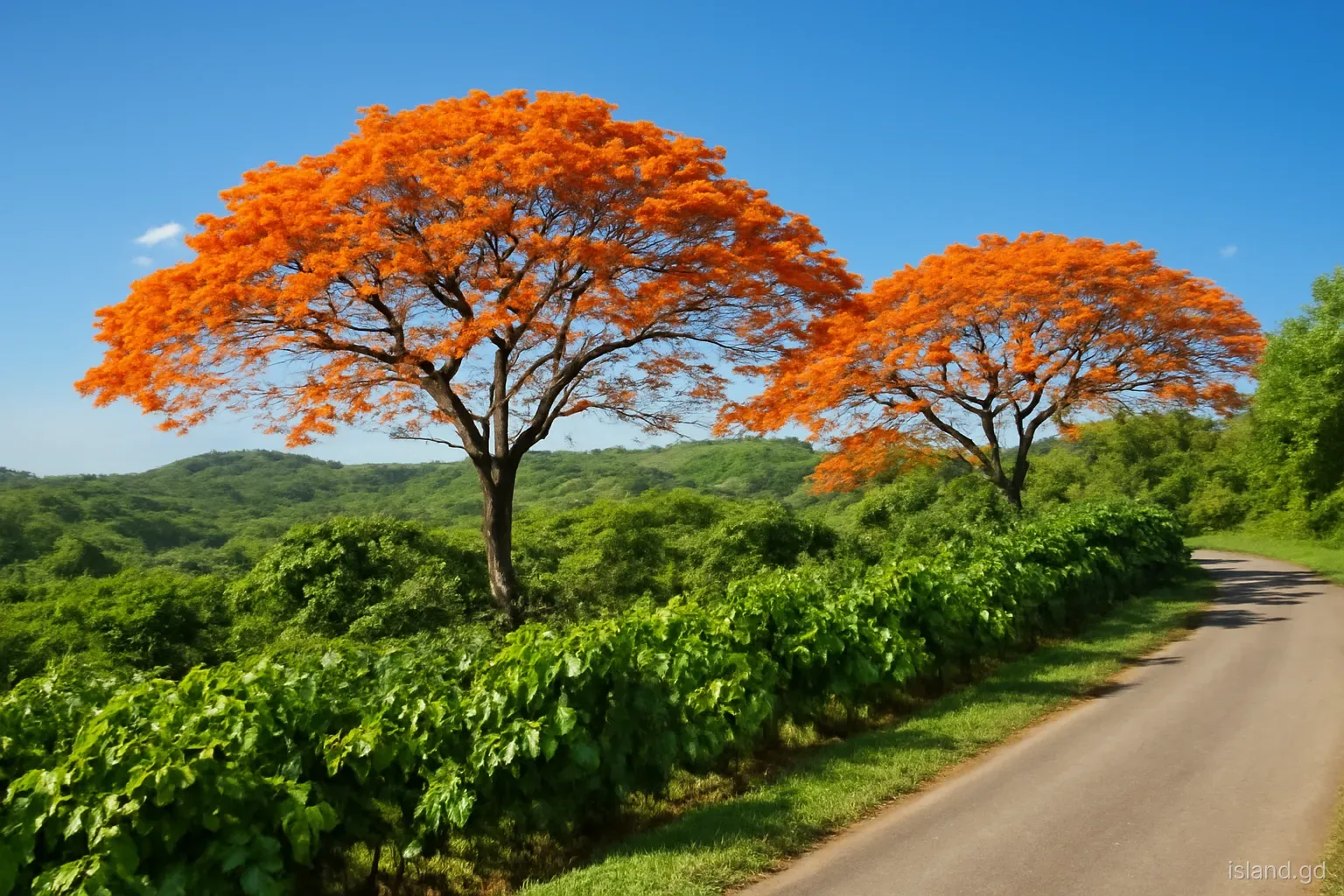
The interior is not one region but a series of valleys and ridges radiating from the central highlands. In St Andrew, the largest parish, villages such as Birch Grove, Grand Bras and Paradise lie on the slopes inland from Grenville, in some of the island's richest farming country. In St John and St Mark, roads climb from the leeward coast up into nutmeg and cocoa valleys behind Gouyave and Victoria. In St David, communities such as Perdmontemps sit on the higher ground above the southern bays, and in St George, villages in the hills above the capital have become partly suburban.
The common thread is elevation and rain. Inland villages are cooler and wetter than the coast, with heavier soils and thicker vegetation. Houses stand on steep plots, often with a kitchen garden and a few fruit trees, and many families also work land further down the valley or up the ridge.
Roads are narrow and steep, with sharp bends and occasional landslips after heavy rain, which is part of why these communities feel distinct from the coast.
A landscape built on cocoa, nutmeg and provisions
Grenada's reputation as the Spice Isle rests on these hills. Nutmeg trees, tall and dark-leaved, grow in the wetter interior, and their fruit splits to show the seed wrapped in red mace. Cocoa grows in shaded groves, often under larger trees such as immortelle or among bananas, and its pods ripen to yellow, orange or deep red. Farmers sell nutmeg through the Grenada Cooperative Nutmeg Association and cocoa through recognised buyers and chocolate makers.
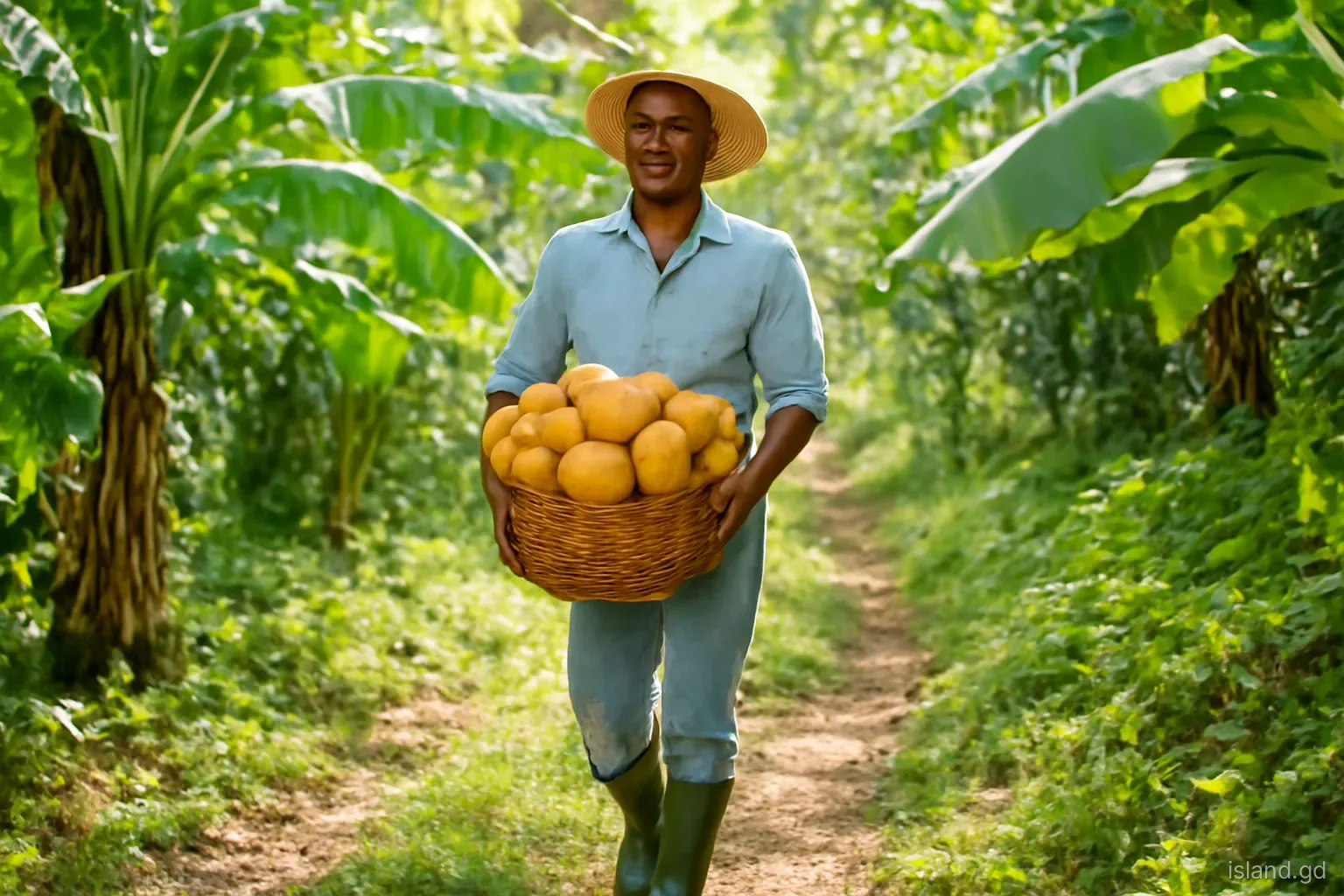
Alongside these export crops, interior families grow ground provisions such as dasheen, yam, tannia and sweet potato, plus breadfruit, plantain, christophene and seasonings. Much of this produce ends up in markets in St George's, Grenville and Gouyave, or in the national dish, oil down.
Farming here is usually small-scale and family-based. Many plots are a few acres or less, worked by hand on steep slopes, and family land shared between relatives is common. That makes interior agriculture labour-intensive and vulnerable to bad weather, but also deeply woven into family and community life.
The long shadow of Hurricane Ivan
When Hurricane Ivan struck Grenada in September 2004, it devastated the interior. Nutmeg trees, which take years to reach full production, were flattened across the island, and Hurricane Emily added further damage in 2005. Nutmeg output fell dramatically, and many farmers abandoned or replanted their land. Cocoa and banana farms were also badly hit.
The recovery reshaped the hills. Some farms replanted nutmeg, others switched to faster crops such as vegetables and provisions, and some land went back to bush. Driving through the interior today, you can still see the mix: young nutmeg groves, older surviving trees, abandoned plots and new kitchen gardens.
Ivan also reshaped the villages themselves. Houses were rebuilt with stronger roofs and concrete walls, and community groups, churches and the diaspora played a large part in reconstruction. Many older residents still date family events by whether they happened before or after Ivan, and the storm remains a reference point in conversations about land and farming.
A newer pressure is age. Many interior farmers are older, and younger people often look for work in the towns, in tourism or overseas. Agricultural programmes, farmers' cooperatives and the growth of local chocolate making have encouraged some young Grenadians back to the land, but labour shortages remain a common complaint in farming communities.
What daily life looks like in the hills
Mornings start early. Farmers head to their land soon after dawn to work before the heat and the afternoon rain. Children walk or catch buses to school, and the first route buses leave for the towns.
The village shop and rum shop are the centre. Small shops sell basics, while the rum shop is where news is exchanged, dominoes are played and visitors are noticed. A polite greeting goes a long way.
Church and community groups organise much of life. Churches of several denominations, village councils, sports clubs and farmers' groups run events, fundraisers and support for families in need.
Transport ties the hills to the coast. Route buses link interior villages to Grenville, Gouyave and St George's, though services are less frequent than on the main coastal roads, especially in the evening.
Weather sets the pace. Heavy rain can cut roads or make tracks impassable, and the wet season from about June to December brings more frequent downpours. Farmers watch the sky as closely as the calendar.
Food, harvests and the village calendar
Interior life has its own calendar, shaped by crops and church. Cocoa has a main harvest season and smaller flushes through the year, and you may see beans spread out to dry on raised trays or flat surfaces near farmhouses. Nutmeg falls throughout the year and is gathered from the ground, then carried to collection points. Breadfruit, mangoes, avocados and citrus come in waves, and when a tree is heavy, neighbours and relatives share the surplus.
Food is the glue of community events. Oil down, the national dish of breadfruit, salted meat, dumplings, callaloo and turmeric cooked down in coconut milk, is the classic dish for a gathering, often cooked in a large pot over a wood fire outdoors. Church harvest festivals, fundraising cook-ups, village sports days and family reunions bring people back from the towns and abroad.
Many villages also have their own traditions around Easter, Emancipation and Christmas, when parang singing may travel from house to house. These events are community occasions first; visitors who are invited should accept warmly, but should not treat them as shows.
How to visit interior villages without getting it wrong
Hill villages are not tourist attractions, and that is part of their value. A few habits help visitors be welcome rather than intrusive.
- Greet people first. A 'good morning' or 'good afternoon' before asking a question is expected everywhere in Grenada, and especially in small communities.
- Do not walk onto farmland uninvited. Cocoa and nutmeg groves are private property and someone's livelihood. Picking fruit or pods, even from the ground, is theft in local eyes.
- Ask before photographing people and homes. Many residents are happy to talk, but treat permission as necessary.
- Use a guide for trails and farm visits. Community tourism projects and local guides can arrange farm visits and walks, which also brings money directly to the village.
- Drive slowly and park considerately. Roads are narrow, children and animals use them, and blocking a driveway or bus stop causes real problems.
- Buy locally. Village shops, roadside fruit stands and small cocoa or spice producers welcome visitors' custom, and spending there supports the community directly.
Frequently asked questions
Which Grenada parishes have the most farming villages?
St Andrew, the largest parish, has many interior farming villages, along with St John, St Mark and St Patrick. These areas grow nutmeg, cocoa, bananas and ground provisions. St George and St David also have hill communities, though some are becoming suburban.
Can visitors tour a nutmeg or cocoa farm in Grenada?
Yes, through estates that offer tours or via local guides and community tourism groups who arrange visits to working smallholdings. Arrange visits in advance rather than turning up uninvited, as farms are private land and family livelihoods.
How did Hurricane Ivan affect Grenada's interior?
Hurricane Ivan in 2004, followed by Emily in 2005, destroyed a large share of the island's nutmeg trees and damaged cocoa and banana farms. Production collapsed and recovery has been slow, with some farmers replanting and others switching crops.
Is it safe to drive to Grenada's interior villages?
Generally yes, but roads are narrow, steep and winding, with sharp bends and occasional landslips after heavy rain. Drive slowly, use your horn on blind corners and avoid travelling during very heavy rain if you are not used to mountain roads.
What crops grow in Grenada's hills?
The main crops are nutmeg and cocoa, alongside bananas, plantain, breadfruit and ground provisions such as dasheen, yam, tannia and sweet potato. Many families also grow seasonings, fruit trees and vegetables in kitchen gardens around their homes.