In Grenada, 'windward' and 'leeward' are not sailing jargon but everyday geography. The windward side is the eastern, Atlantic-facing half of the main island, where the north-east trade winds arrive. The leeward side is the western half, sheltered behind the mountains and facing the Caribbean Sea. The two are only a short drive apart, yet they differ in weather, sea, landscape, villages and even how people use the shore.
Knowing those differences helps whether you are choosing a beach for the day, deciding where to rent a house, or trying to understand why Grenville feels so unlike St George's. This comparison works through the main contrasts, with the caveat that the south-west corner, around Grand Anse and Point Salines, behaves like a dry, sheltered extension of the leeward side.
Why the two sides differ at all
The cause is the combination of steady easterly trade winds and a mountain spine running roughly north to south. Moist air blowing off the Atlantic meets the windward slopes and rises, cooling as it climbs. Clouds form and rain falls on the eastern side and the high interior. By the time the air descends on the western side, it has lost much of its moisture, so the leeward coast tends to be drier and sunnier, especially in its lower areas.
The same wind drives the sea. On the windward coast, waves have travelled across thousands of kilometres of open Atlantic, so swell, surf and currents are normal. The leeward coast faces away from the wind, and the island itself blocks the swell, so the Caribbean Sea there is usually calm, sometimes glassy.
These are tendencies, not rules. Heavy rain falls on both sides in the wet season, and calm days happen on the Atlantic. But day to day, the contrast is real and predictable enough to plan around.
Weather and sea, side by side
Rain. The windward slopes and interior receive markedly more rain than the leeward coast and the south-west. Showers on the east can be frequent but short; on the leeward side, especially near the coast, dry spells last longer.
Wind. The windward coast feels the trade winds directly, which keeps it breezy and slightly cooler. Leeward bays can feel still and hot in the middle of the day, particularly in the late summer months.
Swell and currents. Atlantic beaches often have breaking waves, longshore currents and rip channels. Leeward beaches are usually calm enough for easy swimming and snorkelling, although northerly swells in the winter months can occasionally reach the west coast.
Sargassum. Floating sargassum seaweed, carried on Atlantic currents, mostly lands on the windward coast. In heavy years some east-facing beaches can be covered for weeks, while leeward beaches are largely spared.
Clarity. Leeward water is often clearer near the shore, which is why many dive sites and snorkelling spots are on the west and south-west coasts. Windward water can be churned by surf and river runoff.
Landscape and vegetation
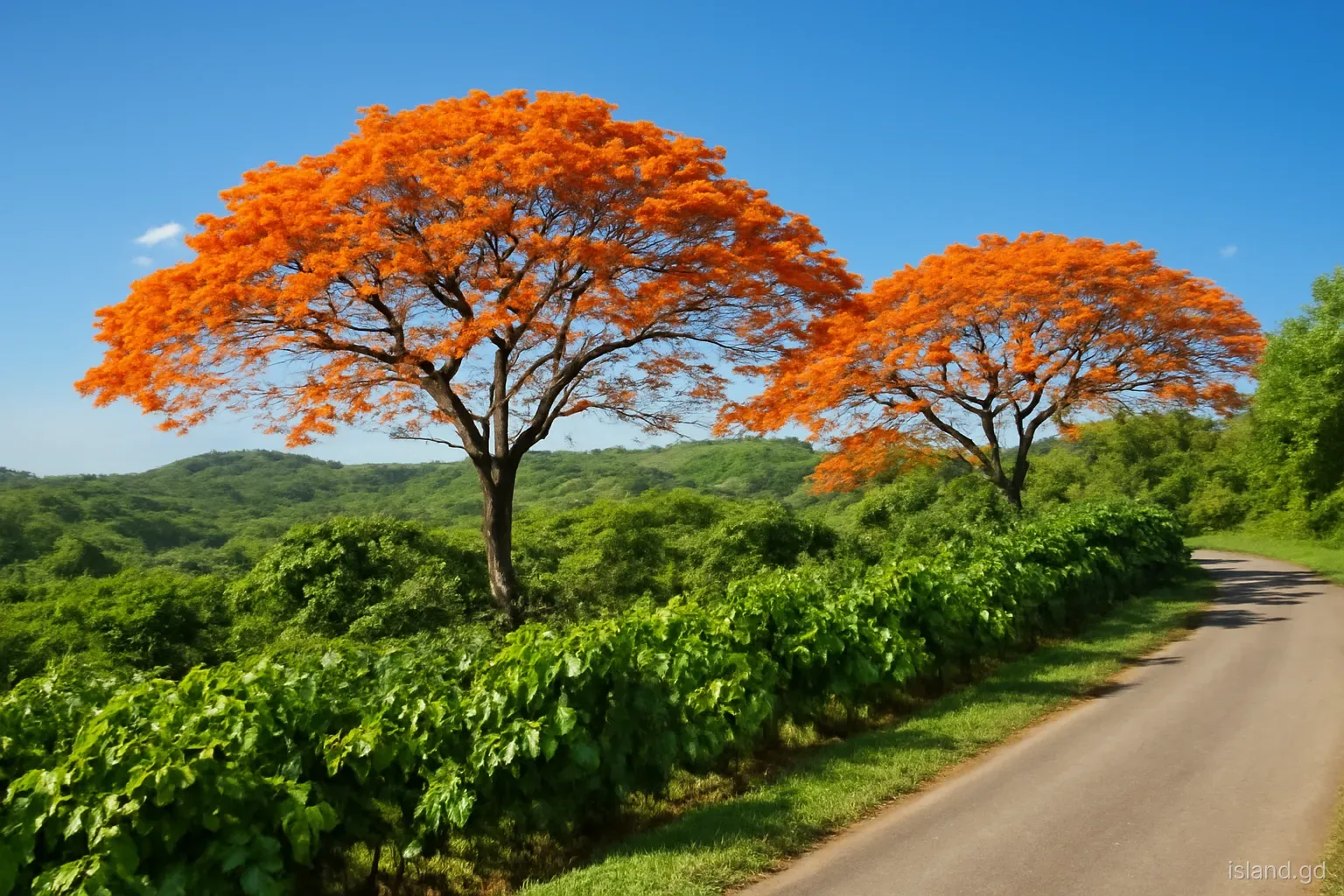
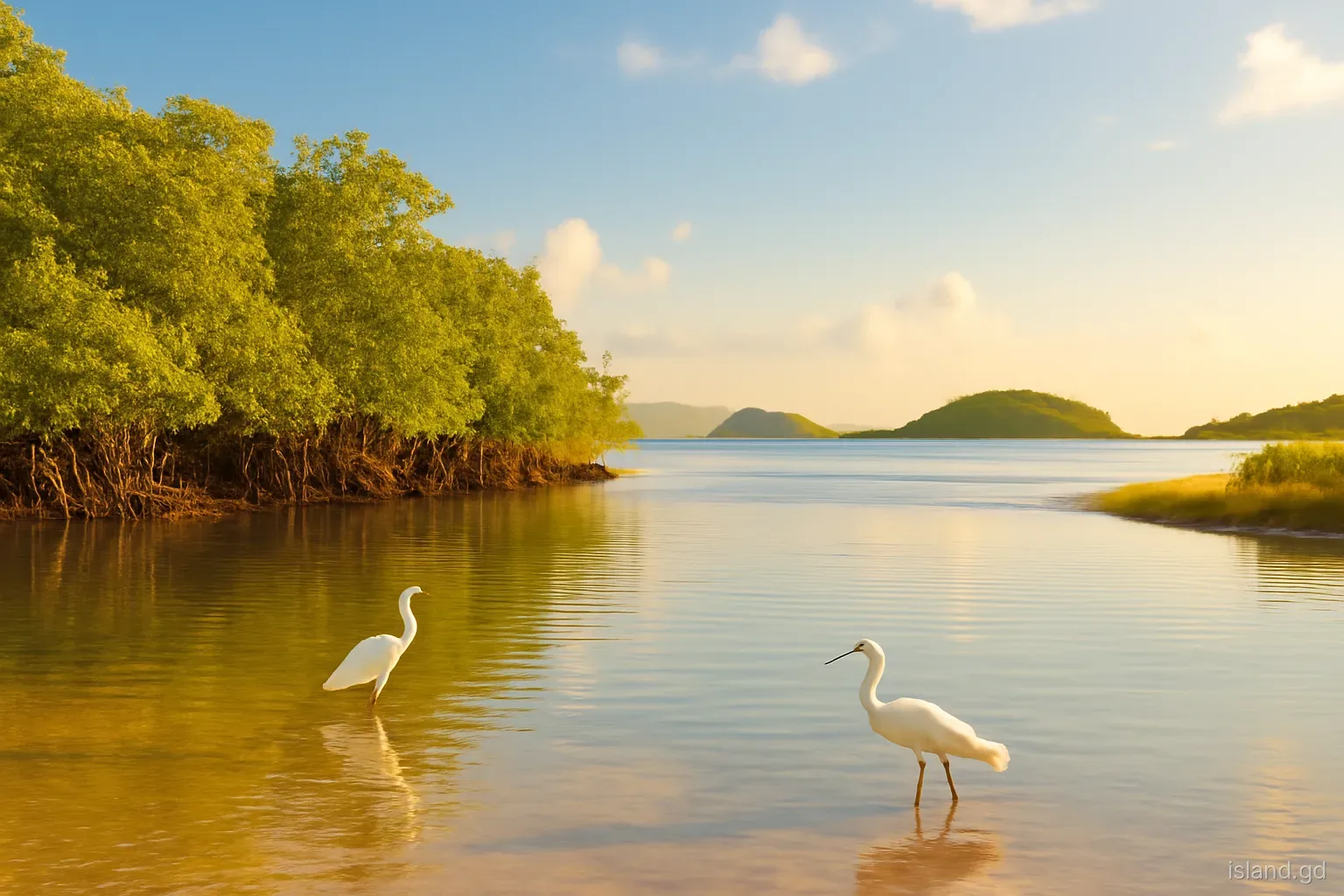
The windward side looks lusher. Its lower slopes are covered in bananas, cocoa, nutmeg, breadfruit and mixed farmland, and the coast includes river mouths, mangrove swamps and wide bays such as Grenville Bay. The land slopes more gradually from the mountains towards the Atlantic, giving more space for farms and roads.
The leeward side is steeper. Between St George's and Victoria, the mountains drop almost directly into the sea, leaving narrow valleys, cliffs and small coves. The vegetation is still green, with nutmeg and cocoa in the valleys, but the coastal hills dry out more in the dry season, and the dark volcanic sand of many leeward beaches contrasts with the paler sand of the south-west.
In the far south-west, the leeward pattern turns into dry woodland and scrub, with cactus on headlands and brown hills from about January to May. That dryness is part of why tourism concentrated there: dependable sunshine and calm water.
Towns, villages and the pace of life
The leeward coast holds the capital and a chain of fishing villages. St George's, with its harbour and hillside streets, dominates the south of it, and north of it Gouyave and Victoria are compact towns built on river flats. Fishing from small boats is central, because the calm water makes daily trips possible, and village life often faces the sea: boats on the beach, nets drying, fish sold at landing sites.
The windward coast centres on Grenville, the island's second town and a market and transport hub for St Andrew. Around it, villages mix fishing with farming, and the land behind them supplies much of the produce sold across the island. The coast is generally less developed for tourism, with fewer hotels and restaurants and more working beaches.
Visitors often find the windward side more rural and the leeward side more village-and-harbour. Both are deeply Grenadian; the difference is in what people do for a living and how close they live to calm water.
Where the pattern blurs: the far north and the south
The simple east-west split works best for the middle of the island. At both ends it softens. In the far north, around Sauteurs and Levera, the coast wraps from leeward to windward within a few kilometres, and the north coast takes some Atlantic swell even though it faces partly north-west. Beaches there need the same caution as the east coast.
In the south, the coast faces the Caribbean but sits close to the open water south of the island, where Atlantic swell and currents wrap round Point Salines. The bays of St George and St David are sheltered by their own headlands rather than by the mountains, which is why they stay calm even though they lie in line with the trade winds. Further east, from about La Sagesse, the shore becomes properly windward again.
The practical lesson is to read each bay on its own terms. Look at which way it faces, whether a reef or headland protects it, and what local people are doing in the water. If fishermen are pulling boats high up the beach and nobody is swimming, there is usually a reason.
Which coast suits what
Neither side is better. They suit different plans, and many visitors use both in the same trip.
- Easy swimming and snorkelling: leeward and south-west beaches, with calmer water and better clarity close to shore.
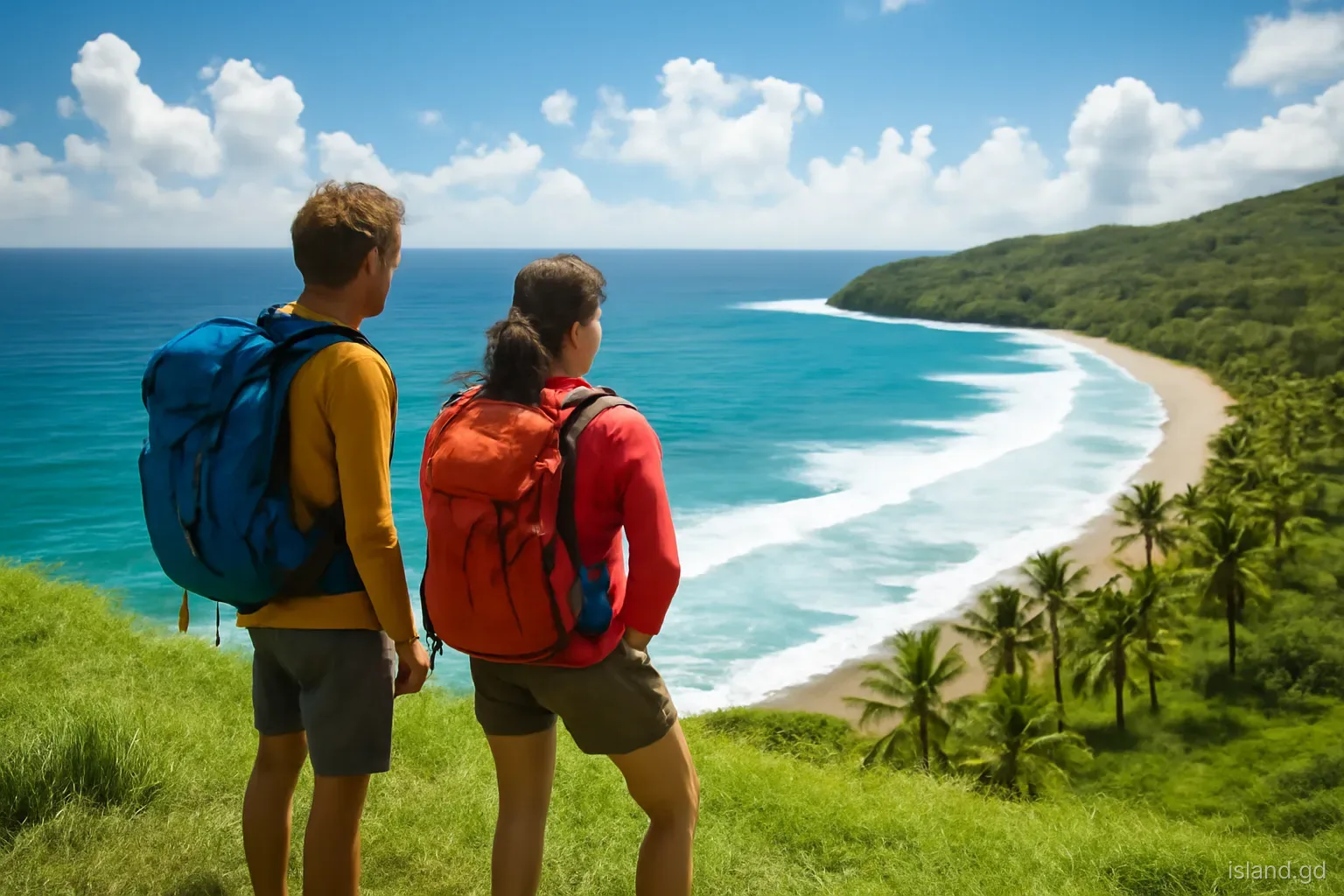
- Wild beach walks and big skies: windward beaches such as those around Grenville, La Sagesse and the north-east, where surf and wind give a very different mood. Swim only where locals do, and in calm conditions.
- Diving: most dive sites, including the area around Moliniere and the underwater sculpture park, are on the leeward side.
- Farm, estate and river visits: the windward slopes and interior, with cocoa, nutmeg and river tubing in St Andrew.
- Fish markets and village evenings: both coasts have them, with Gouyave on the leeward side and Grenville on the windward side.
- Renting or living long term: leeward and south-west areas are closer to St George's and services; windward areas offer cooler breezes, more space and generally quieter neighbourhoods, but longer drives to the capital.
Mistakes people make with the two coasts
Treating every beach as calm. Swimming habits learned at Grand Anse do not transfer to Atlantic beaches. Currents on the windward side have caught out confident swimmers. Ask locally and stay out when waves are breaking hard.
Judging the weather from one side. A wet morning in Grenville may be sunny in St George's, and the reverse. Look at the sky towards your destination, or ask someone who has just driven across.
Underestimating travel time. Crossing from one coast to the other means climbing over the mountains or driving around the north or south. Plan an hour or more for most crossings.
Ignoring sargassum news. In heavy seaweed years, east-facing beaches can smell strongly of decomposing weed. If a windward beach is your plan, check recent conditions first.
Assuming services are the same. Shops, fuel and restaurants are thinner on the windward coast outside Grenville. Carry water, cash and some food on a day out.
Frequently asked questions
Which side of Grenada is calmer for swimming?
The leeward (west) side and the south-west are usually calmer, because the island blocks the Atlantic swell and trade winds. Grand Anse, Morne Rouge and many west coast bays are generally safe for easy swimming, while windward beaches often have waves and currents.
Is the east coast of Grenada worth visiting?
Yes. The windward coast offers wild beaches, fishing villages, Grenville's market, estates, rivers and the Levera area in the north-east. It is quieter and more rural than the south. Treat the sea with caution and check recent sargassum conditions before a beach day.
Why is the east side of Grenada wetter?
Trade winds carry moist Atlantic air from the east. When it meets the mountains it rises and cools, producing cloud and rain on the windward slopes and interior. The leeward side sits in a partial rain shadow, so it is usually drier.
Does sargassum affect the west coast of Grenada?
Rarely and lightly. Sargassum drifts on Atlantic currents and the trade winds, so it mostly washes up on east-facing beaches. In very heavy years some can reach other coasts, but the leeward side is largely spared compared with the windward side.
Where are most hotels in Grenada?
Most hotels are in the south-west, around Grand Anse, Morne Rouge, Point Salines and Lance aux Épines, on the dry, sheltered leeward side. The windward coast has relatively few hotels and more guesthouses and small rentals.