Grenada has no winter or summer in the temperate sense. Temperatures stay warm all year, usually somewhere in the high twenties to low thirties Celsius on the coast and cooler in the mountains. What changes is rain, and with it the colour of the land, the flowers on the trees, the fruit in the markets and the mood of the sea.
Broadly, there are two seasons: a dry season from about January to May and a wet season from about June to December, which overlaps with the Atlantic hurricane season from 1 June to 30 November. Within that frame, each month has its own character. This guide follows the main island through the year, looking at what the landscape actually does.
Patterns vary from year to year, and climate change is making them less predictable, so treat the timings below as typical rather than guaranteed.
January to February: the dry season settles in
By January the rains of the previous year have usually eased, the trade winds blow steadily and the air feels fresher, particularly at night. The countryside is still green from the wet season, but the lower hills of the south-west begin to dry. Skies are often clear, with short passing showers rather than long downpours.
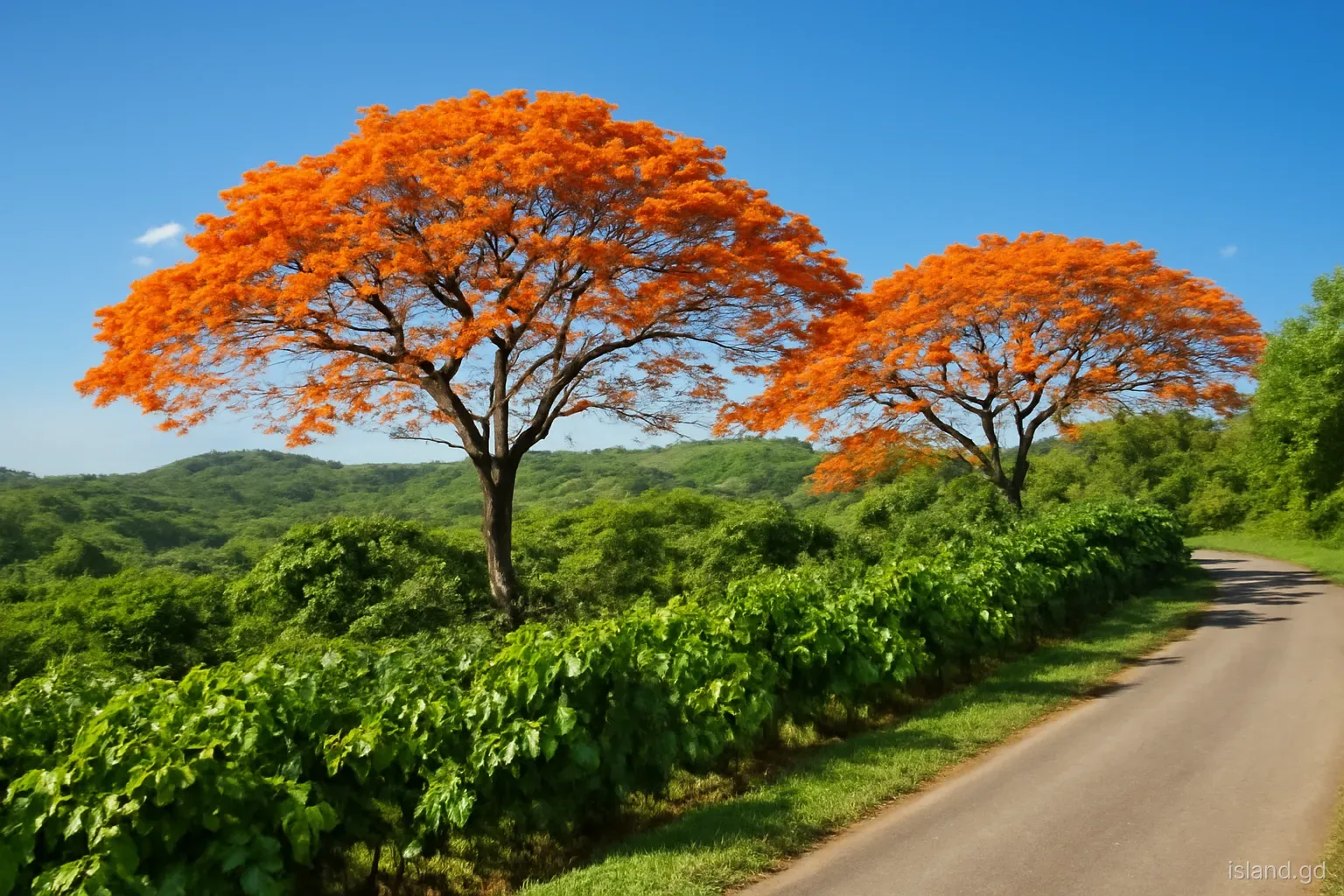
This is when the immortelle trees put on their display. Planted for generations as shade trees over cocoa, immortelles drop many of their leaves and cover their branches in orange to red-orange flowers, so that cocoa valleys in St Andrew, St John and St Patrick are dotted with bright crowns above the darker green. Seen from ridge roads, the effect is striking.
The sea on the leeward side is generally calm, though northerly swells occasionally roll in during these months. On the Atlantic coast, the trade winds keep the surf lively. For walking and hiking, these are among the most comfortable months, with drier trails than later in the year.
March to May: the land at its driest
As the dry season deepens, the contrast between the regions grows. The south-west peninsulas, Point Salines and the southern hills of St George and St David turn brown and leafless, with dry grass on the slopes and dust on the roads. Some trees shed leaves to save water. Bush fires can break out on dry hillsides, often started by burning rubbish or clearing land.
The interior and windward slopes stay greener, but rivers drop and some smaller streams shrink to a trickle. Water supply can come under strain, and NAWASA, the national water authority, may schedule supply interruptions in some areas during dry spells. Rainwater tanks and storage become important for households.
Farmers feel the dry months keenly. Vegetable growers without irrigation scale back planting, livestock grazing thins, and the ground hardens on exposed slopes. Many families time the clearing and preparation of garden plots for the end of the dry season, so they are ready to plant as soon as the first steady rains arrive.
This is also when the poui trees flower. These trees produce masses of yellow or pink blossoms on bare branches, briefly lighting up dry hillsides. Mangoes begin to ripen in many areas towards the end of this period, and the start of the mango season is one of the most anticipated changes of the year.
June to August: rains return and the island greens
Around June, the wet season begins. Showers become more frequent and heavier, often building in the afternoon, and within a few weeks the brown hills of the south turn green again. Rivers rise, waterfalls fill, and the air becomes more humid.
The flamboyant trees, with their wide canopies, burst into vivid red or orange flowers around the start of the rains, lining roadsides and village squares. Mango season is usually in full swing, with many varieties appearing in markets and on roadside stalls, and other fruits such as plums and soursop come and go.
This is also the period when dust from the Sahara can drift across the Atlantic, giving the sky a hazy, pale look on some days and reducing visibility. It can bother people with asthma or allergies. Carnival, known as Spicemas, takes place in August, so the season's landscape changes coincide with one of Grenada's busiest social periods.
The hurricane season is under way, though historically Grenada has been hit less often than islands further north. Hurricane Beryl in early July 2024 was a stark reminder that early-season storms can still be severe.
September to November: the wettest stretch
September to November is often the wettest part of the year, with heavy showers, thunderstorms and occasional prolonged rain. The interior and windward slopes are at their greenest, rivers run high, and waterfalls are at their most powerful. Trails become muddy and some become dangerous, with slippery rocks and fast-rising streams.
Many Caribbean islands, including Grenada, can see a short drier spell within the wet season, sometimes called the petit carême, though its timing and length vary from year to year. Even in the wettest months, there are usually long sunny breaks between showers.
Hurricane season peaks in this period, and tropical waves and storms are watched closely. Grenada's National Disaster Management Agency, NaDMA, issues alerts and guidance when storms threaten. For residents, this is a season of checking roofs, clearing drains and keeping emergency supplies ready.
December: from wet to dry
December is a transition month. Rains begin to ease, though heavy showers are still possible, especially early in the month. The trade winds strengthen, the air feels a little cooler, particularly in the evenings, and the landscape is lush after months of rain.
Christmas brings its own seasonal signs: sorrel plants with their deep red sepals are harvested to make the traditional drink, ham and black cake appear on tables, and parang music, with its string bands and seasonal songs, is heard in communities across the island and in Carriacou.
By the end of December, the shift towards the dry season is usually clear, with longer sunny periods and calmer weather. The yachting and tourist season is under way, and the hurricane season has formally ended, bringing a sense of relief after the anxious months.
How the sea and coast change through the year
The land is not the only thing with seasons. Along the coast, the trade winds are usually strongest and steadiest from about December to April, which keeps the Atlantic side rough and makes for brisk sailing between the islands. Later in the year the winds often ease and become more variable, so there are more flat-calm days on both coasts, but also more humid, still afternoons.
Sargassum seaweed tends to arrive in waves, with heavier landings on the windward beaches in some months than others, and some years far worse than others. Water temperatures are warm all year, rising towards their peak in late summer and early autumn. Prolonged high sea temperatures in that period can stress corals and cause bleaching, a growing concern around Grenada's reefs.
Beaches themselves shift. Swells and storms can strip sand from one end of a bay and pile it at the other, and a beach that looked wide in March may be narrow by October. For anyone choosing a coastal spot to stay or build, seeing it in more than one season is worth the effort.
What the calendar means in practice
For hiking and waterfalls. January to April usually offers the driest trails. Waterfalls are fuller in the wet season but trails are muddier and rivers less predictable.
For photography. Immortelle and poui blooms in the dry season and flamboyant at the start of the rains give the most colour. Clear dry-season air gives the best long views, apart from Saharan dust days.
For fruit and markets. Mango season in the middle of the year and citrus later are highlights; nutmeg and cocoa are available year-round, with seasonal peaks.
For storms. June to November is hurricane season. Travel insurance, flexible plans and attention to official alerts matter most from August to October.
For residents. Dry months mean water conservation and fire caution; wet months mean drains, roofs and landslip awareness on steep roads.
Frequently asked questions
What is the best month to visit Grenada?
Many visitors prefer January to April, the core of the dry season, for sunny weather, calmer seas on the leeward side and drier trails. The wet season from June to December is greener and quieter but brings more showers and falls within the hurricane season.
When is the rainy season in Grenada?
The rainy season usually runs from about June to December, with September to November often the wettest. Rain typically comes as heavy showers with sunny breaks rather than all-day downpours, but prolonged rain and storms are possible during hurricane season.
When do the immortelle trees flower in Grenada?
Immortelle trees, planted as shade over cocoa, usually flower in the dry season, roughly January to March. They lose many leaves and produce orange to red-orange blossoms, making cocoa valleys in parishes such as St Andrew and St John especially colourful.
When is mango season in Grenada?
Mango season usually runs from around April or May through the middle of the year, peaking in the early wet season. Timing varies by variety and location, and some trees fruit earlier or later. Markets and roadside stalls are the best indicator of what is in season.
How likely is a hurricane to hit Grenada?
Grenada lies near the southern edge of the main hurricane belt and is hit less often than islands further north, but direct hits do happen, as Ivan in 2004 and Beryl in 2024 showed. The season runs from June to November, peaking from August to October.