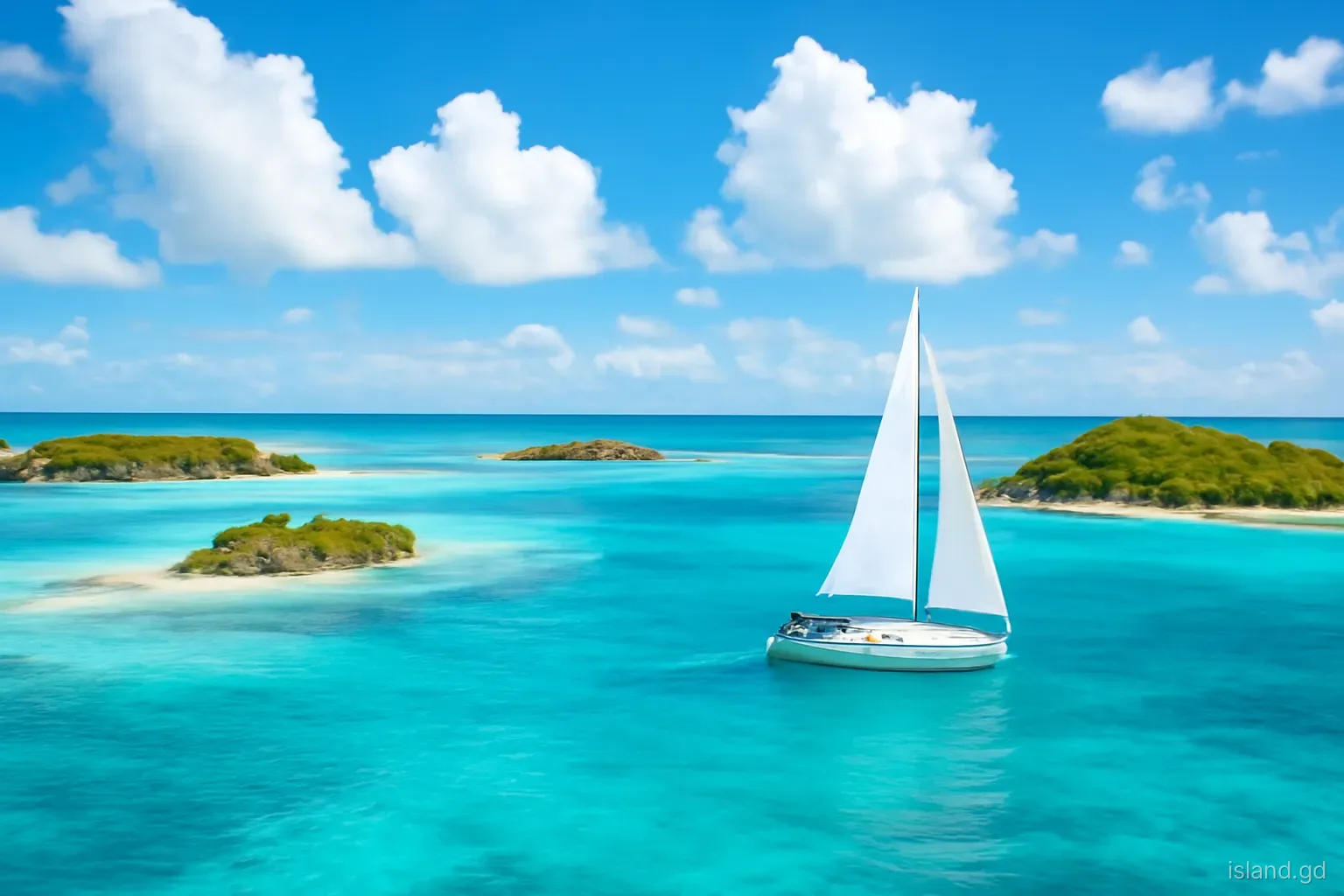
The Grenadines look like one chain of islands on a map, running unbroken from Grenada to St Vincent. Politically, they are split. The southern part, including Carriacou, Petite Martinique and the islets around them, belongs to Grenada. The northern part, from Union Island, Petit St Vincent and Mopion northwards, belongs to St Vincent and the Grenadines.
The border runs through some very narrow channels. Between Petite Martinique and Petit St Vincent, the water separating the two countries is crossed in minutes. Visitors regularly get confused about which island belongs to which country, sometimes with costly results if they cross without clearing customs and immigration.
This article explains where the border lies, which islets fall on each side and what it means in practice, from clearance to money, mobile phones and everyday links between the communities on either side.
How the Grenadines came to be divided
The Grenadines were contested by European powers for much of the colonial era, changing hands between France and Britain several times. Under British rule, the islands were divided administratively between the colonies of Grenada and St Vincent, with Carriacou, Petite Martinique and the smaller islands around them attached to Grenada, and the islands further north, including Bequia, Mustique, Canouan, Mayreau and Union, attached to St Vincent.
That colonial division carried over into independence. Grenada became independent in 1974, and St Vincent and the Grenadines in 1979. The line between them, once an administrative boundary within the British Caribbean, became an international border, though the communities on either side remain closely connected by family, trade and culture.
The result is that the state of Grenada consists of Grenada's main island, Carriacou, Petite Martinique and a number of smaller islets and rocks, while the Grenadines that form part of St Vincent and the Grenadines include most of the chain to the north. Both countries are members of the Organisation of Eastern Caribbean States and CARICOM, and share the Eastern Caribbean dollar.
Which islands are on which side
Grenada's Grenadines. Carriacou and Petite Martinique are the inhabited islands. Around them are islets and rocks including Sandy Island, Mabouya Island, White Island, Saline Island, Large Island and Frigate Island, and further south the islands between Carriacou and Grenada, such as Isle de Ronde, Caille and Diamond Island.
The border area. The boundary runs between Carriacou and Union Island to the north and through the narrow channel between Petite Martinique and Petit St Vincent. These are the closest points between the two countries' islands.
St Vincent's southern Grenadines. Petit St Vincent, a private resort island just across from Petite Martinique, Mopion, a tiny sand cay near it, and Union Island, with its port at Clifton, are the nearest islands belonging to St Vincent and the Grenadines.
Further north. Palm Island, Mayreau, the Tobago Cays Marine Park, Canouan, Mustique, Bequia and other islands all belong to St Vincent and the Grenadines.
Mopion and Petit St Vincent: so close, another country
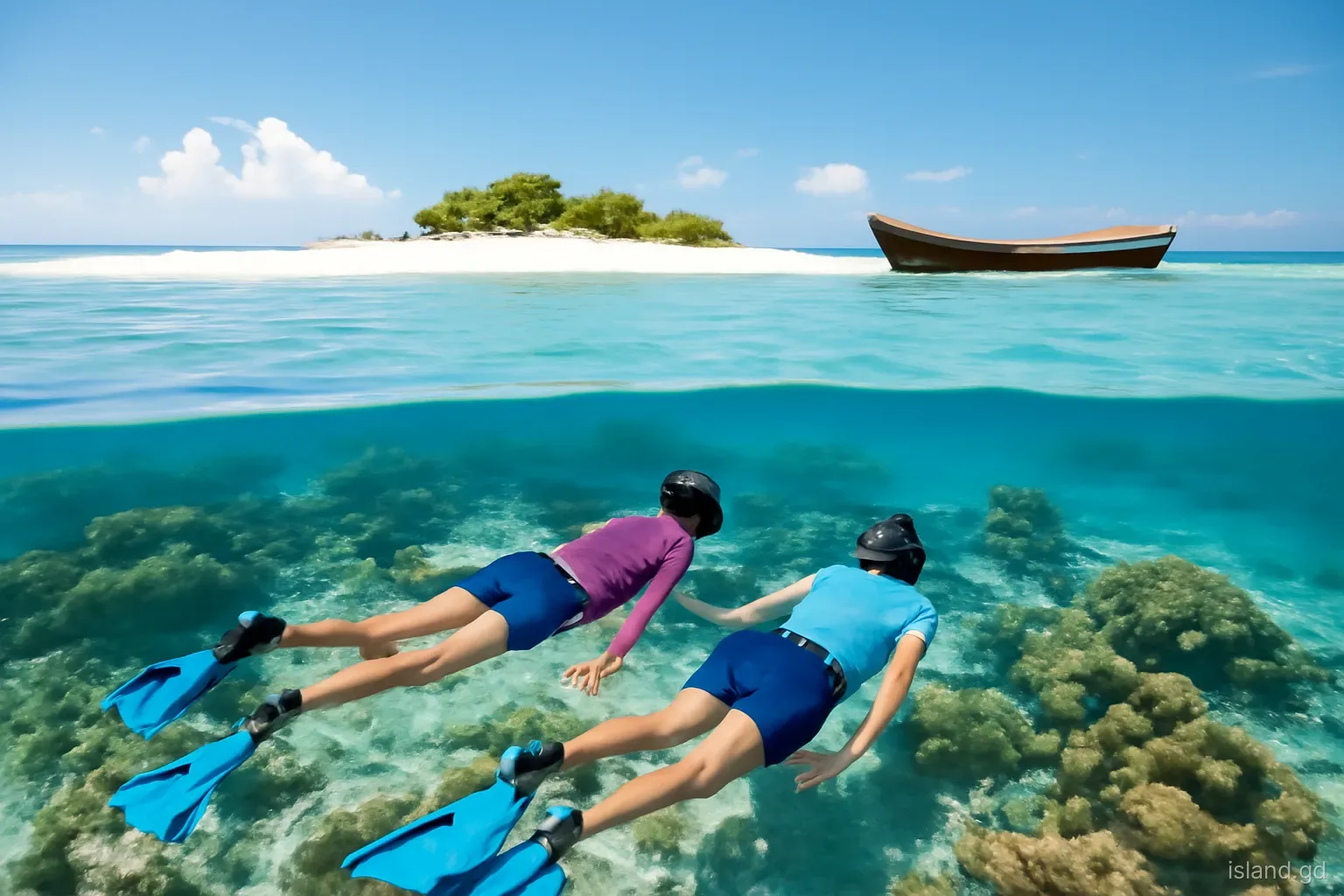
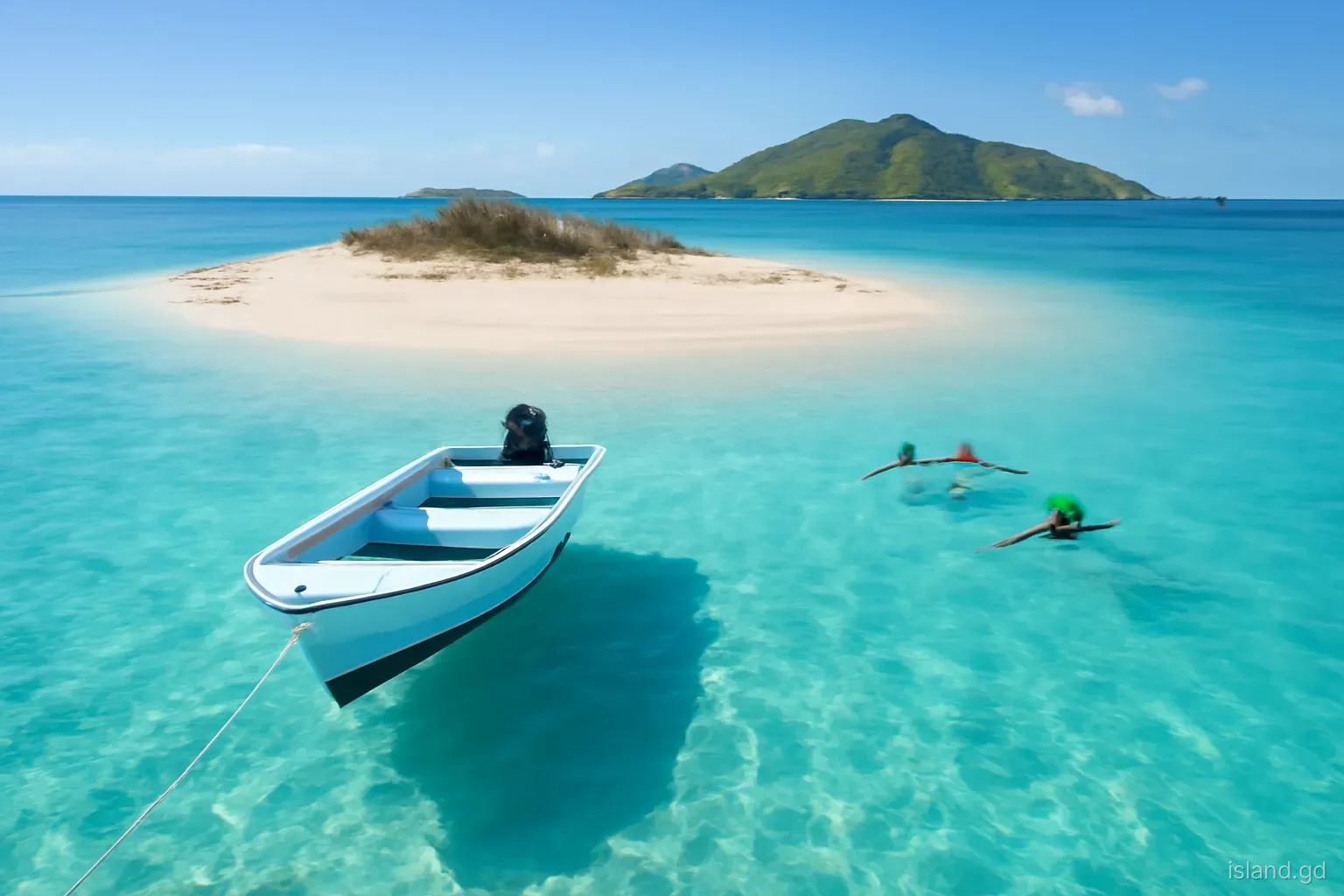
Mopion is one of the most photographed islets in the Grenadines: a tiny circle of white sand, long known for a single thatched shade, sitting on a reef in turquoise water. Because it lies so close to Petite Martinique and is visible from its shore, many visitors assume it is part of Grenada. It is not. Mopion belongs to St Vincent and the Grenadines, as does Petit St Vincent, the private resort island nearby.
Water taxis and day-trip boats from Carriacou and Union Island have long taken visitors to Mopion and similar sandbars. Any trip from Grenadian territory to these islets is an international crossing and requires proper customs and immigration clearance. Tour operators who include such islets in their trips must comply with the rules, and visitors should check before booking.
Petit St Vincent operates as an exclusive resort, and landing there is generally limited to guests and those with arrangements. Yachts may anchor nearby subject to the rules of St Vincent and the Grenadines, having cleared into that country. Again, being able to see it from Petite Martinique does not make it part of the same jurisdiction.
Crossing the border properly
Whether by yacht, ferry or water taxi, crossing between Grenada's and St Vincent's Grenadines follows the same basic logic. Procedures change, so confirm current requirements before travelling:
- Clear out of Grenada at an official port of entry. In the sister islands, these are on Carriacou, at Hillsborough and Tyrrel Bay; there is no port of entry on Petite Martinique.
- Travel directly to an official port of entry in St Vincent and the Grenadines, such as Clifton on Union Island, without stopping at other islands or cays on the way.
- Clear into St Vincent and the Grenadines with customs and immigration, presenting passports, vessel documents if applicable and any required forms.
- Only after clearing in, visit other islands and islets in St Vincent's Grenadines, such as Mopion, Petit St Vincent's anchorage or the Tobago Cays, following local rules and marine park fees.
- Reverse the process on the way back: clear out of St Vincent and the Grenadines, then clear into Grenada on Carriacou before stopping at Petite Martinique or other Grenadian islands.
What changes, and what does not, when you cross
The border affects some things more than others. A quick guide:
- Currency. Both countries use the Eastern Caribbean dollar, so cash works on both sides.
- Mobile phones. Phones near the border may connect to networks in the other country. Check roaming settings to avoid unexpected charges, especially on Petite Martinique and Carriacou's north coast.
- Laws and fees. Customs rules, marine park fees, fishing regulations and other laws differ. What is permitted in one country's waters may not be in the other's.
- Emergency services. Emergency response depends on which country you are in. In Grenada, the emergency number is 911; confirm arrangements when travelling in St Vincent and the Grenadines.
- Family and community. Communities on both sides share family ties, trade, regattas and festivals, and many people move back and forth regularly, through official channels.
Mistakes to avoid
The most common mistake is the casual hop: a water taxi from Petite Martinique or Carriacou to Mopion or Petit St Vincent without clearance. It may seem harmless and is sometimes offered informally, but it breaks the law of both countries. Penalties can include fines, seizure of vessels and problems with future entry. Coastguards from both countries patrol the area.
Another is relying on outdated information. Clearance procedures, office hours, online pre-arrival systems and fees change. Check with the relevant customs and immigration authorities or with up-to-date cruising guides and reputable local operators before planning a crossing.
Finally, do not assume that a trip advertised as covering the Grenadines stays within one country. Ask exactly which islands are included, whether clearance is handled by the operator, what documents you need and whether any fees are extra. Carry your passport on any trip that might cross the border.
Life across the line
For the people who live here, the border is part of everyday reality rather than an abstraction. Families on Petite Martinique, Carriacou and Union Island are intertwined through generations of marriage, trade and shared work at sea. Regattas draw boats and crews from both sides, festivals attract visitors across the line, and goods have always moved between the islands.
Formal procedures sit alongside these old connections. Residents travelling for family events, shopping or work are expected to use official channels like anyone else, and both governments have at times discussed ways to make legitimate movement between the southern Grenadines easier. Any changes are announced by the authorities, so check before assuming special arrangements apply.
For visitors, appreciating these links adds depth to a trip. Union Island's peaks, visible from Carriacou, and the resort lights of Petit St Vincent, seen at night from Petite Martinique, are reminders that the chain was one world long before it was two countries.
Frequently asked questions
Is Mopion part of Grenada?
No. Mopion, the small sand cay near Petite Martinique, belongs to St Vincent and the Grenadines, as does nearby Petit St Vincent. Visiting it from Grenadian territory requires clearing out of Grenada and into St Vincent and the Grenadines.
Which Grenadines islands belong to Grenada?
Carriacou and Petite Martinique are the inhabited Grenadian islands, along with islets such as Sandy Island, Mabouya, White Island, Saline Island, Large Island, Frigate Island, Isle de Ronde, Caille and Diamond Island. The rest of the chain belongs to St Vincent and the Grenadines.
Can you clear customs on Petite Martinique?
No. Grenada's ports of entry in the sister islands are on Carriacou, at Hillsborough and Tyrrel Bay. To travel between Petite Martinique and Petit St Vincent or Union Island legally, you must clear through Carriacou and an official port of entry in St Vincent and the Grenadines.
Do Grenada and St Vincent use the same currency?
Yes. Both use the Eastern Caribbean dollar, pegged to the US dollar at EC$2.70 to US$1. Cash works on both sides of the border, though card acceptance and bank access vary from island to island.
Why is the Grenadines chain split between two countries?
The division dates from British colonial administration, which attached Carriacou, Petite Martinique and nearby islets to Grenada and the islands further north to St Vincent. The line became an international border when Grenada and St Vincent and the Grenadines became independent.