Between Hillsborough and Tyrrel Bay, the road along Carriacou's west coast passes through a stretch of low land, gentle hills and small villages that most visitors cross without much thought. Yet this short strip holds the island's airport at Lauriston, the long sweep of Paradise Beach at L'Esterre, and the home village of Canute Caliste, the painter whose bright, naive images of Carriacou life became known well beyond the island.
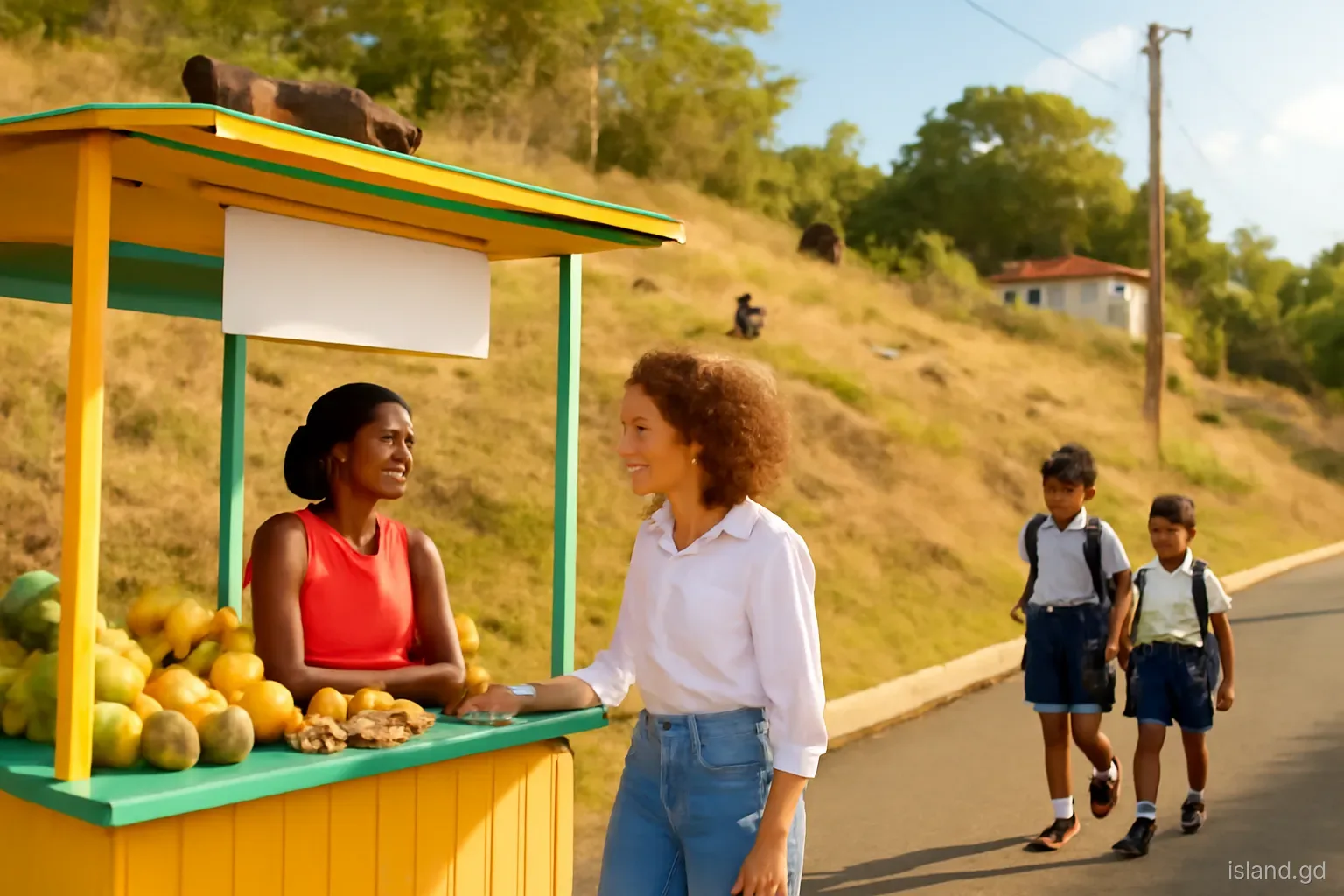
L'Esterre and Lauriston are neither resort areas nor remote hamlets. They are ordinary Carriacou communities, where people farm small plots, fish, work in Hillsborough, run guesthouses and food stalls, and gather at churches and rum shops. Understanding them gives a clearer picture of everyday Carriacou than the waterfront of Hillsborough alone.
This profile looks at both villages, what they are like, what to see and how to spend time there.
Where they are and how they fit together
Lauriston lies just south of Hillsborough, on the flat land beside the west coast. Its main feature is the airport, a short runway serving small aircraft that connect Carriacou with the main island and, at times, other nearby islands. The runway's position means that the main road and the airport sit close together, and planes are a regular sight and sound.
L'Esterre lies further south and slightly inland, spreading over a low hill and down towards L'Esterre Bay, whose shore is lined by Paradise Beach. From the village, roads lead down to the beach and onwards to Tyrrel Bay and Harvey Vale.
Together, the two villages make up the busy middle of the west coast, linking town, airport, beach and harbour. Distances are short, and the whole stretch can be walked in parts, though heat, traffic and the lack of shade make a car, taxi or minibus more practical for most.
Lauriston: the airport village
Lauriston Airport is Carriacou's air link with Grenada's main island. Flights are short, small planes carry limited passengers and luggage, and schedules can change with demand and weather. For many residents, the airport is part of daily life, used for medical trips, business and family visits, alongside the ferry.
The area around the airport mixes homes, small businesses and open land. Because the land here is relatively flat, it is one of the few places on the island suited to a runway, and its presence has shaped the village. Traffic stops when planes land or take off, and children often watch the arrivals.
Beyond the airport, Lauriston is a quiet residential community. It has houses scattered across the plain and lower slopes, small shops and easy access to Hillsborough. For visitors, its main role is as a gateway, but it is also a reminder of how small Carriacou is: the island's airport, main town and main beaches all lie within a few kilometres of each other.
L'Esterre: village and bay
L'Esterre is a hillside village with a French name, reflecting the period when Carriacou was under French influence before it passed to Britain. Its houses spread across the slope, many with gardens, fruit trees and views over the bay towards Sandy Island.
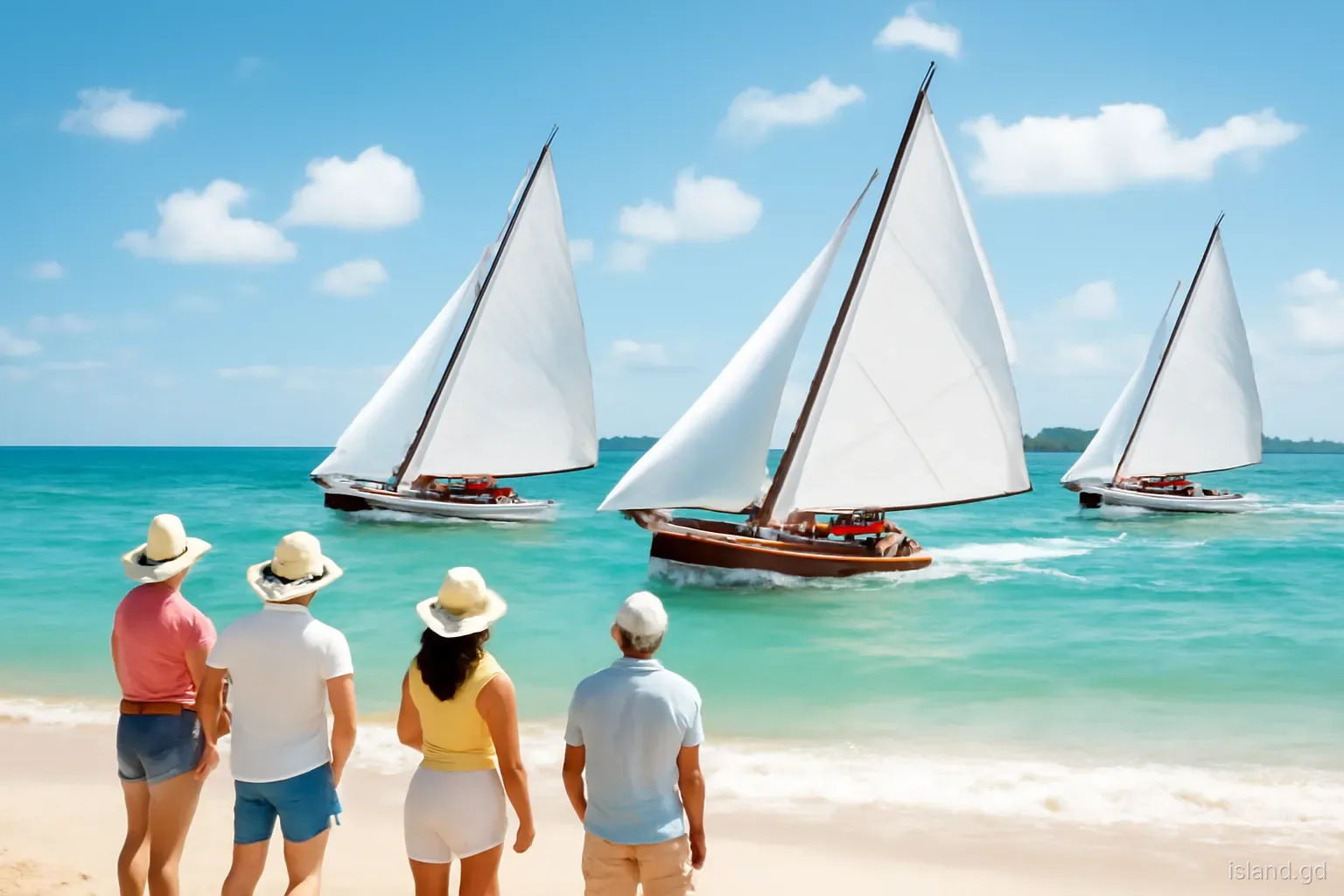
Below the village, L'Esterre Bay is a broad curve of sheltered water facing west, with Paradise Beach along its shore. The beach is the island's best-known strip of sand, long and calm, and water taxis to Sandy Island leave from here. Small bars, food stalls and guesthouses have operated along the shore, though many were damaged when Hurricane Beryl hit in July 2024, and what is open varies.
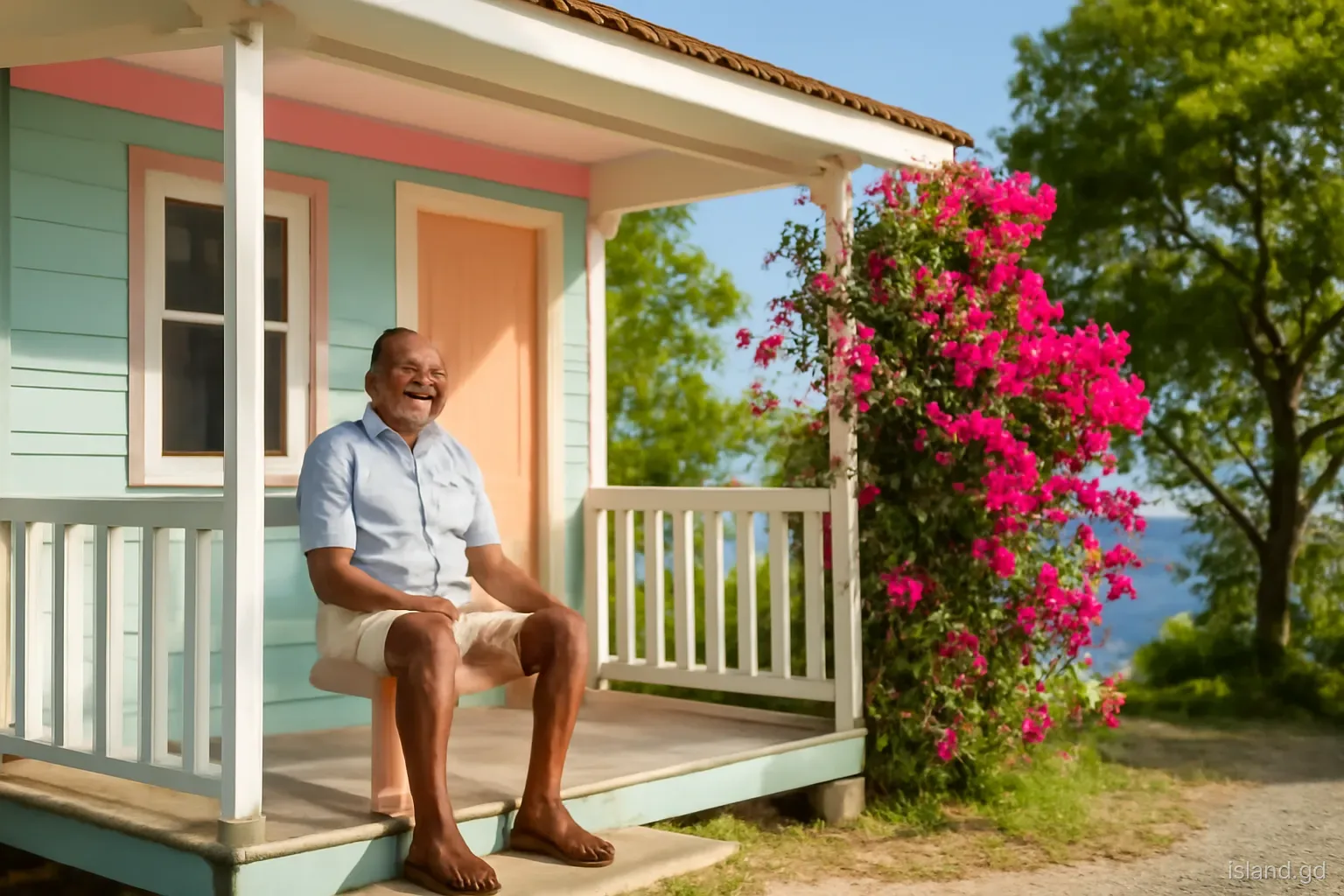
The village is close-knit. Churches, a school and community spaces form its centre, and families often have deep roots in the area. Life moves at an unhurried pace, with people meeting on the road, sitting on porches in the evening and gathering for events such as funerals, weddings and festivals, which bring relatives home from abroad.
A little history in the place names
The names along this coast tell part of Carriacou's story. L'Esterre is French, a survival from the eighteenth century, when French settlers established estates on the island before it passed to Britain along with Grenada in 1763. Lauriston, Harvey Vale and Hillsborough are British names, laid over the earlier French map as estates changed hands.
The estates of the south-west grew crops such as cotton, worked by enslaved Africans whose descendants make up most of Carriacou's population today. After emancipation in the 1830s, the plantation economy declined on such a dry island, and over time much of the land passed into the hands of small farmers. That pattern of family plots, rather than large estates, still shapes the countryside around L'Esterre.
Migration is the other thread. For generations, people from these villages have gone to work in Trinidad, Britain, North America and elsewhere, sending money home and returning for holidays, festivals and retirement. Many of the larger houses on the hillsides were built with earnings from abroad.
Canute Caliste: L'Esterre's painter
Canute Caliste, who lived in L'Esterre and died in 2005, is Carriacou's most celebrated artist. A self-taught painter, he produced vivid, naive-style works showing scenes of Carriacou life: boat launchings, Big Drum dances, village festivals, saraka feasts, sailing sloops and the mermaids of local folklore. His paintings, often with short handwritten captions, became sought after by collectors and visitors.
His work is valuable not only as art but as a record of Carriacou's culture. Through his images, traditions such as boat launchings and ancestral ceremonies were captured for people who had never seen them. Mermaid stories, in particular, are closely associated with his name, reflecting the island's deep connection with the sea.
His legacy remains part of L'Esterre's identity. Members of his family and other local artists have continued painting in the area. Visitors interested in his work can ask locally about where to see or buy paintings, and should be wary of copies sold as originals.
What to see and do in the area
Paradise Beach. Long, calm and sandy, with views to Sandy Island. Good for swimming and lazy afternoons, though shade has been reduced since Beryl.
Sandy Island trips. Water taxis run from Paradise Beach and Hillsborough to the sandbar islet. Agree prices and return times beforehand.
Village walks. Strolling up through L'Esterre gives views over the bay and a sense of daily life. Greet people and respect private property.
Art. Ask locally about painters in the area and where Caliste-style works can be seen, keeping in mind that availability changes.
Planespotting. Watching small planes land on the short runway at Lauriston is a minor but popular pastime, especially for children.
Sunsets. The west-facing coast offers clear sunset views over the sea towards Sandy Island and beyond.
Practical tips and pitfalls
The south-west villages are easy to visit, but some details are worth knowing.
- Shade is scarce. Many trees were damaged or lost in Beryl. Bring hats, sunscreen and water, especially on the beach and roads.
- Check what is open. Guesthouses, bars and food stalls along the bay have changed since 2024. Ask locally rather than relying on old reviews.
- Cash is king. Small businesses often prefer cash in Eastern Caribbean dollars, and cash machines are mainly in Hillsborough.
- Respect the runway. Never cross airport land or approach the runway; follow road signals and instructions when planes are moving.
- Manchineel on the beach. These trees grow along parts of the coast. Avoid touching them or sheltering beneath them in rain.
- Buy art carefully. If buying a painting described as a Caliste original, ask about provenance and consider buying through a reputable source.
Frequently asked questions
Where is Lauriston Airport in Carriacou?
Lauriston Airport lies just south of Hillsborough on Carriacou's west coast, a few minutes by road from town. It handles small aircraft flying to and from Grenada's main island. Schedules and operators change, so confirm flights directly before travelling, especially after the disruption caused by Beryl.
Who was Canute Caliste?
Canute Caliste was a self-taught painter from L'Esterre, Carriacou, who died in 2005. His colourful naive paintings show boat launchings, Big Drum dances, festivals, sloops and mermaids, and they are valued as both art and a record of Carriacou culture.
Is Paradise Beach in L'Esterre?
Yes. Paradise Beach runs along L'Esterre Bay below the village of L'Esterre, between Hillsborough and Tyrrel Bay. It is long, calm and sandy, with views to Sandy Island, and water taxis to the islet leave from here.
How do you get from Hillsborough to L'Esterre?
L'Esterre is a short drive south of Hillsborough past Lauriston Airport. Taxis and local minibuses run along the west coast road. Walking is possible but hot and exposed, so most visitors use a taxi or bus, especially in the middle of the day.
Can you buy Canute Caliste paintings in Carriacou?
Paintings attributed to Caliste and his circle sometimes appear for sale, and family members and other local artists continue painting in his style. Ask locally about reputable sources and provenance, and be aware that copies exist. Availability varies over time.