On a stretch of sand on Carriacou's north-east coast, wooden hulls have been rising on the beach for well over a century. Windward is the village most closely tied to the island's boatbuilding tradition, where shipwrights have built fishing boats, trading sloops and racing craft without drawn plans, shaping keel, ribs and planks by eye and by experience passed down through families.
The village faces Petite Martinique across a reef-sheltered stretch of water, and its life has always been bound up with the sea: fishing, trading between islands, racing in regattas and, in earlier times, carrying goods across the Grenadines in ways that did not always involve customs officers. Today the large trading sloops are rarer, but boatbuilding remains part of Windward's identity.
This profile looks at Windward as a place: where it is, how its boats are built, what a launching means, and how to visit without getting in the way.
Where Windward is and what it looks like
Windward sits on the north-eastern side of Carriacou, a drive of around twenty minutes or so from Hillsborough across the island's hilly centre. The village is spread along the shore and up the slopes behind it, with houses, small shops, churches and fishing boats pulled up on the beach.
Offshore, a fringing reef breaks the Atlantic swell, creating calmer water inside where boats can be moored and launched. Across the channel lies Petite Martinique, close enough that the two communities have long been linked by family, trade and seafaring. Boats regularly cross between them, and Windward is one of the places where trips to Petite Martinique can be arranged with local boatmen.
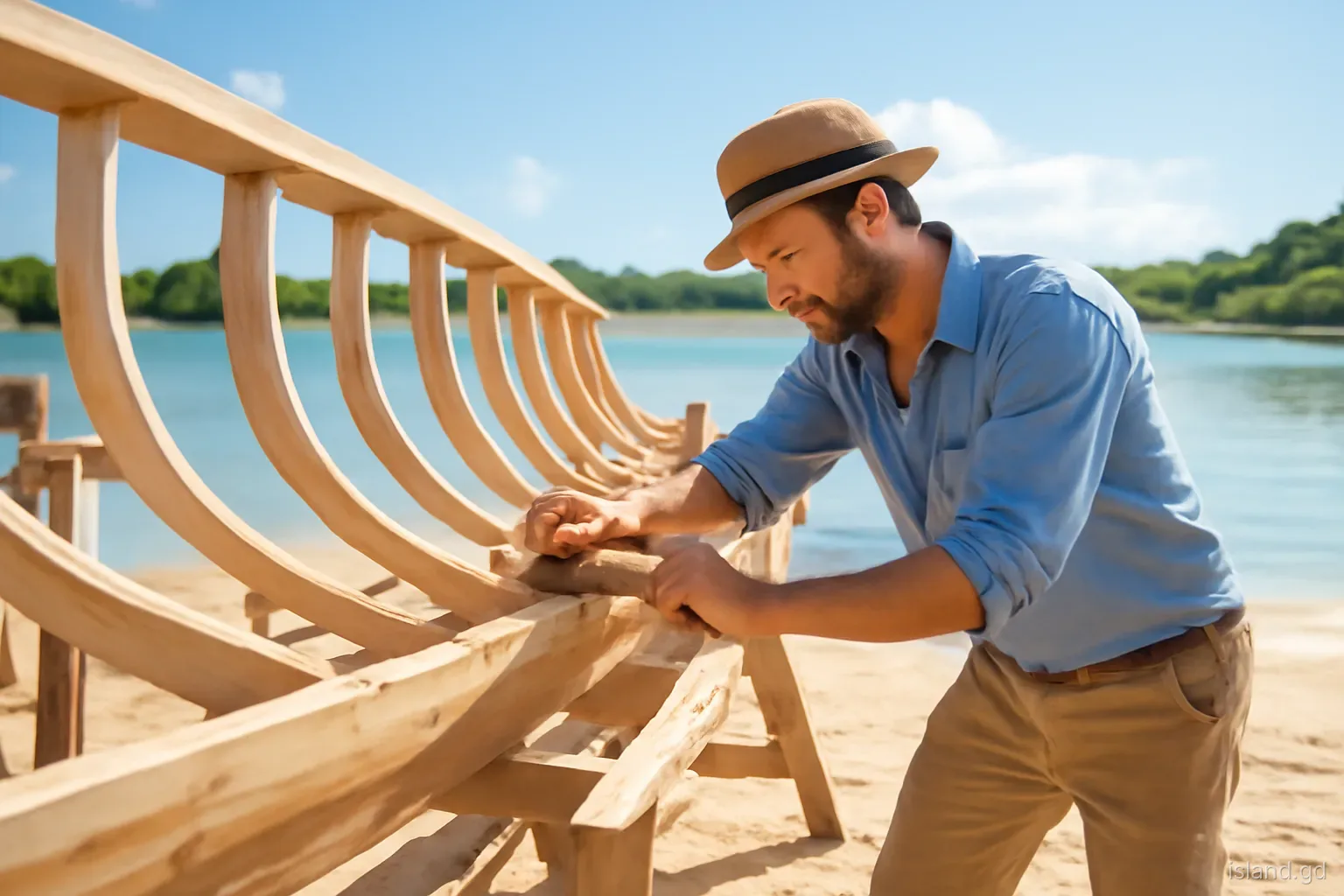
The beach is the village's workshop. In places, timber, frames and partly built hulls may stand on the sand, propped on blocks and shaded by temporary covers, while fishermen work on nets and engines nearby. What is under construction at any time varies, and some years see little building.
Scottish roots and a seafaring community
Windward's boatbuilding tradition is often linked to Scottish influence. Scottish settlers and shipwrights arrived in the area in the colonial era, and their skills combined with those of African-descended Carriacouans to create a distinctive local craft. Scottish surnames remain common in the village, a visible trace of that history.
Over generations, building boats became a family trade, with knowledge passed from father to son and among relatives. Apprentices learned by working alongside master builders, absorbing techniques that were never written down: how to select timber, how to judge the curve of a hull, how to balance a boat for speed and stability.
The boats served the island's economy. Carriacou depended on the sea for food, trade and travel, and sloops and schooners built at Windward and elsewhere on the island carried goods and people between Carriacou, Grenada, St Vincent, Trinidad and beyond. Much of that inter-island trade has since moved to steel vessels, but the skills and pride have endured.
How a Carriacou sloop takes shape
Building methods vary between builders, and modern tools have joined traditional ones, but the broad sequence of a wooden boat built on the beach follows a familiar pattern.
- Choosing timber. Builders select wood for different parts, with white cedar traditionally prized for frames. Suitable timber has long been brought in from the main island of Grenada and elsewhere, as Carriacou's own trees are limited.
- Laying the keel. The backbone of the boat is set up on blocks on the beach, aligned so the finished hull can be launched straight into the water.
- Raising the stem, stern and frames. The ribs that give the hull its shape are cut and fitted, their curves judged by eye and experience rather than from drawn plans.
- Planking. Planks are bent and fastened to the frames to form the hull, a slow process that demands precision so the boat is watertight and fair.
- Caulking and finishing. Seams are caulked and sealed, the deck is built, and the hull is painted, often in bright colours.
- Rigging. Mast, boom and sails are fitted for sailing boats, while fishing boats may be fitted for outboard engines.
- Launching. When the boat is ready, the community gathers to haul it down the beach and into the sea.
The launching: a village occasion
A boat launching in Carriacou is more than a practical step; it is a community event with spiritual meaning. Traditionally, a launching involves a blessing by a member of the clergy, the naming of the boat, and a saraka, a ceremonial feast in which food is prepared and shared, with portions set aside for the ancestors. Big Drum music and dancing may accompany the occasion.
On the day, family, friends and neighbours gather on the beach. The boat is gradually eased down towards the water on rollers or greased logs, hauled with ropes by many hands, with plenty of shouting, encouragement and laughter. When it finally floats, there is celebration.
Launchings do not follow a fixed calendar; they happen when a boat is finished, and timing may depend on tides, weather and the builder's plans. If one is taking place during a visit, it is worth asking whether visitors are welcome, and following the lead of local people on where to stand and when to help.
Racing, regattas and boats today
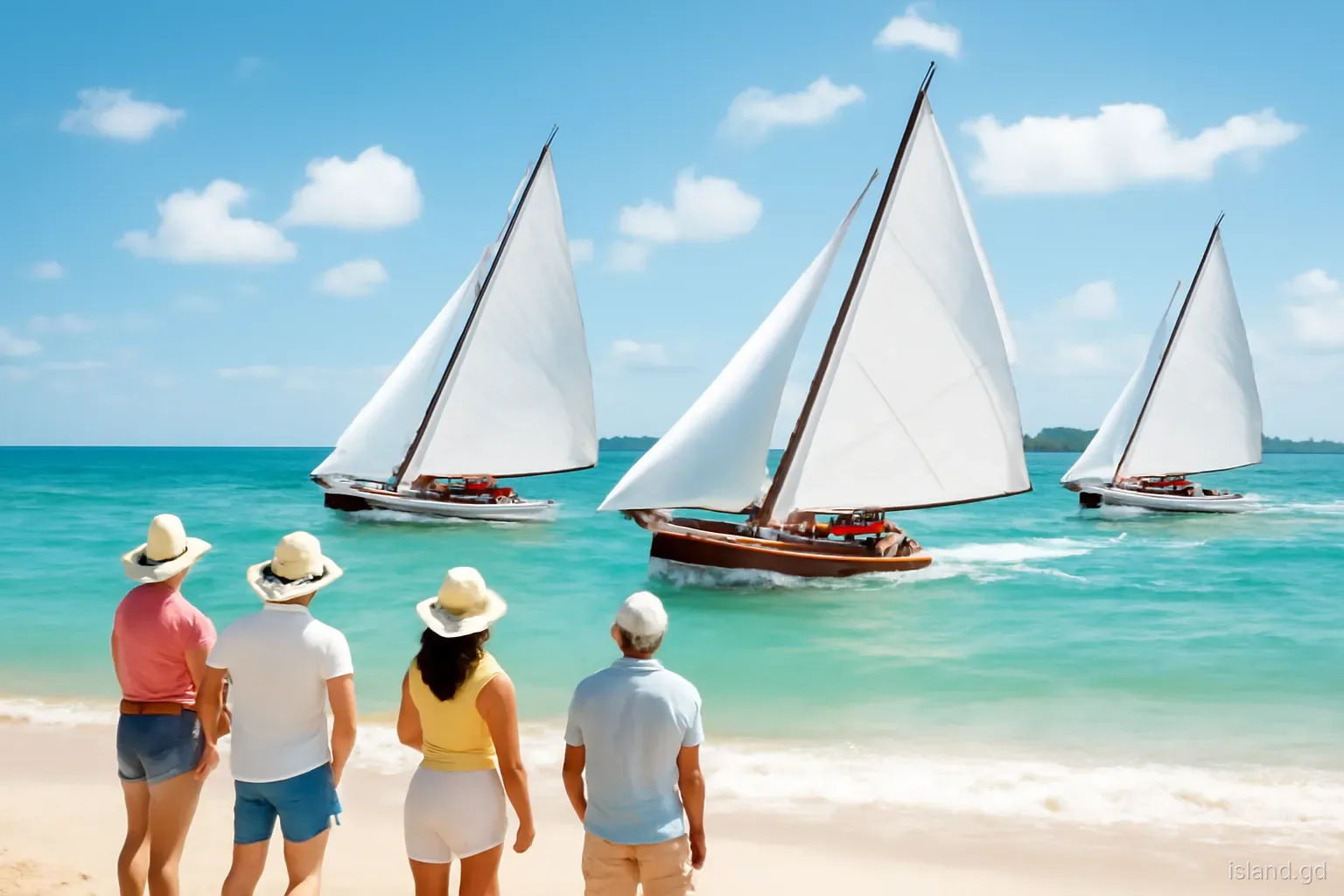
Carriacou's sloops are also built for speed. The Carriacou Regatta Festival, held around the start of August, has a long history and features races for local sloops alongside shore-based events. Racing is a source of pride, with builders and crews from Windward and other villages competing keenly.
Today, Windward's boatbuilders work on a smaller scale than in the days of trading schooners. Fishing boats, smaller sailing craft and occasional larger commissions keep the skills alive, and interest from sailors and cultural organisations has helped draw attention to the tradition.
Hurricane Beryl in July 2024 caused severe damage across Carriacou, including to homes, boats and coastal communities. Recovery has been ongoing, and the state of boatbuilding activity, workshops and local facilities may differ from earlier descriptions. Check current conditions locally before planning a visit specifically to see boats under construction.
Fishing and the everyday sea
Boatbuilding is the craft Windward is known for, but fishing is the daily work. Small open boats, many with outboard engines, head out from the village to fish around the reefs, the channel towards Petite Martinique and the deeper water offshore. Catches vary with the season, and fish is often sold straight from the boats or on the beach as they come in.
Some fishermen set traps, known locally as fish pots, on the reefs and seagrass beds; others use lines and nets. Conch, called lambi, and lobster are also harvested, subject to closed seasons and size limits set by the fisheries authorities. Those rules matter to the long-term health of the reefs that the village depends on.
The rhythm of the sea governs the day. Boats leave early and return by late morning or afternoon, engines are repaired on the sand, and conversations on the beach turn on weather, swell and prices. For a visitor, an hour watching the boats come in explains more about Windward than any description.
Visiting Windward respectfully
Windward is a working village, not a museum. Visitors are generally welcome, but a few habits matter.
- Ask before photographing. Builders and fishermen are working; ask before taking photos of people or close-ups of work in progress.
- Do not climb on boats or frames. Partly built hulls are delicate and represent months of work and money.
- Keep a respectful distance during launchings and ceremonies. Follow local cues, especially during blessings and the saraka.
- Buy locally. Village shops and small food vendors appreciate custom, and spending in the village supports the community.
- Arrange boat trips with care. If crossing to Petite Martinique with a local boatman, agree the price and return time clearly beforehand, and check the boat carries life jackets.
- Remember Beryl. Many families are still rebuilding. Be patient, considerate and aware that some facilities may be limited.
Frequently asked questions
Why is Windward in Carriacou famous?
Windward is known for its boatbuilding tradition. Local shipwrights build wooden sloops and fishing boats by eye on the beach, without drawn plans, using skills passed down through families. The tradition is often linked to Scottish settlers combined with local craftsmanship over generations.
Can visitors watch boats being built in Carriacou?
Sometimes. If a boat is under construction on the beach at Windward or elsewhere, visitors can usually watch from a respectful distance, ideally after asking the builders. Activity varies from year to year and was disrupted by Hurricane Beryl, so check locally.
What happens at a Carriacou boat launching?
A launching typically includes a blessing, the naming of the boat and a saraka feast with food shared among the community and offered to the ancestors. Villagers then haul the boat down the beach into the sea, often with music and celebration.
How far is Windward from Petite Martinique?
Windward faces Petite Martinique across a short reef-sheltered channel. Local boats cross regularly, and the trip is short in good conditions. Agree prices and return times with boatmen in advance, and check sea conditions, as the channel can be choppy.
When is the Carriacou Regatta?
The Carriacou Regatta Festival is traditionally held around the start of August, linked to the Emancipation holiday period. It features sloop races and shore events. Dates and programmes can change, especially after hurricane damage, so confirm with local organisers before planning travel.